
Meet the Fastest Passenger Plane in the World and See Its Top Speeds
Introduction

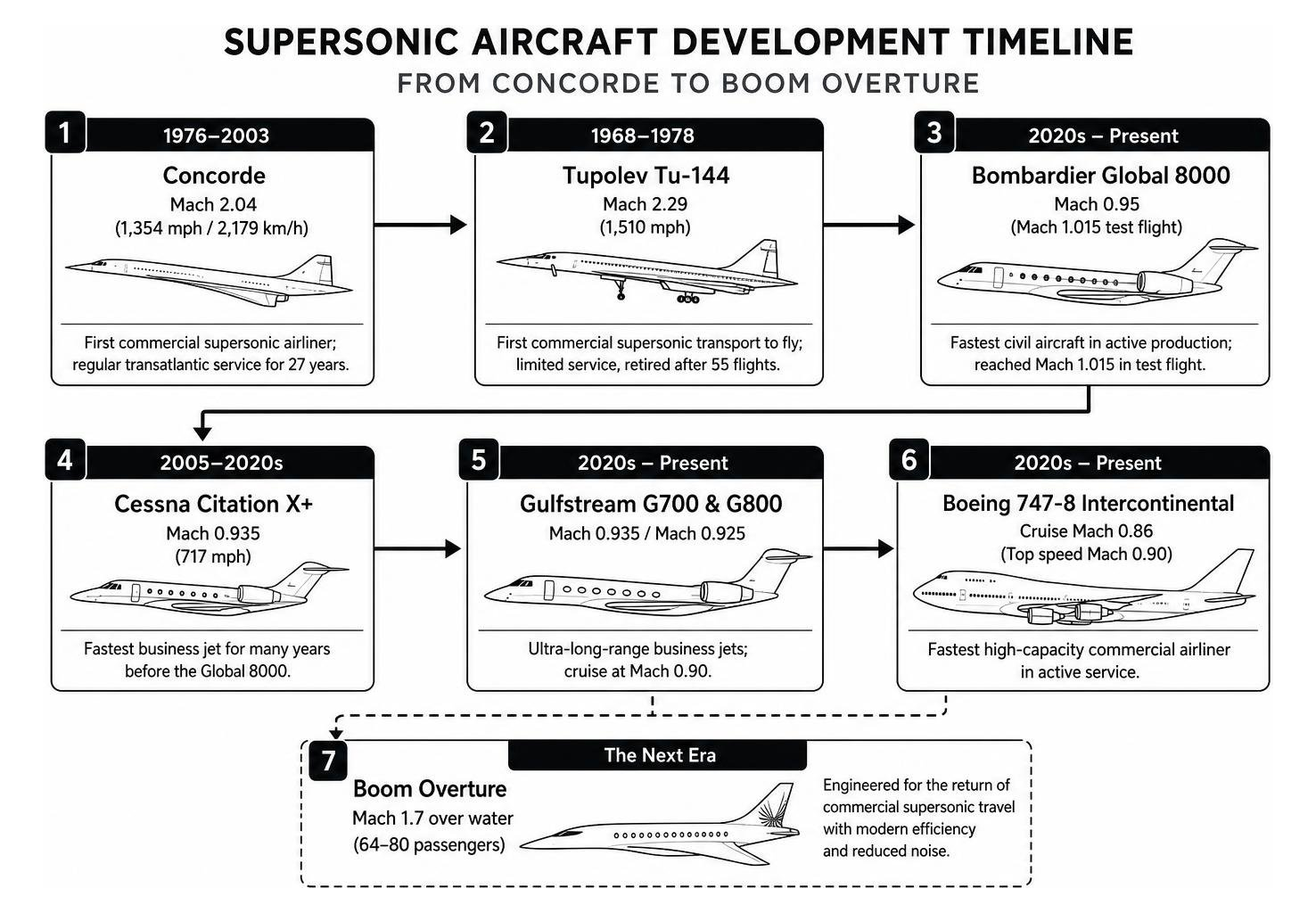
The fastest passenger plane in the world in aviation history is the Tupolev Tu-144, which reached Mach 2.29 (1,510 mph), followed by the celebrated Aérospatiale/BAC Concorde at Mach 2.04 (1,354 mph). In active service today, the Bombardier Global 8000 leads civil aviation with a top operating speed of Mach 0.95, while the Boeing 747-8 Intercontinental remains the fastest commercial airliner at Mach 0.86.
The story of high-speed aviation is written by machines that challenged the laws of physics to compress our planet. When looking back across aviation history, the quest for pure speed has delivered some of the most radical engineering ever conceived. To understand why passenger flight evolved the way it did—and where it is heading next—we have to start with the pinnacle of commercial supersonic flight.
The Concorde: The Undisputed Fastest Passenger Plane in the World in Aviation History
Entering commercial service on January 21, 1976, the Aérospatiale/BAC Concorde represented an extraordinary joint venture between the British and French governments. It was not merely a fast jet; it was a luxury time machine. Powered by four Rolls-Royce/Snecma Olympus 593 turbojet engines equipped with reheat (afterburners), each producing 38,050 lbf (169.3 kN) of thrust, Concorde pushed through the sound barrier with 92 to 128 passengers on board.
Cruising smoothly at 60,000 feet—where passengers could observe the curvature of the Earth and the deep indigo edge of space—Concorde sustained Mach 2.02 over open oceans. At these speeds, crossing the Atlantic was faster than Earth's rotation. Flying west from London or Paris to New York meant landing at a local time earlier than departure.
What Made Concorde the Fastest Passenger Plane in the World?
Concorde was packed with engineering breakthroughs that were decades ahead of their time:
- Ogival Delta Wing: The complex, curving slender delta wing created high aerodynamic lift at supersonic speeds while generating controllable leading-edge vortexes during low-speed takeoffs and landings.
- Analogue Fly-By-Wire: Concorde was the first commercial airliner fitted with an analogue fly-by-wire flight control system to coordinate rudder and elevon movement.
- Variable Intake Ramps: At Mach 2, incoming airflow had to be slowed down to subsonic speeds before entering the Olympus engines. Computer-controlled ramps inside the intake ducts manipulated shockwaves to decelerate the air efficiently.
- Thermal Expansion Management: Flying at Mach 2 caused skin friction that heated the aircraft's nose to 127°C (261°F). The fuselage expanded by up to 30 cm (nearly a foot) during flight, requiring expandable cabin joints and specialized white paint to reflect heat.
- Fuel Trim Transfer: Instead of relying on mechanical trim tabs that caused massive drag, Concorde pumped tons of jet fuel between 13 internal fuel tanks to shift its center of gravity dynamically as the aircraft transitioned from subsonic to supersonic speeds.
| Specification | Aérospatiale/BAC Concorde | Tupolev Tu-144 | Boeing 2707-300 (Cancelled) |
|---|---|---|---|
| Max Operating Speed | Mach 2.04 (1,354 mph) | Mach 2.29 (1,510 mph) | Mach 2.7 (1,800 mph projected) |
| Cruise Altitude | 55,000–60,000 ft | 52,000–59,000 ft | 60,000–70,000 ft projected |
| Passenger Capacity | 92–128 | 140–150 | 250–300 projected |
| Operational Range | 4,488 mi (7,222 km) | 4,000 mi (6,500 km) | 4,000 mi (6,400 km) projected |
| Engines | 4x Rolls-Royce/Snecma Olympus 593 | 4x Kolesov RD-36-51 or NK-144 | 4x GE4/J5P turbojets |
| Status | Retired (2003) | Retired (1983) | Cancelled (1971) |
The Challenges, Crash of Flight 4590, and 2003 Retirement
Despite its engineering triumph, Concorde faced fierce headwinds throughout its operational life. Overland supersonic flights were swiftly banned in the United States and globally due to the disruptive noise of sonic booms, restricting routes almost exclusively to transatlantic corridors. High operating costs and astronomical fuel consumption made ticket prices accessible only to corporate elites, heads of state, and celebrities.
The turning point came on July 25, 2000, when Air France Flight 4590 crashed shortly after takeoff from Paris Charles de Gaulle Airport. A titanium wear strip dropped by a previously departing aircraft punctured a tire, causing rubber debris to breach the fuel tank and ignite a catastrophic wing fire. While the fleet was subsequently modified with Kevlar fuel-tank liners and reinforced tires, the tragic crash—combined with the post-2001 global aviation slump and soaring maintenance expenses—led British Airways and Air France to permanently retire the fleet on October 24, 2003. Today, 18 of the original 20 airframes are preserved in world-renowned museums, celebrated among the best jets in the world for their timeless ambition.
Ranked: The 6 Fastest Passenger Planes and Civilian Jets in History
Following the retirement of commercial supersonic transport, the civilian aviation landscape shifted. The quest for speed moved into the private business jet sector, while commercial airlines prioritized fuel efficiency, high-capacity widebody airframes, and lower emissions.
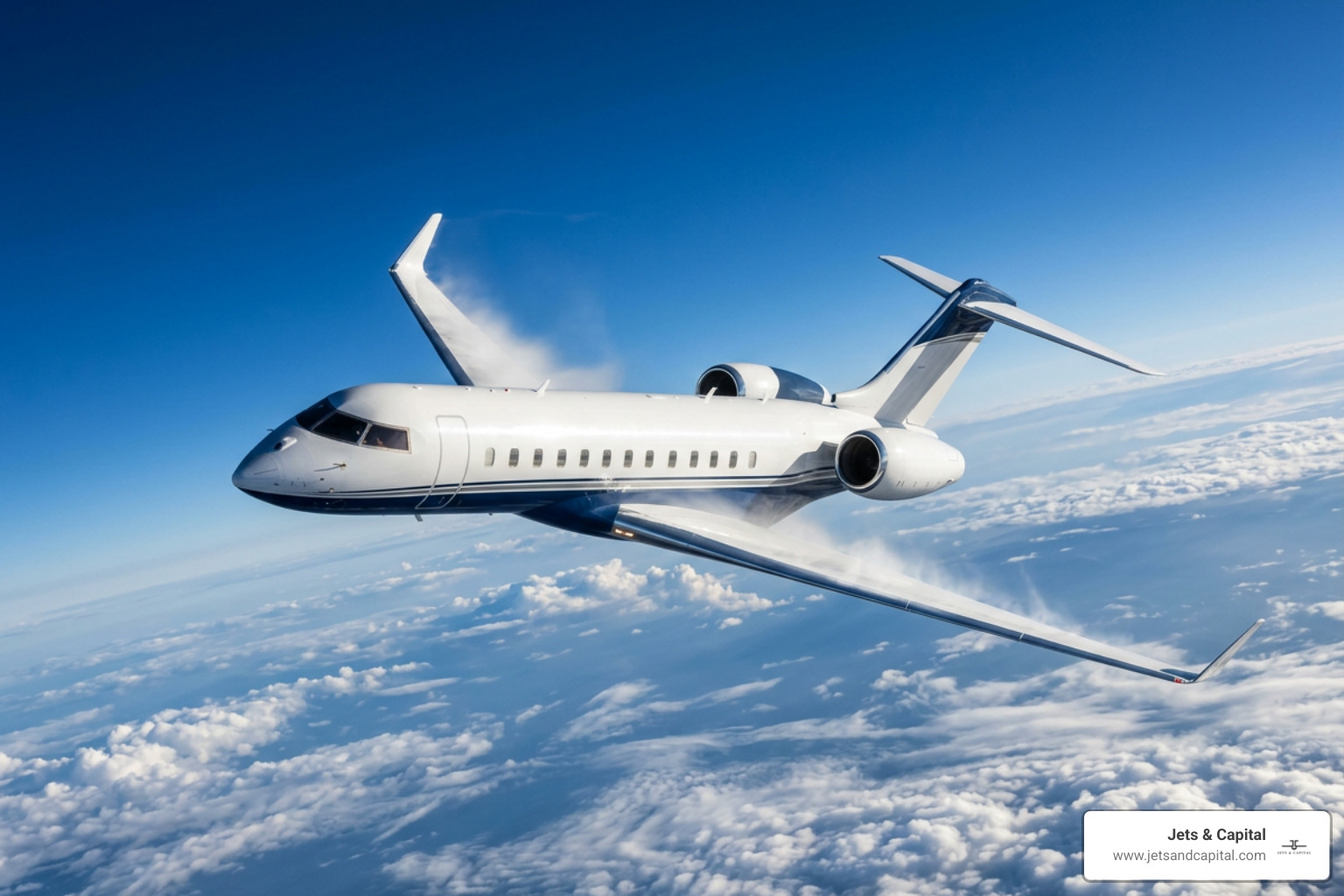
Here is how the fastest passenger planes and civil aircraft rank by their proven and certified operational top speeds:
1. Aérospatiale/BAC Concorde (Mach 2.04)
Concorde remains the gold standard for passenger speed. With a maximum certified operating speed of Mach 2.04 (1,354 mph / 2,179 km/h) and an operational range of 4,488 miles, it flew regular scheduled transatlantic crossings in under 3.5 hours for 27 years. In 1985, a charter Concorde completed a flight from London Heathrow to Sydney in 17 hours, 3 minutes, and 45 seconds (including stops), setting permanent global marks.
2. Tupolev Tu-144 "Charger" (Mach 2.29)
The Soviet Union's counterpart, the Tupolev Tu-144, was technically the first commercial supersonic transport to fly (December 1968) and the first to break Mach 2. Powered by four Kolesov engines and featuring deployable "mustache" canards for low-speed control, the Tu-144 reached a peak speed of Mach 2.29 (1,510 mph). However, intense cabin noise, structural vibrations, and excessive fuel burn severely curtailed its career; Aeroflot operated it for just 55 scheduled passenger flights before converting it to mail service and research testing.
3. Bombardier Global 8000 (Mach 0.95 / Mach 1.015 Test Flight)
Entering service as the flagship of modern long-range business aviation, the Bombardier Global 8000 is the fastest civilian aircraft in active production. Delivering a certified maximum operating speed of Mach 0.95 and high-speed cruise of Mach 0.92, it provides an intercontinental range of 8,000 nautical miles. Powered by twin GE Passport engines and featuring an advanced transonic wing, a modified test version demonstrated supersonic capability by reaching Mach 1.015 in a shallow dive using sustainable aviation fuel. To discover how it stacks up against the pinnacle of long-range executive travel, explore our breakdown of the fastest private jet in the world. For real-world speed milestones, see how Bombardier's Global 8000, the World’s Fastest Civil Aircraft, Sets New Speed Record Between Los Angeles and Farnborough, UK and check the comprehensive technical review on Mach 0.95: This Is The Fastest Civil Jet Since Concorde Retired In 2003 .
4. Cessna Citation X+ (Mach 0.935)
Before the Global 8000's arrival, the Cessna Citation X+ held the crown as the quickest business jet in modern civil skies. Powered by two Rolls-Royce AE3007C2 turbofans, the Citation X+ incorporates a dramatic 37-degree wing sweep and area-rule fuselage contouring to reach Mach 0.935 (717 mph). For business leaders flying time-sensitive domestic or regional routes, it established the benchmark among the best business jets for pure point-to-point speed.
5. Gulfstream G700 & G800 (Mach 0.935 / Mach 0.925)
Gulfstream's ultra-long-range lineup pairs exceptional speed with peerless luxury. The G700 and G800, powered by Rolls-Royce Pearl 700 engines, cruise comfortably at Mach 0.90 with a maximum operating capability of Mach 0.935 and Mach 0.925, respectively. With maximum ranges extending up to 8,000 nautical miles, these flagships routinely connect financial hubs across the globe without stopping. They remain popular staples among billionaire luxury private jets.
6. Boeing 747-8 Intercontinental (Mach 0.86 / Top Speed 706 mph)
Among high-capacity commercial airliners carrying hundreds of passengers, the Boeing 747-8 Intercontinental is the fastest in active service. Powered by four General Electric GEnx-2B67 engines and sporting raked wingtips, the "Queen of the Skies" operates at a standard cruise speed of Mach 0.86 (around 660 mph) and can reach dash speeds up to Mach 0.90 (706 mph / 1,136 km/h) to make up lost schedule time.
The Next Era: The Return of Commercial Supersonic Travel
For over two decades, civil aviation prioritized fuel burn over speed. But demand for time savings has never waned, and supersonic travel is preparing for a modern comeback. The technological foundation has evolved dramatically with advanced computational fluid dynamics (CFD), lightweight composite structures, and modern turbofans.
A major milestone arrived when Boom Supersonic's demonstrator aircraft achieved supersonic speeds, validating low-drag aerodynamics—as reported when this plane completes first supersonic flight, breaks sound barrier - ABC7 . For those evaluating fleet investments in this new era, consulting an authoritative corporate jet buying guide 2026 is essential.
Boom Overture and the Mach 1.7 Horizon
Boom Supersonic’s flagship commercial airliner, the Overture, is engineered to carry 64 to 80 passengers at Mach 1.7 over water—cutting global flight times nearly in half. Powered by four custom Symphony medium-bypass turbofan engines, Overture avoids afterburners entirely to improve fuel efficiency and minimize takeoff noise. Major legacy airlines have already placed pre-orders to secure future supersonic transatlantic and transpacific travel corridors.
Overcoming Noise, Efficiency, and Overland Sonic Boom Bans
The two largest hurdles facing next-generation supersonic jets are overland sonic boom bans and emissions. To solve this, research programs like NASA's X-59 QueSST are testing quiet supersonic technology, utilizing long, needle-nose fuselages and specialized lift distributions to replace the jarring sonic boom with a soft acoustic "thump."
Furthermore, new supersonic airliners are designed to operate on 100% Sustainable Aviation Fuel (SAF). For private jet owners and flight departments preparing for future fleet integrations, infrastructure solutions in a private jets hangar must evolve to support high-efficiency fueling and specialized maintenance demands.
Frequently Asked Questions About the Fastest Passenger Planes
What Is the Fastest Passenger Plane in the World in Active Service Today?
In business aviation, the Bombardier Global 8000 is the fastest certified civilian aircraft with a top operating speed of Mach 0.95 (approx. 729 mph). In commercial mass-transit airline service, the Boeing 747-8 Intercontinental holds the top spot, cruising at Mach 0.86 with maximum speeds near Mach 0.90.
Why Was Concorde Retired If It Was the Fastest Passenger Plane?
Concorde was retired in 2003 due to an unsustainable combination of economic, regulatory, and market factors. These included high maintenance costs for an aging fleet of only 20 aircraft, prohibitive fuel consumption, overland supersonic flight bans that restricted viable routes, and an overall downturn in luxury transatlantic business travel following the 2000 Paris accident and 2001 global aviation slowdown.
Will Commercial Airlines Ever Fly Supersonic Again?
Yes. Companies such as Boom Supersonic are actively developing next-generation supersonic airliners designed to cruise at Mach 1.7 using sustainable fuels. With pre-orders from major global airlines, commercial supersonic flights are projected to return by the end of the decade on key transoceanic routes.
Conclusion
The pursuit of speed has defined the greatest milestones in aerospace engineering. From Concorde’s reign at Mach 2 to modern ultra-long-range business jets cruising at Mach 0.95, high-speed aviation continues to revolutionize how leaders connect across continents.
At Jets & Capital, we operate at the intersection of private aviation and private capital. We organize exclusive, invite-only networking events for family offices, principal investors, and UHNWIs held directly inside premier private jet hangars—including our signature Super Bowl Edition in San Francisco, CA, and gatherings across Las Vegas, Dallas, Salt Lake City, Palm Beach, Miami, and New York. With our strict vetting process maintaining an 85% allocator ratio, our members build meaningful relationships and evaluate high-level deal flow in exceptional aviation settings.
If you are exploring the acquisition of world-class aircraft or looking to connect with leading global investors, discover the finest luxury corporate jets and join our private network today.
