
Heavy Metal: Ranking the Top Long-Range Business Jets
The Best Large Business Jets: Heavy and Ultra-Long-Range Contenders

In business aviation, aircraft in the large category fall into distinct tiers: traditional heavy jets, modern ultra-long-range platforms, and VIP executive airliners. While traditional heavy jets comfortably manage transcontinental and transatlantic hops, ultra-long-range models fly between continents non-stop, reaching speeds up to Mach 0.94 and cruising at altitudes up to 51,000 feet—well above commercial airline traffic and turbulence.
Below is an overview comparing the premier production aircraft across critical performance metrics:
| Aircraft Model | Max Range (nm) | Max Cruise Speed | Typical Passenger Capacity | Cabin Volume (cu ft) |
|---|---|---|---|---|
| Gulfstream G800 | 8,000 | Mach 0.925 | 15–19 | 2,138 |
| Bombardier Global 7500 | 7,700 | Mach 0.925 (Mach 0.94 max) | 15–19 | 2,786 |
| Gulfstream G700 | 7,750 | Mach 0.935 | 14–19 | 2,603 |
| Dassault Falcon 10X | 7,500 | Mach 0.925 | 16–19 | 2,780 |
| Dassault Falcon 8X | 6,450 | Mach 0.90 | 12–16 | 1,695 |
| Embraer Lineage 1000E | 4,600 | Mach 0.82 | 13–19 | 4,085 |
| Boeing BBJ 777X | 11,000+ | Mach 0.85 | 20–75+ | 12,113+ |
| Airbus ACJ350 | 11,100 | Mach 0.89 | 25–50+ | 30,000+ |
Bombardier Global 7500 and Global 8000
Bombardier’s Global 7500 has proven itself as a flagship in global private aviation. Powered by purpose-built GE Passport engines, it features Bombardier's proprietary Smooth Flēx Wing—an aerodynamic design acting as an airborne shock absorber to deliver an exceptionally smooth ride across its 7,700 nautical mile range.
Inside, the aircraft boasts a four-zone architectural layout that can be optioned with a permanent master suite, complete with an en-suite lavatory and full-standing shower. Bombardier’s patented Nuage seats offer a deep recline that mimics neutral body posture for restorative sleep during 14-hour flights. For operators seeking the absolute maximum reach, its sibling platform continues to stand out as a top contender for the longest range corporate jet.
Gulfstream G700 and G800
Gulfstream continues to redefine speed and reach with its flagship platforms. The manufacturer sets records with the Gulfstream G800 flagship specifications, delivering an industry-leading 8,000 nautical mile range at Mach 0.85 and an unprecedented 7,000 nautical mile capability at a rapid Mach 0.90. For travelers looking to cut hours off long flights, this positions the family alongside the fastest private jet in the world.
Both the G700 and G800 are powered by twin Rolls-Royce Pearl 700 engines, producing high-altitude climb efficiency and clean cruising. In the cockpit, Gulfstream’s Symmetry Flight Deck integrates active control sidesticks and extensive touchscreen avionics. In the cabin, passengers benefit from a low cabin altitude of just 2,840 feet while cruising at 41,000 feet, paired with Gulfstream’s signature panoramic oval windows that flood every living zone with natural light.
Dassault Falcon 10X and Falcon 8X
Dassault Aviation applies its fighter-jet engineering heritage to its flagship business aircraft. The Dassault Falcon 10X cabin details reveal a cross-section wider than any purpose-built business jet on the market (measuring 9 feet 1 inch wide and 6 feet 8 inches tall). Powered by twin Rolls-Royce Pearl 10X engines generating over 18,000 pounds of thrust, the 10X achieves 7,500 nautical miles of range while remaining 100% Sustainable Aviation Fuel (SAF) compatible.
Pilots command the aircraft through Dassault’s NeXus flight deck, using the FalconEye Combined Vision System (CVS) to safely execute approaches in severe low-visibility conditions.
Embraer Lineage 1000E and Legacy 650
Embraer engineered the Lineage 1000E using an ultra-reliable commercial airliner platform (the E190). While its range sits at 4,600 nautical miles—shorter than Gulfstream or Bombardier flagships—it compensates with 4,085 cubic feet of cabin space divided into five distinct living zones.
The Lineage 1000E easily accommodates a master bedroom with an optional walk-in shower and an enormous 323-cubic-foot walk-in baggage compartment that remains fully accessible in flight. For regional hops and transatlantic routes, the classic Legacy 650 offers practical heavy-jet operating economics with a comfortable three-zone interior.
VIP Airliners: Boeing BBJ 777X and Airbus ACJ350
When standard business jets lack the space needed for heads of state, royal families, or large corporate delegations, VIP widebody airliners step in. The Boeing BBJ 777X widebody overview highlights its capability to fly over halfway around the globe non-stop (exceeding 11,000 nautical miles), backed by folding wingtips that allow it to fit standard airport gates.
Similarly, the Airbus ACJ350 cabin brochure displays a private residence in the sky with up to 3,300 square feet of floor space. Built with over 70% advanced composite materials, the ACJ350 flies 11,100 nautical miles while keeping internal cabin humidity high and cabin altitude down to 6,000 feet, making intercontinental journeys effortless.
Engineering and Design: Twin-Engine vs. Tri-Jet Configurations
Aircraft architecture in the large cabin category balances aerodynamic range against runway flexibility. Twin-engine platforms dominate the market because modern turbofans provide outstanding reliability and lower maintenance requirements. However, tri-jet designs continue to hold a unique operational edge.
Operational Advantages of Tri-Jet Engineering
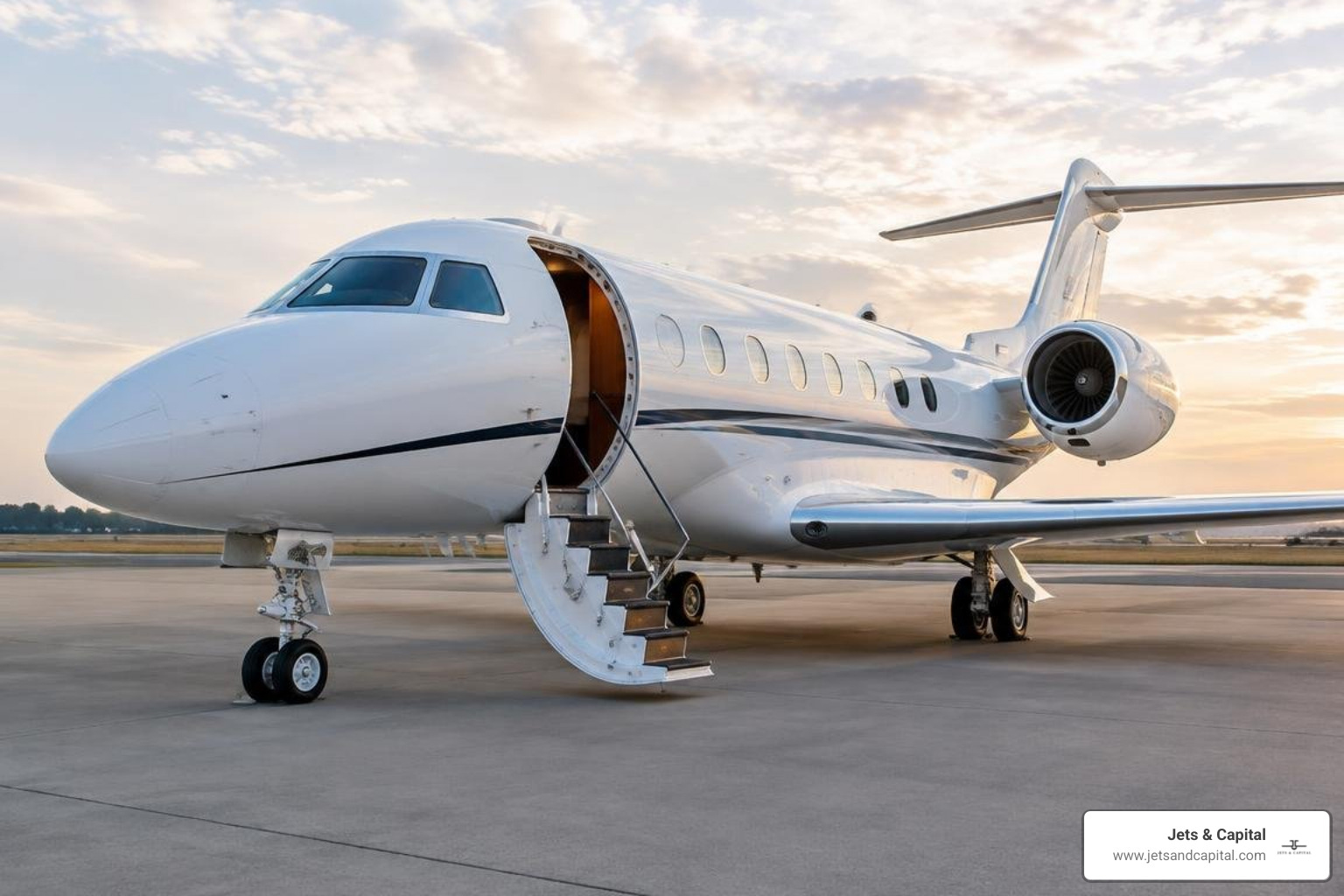
The Falcon 8X tri-jet performance is powered by three Pratt & Whitney PW307D engines. Having a centerline engine mounted in the tail gives the aircraft critical thrust advantages:
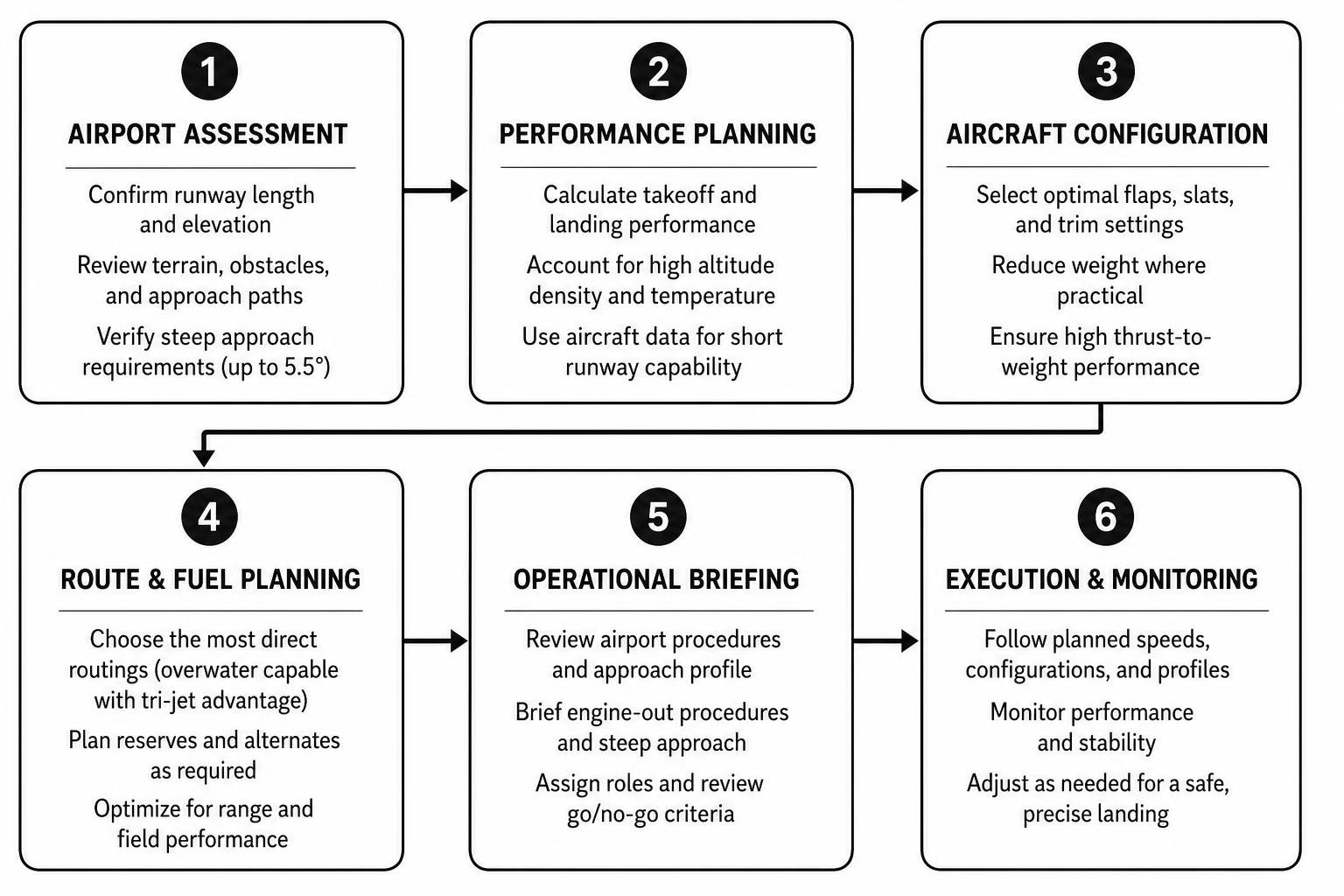
- Balanced Field Lengths: Better engine-out performance margins allow the jet to take off safely from shorter runways.
- Steep Approach Capabilities: The 8X is certified for challenging 5.5-degree steep approaches, such as the approach into London City Airport.
- Overwater Direct Routing: Tri-jets can bypass certain extended-range twin-engine operational restrictions, enabling more direct flight paths across vast oceanic corridors.
For smaller executive travel requirements where tri-jet power isn't required, review our best midsize business jets 2026 guide to evaluate smaller platform options.
What Makes the Best Large Business Jets Ideal for Short Runway Access?
Accessing airfields with short runways or high elevations requires a high thrust-to-weight ratio and advanced wing aerodynamics. Jets like the Falcon 8X and Falcon 10X utilize carbon-fiber wing structures with optimized slats and flaps that generate strong low-speed lift.
This enables these heavy platforms to access restrictive mountain destinations like Aspen or regional airfields where other ultra-long-range jets are forced to land light or divert to larger commercial hubs miles away.
Cabin Luxury, Wellness, and In-Flight Productivity
Modern business jets serve as airborne offices and restful sanctuaries. Acoustic dampening technology now limits interior sound levels to below 50 decibels—quieter than a standard luxury vehicle cabin. High-speed Ka-band and Ku-band satellite connectivity allows executive teams to stream board meetings, transfer large data files, and stay fully connected at 45,000 feet.
Chartering these luxury private planes gives decision-makers the privacy needed to conduct sensitive business without compromise. For high-net-worth individuals exploring bespoke acquisitions, billionaire luxury private jets provide custom multi-room suites and high-end materials tailored to their exact tastes.

Multi-Zone Living and Dedicated Staterooms
To maintain comfort during 12- to 15-hour journeys, ultra-long-range cabins are arranged into dedicated zones:
- Forward Galley & Crew Rest: Ensures private, uninterrupted service while giving pilots space to rest during long missions.
- Executive Club & Conference Suite: Configured with four-place conference groupings, pop-up monitors, and ergonomic leather seating.
- Dining & Entertainment Zone: Equipped with credenzas, high-definition displays, and surround-sound audio systems.
- Aft Private Stateroom & En-Suite: Features a lie-flat bed, soundproof privacy doors, and an en-suite lavatory with an optional walk-in shower.
Cabin Altitude and Circadian Lighting Systems
Arriving refreshed depends heavily on cabin environmental quality. Legacy airliners pressurize cabins to an equivalent altitude of 7,000 to 8,000 feet, which dries the eyes and accelerates physical fatigue. Modern heavy platforms maintain a cabin altitude of just 2,840 to 3,000 feet at typical cruise altitudes.
Combined with 100% fresh-air replenishment cycles every two minutes and dynamic circadian LED lighting that mirrors natural sunrise and sunset rhythms, these systems significantly reduce jet lag across multiple time zones.
Acquisition, Charter Costs, and Operating Economics
Whether securing an aircraft through on-demand charter, fractional shares, or whole-aircraft purchase, operating economics vary significantly based on airframe size, engine cycles, and avionics. When preparing to acquire a plane, our comprehensive corporate jet buying guide 2026 outlines the full due-diligence and pre-purchase inspection framework.
Buyers looking for pre-owned value can also explore options for a private jet under 30 million within the secondary heavy-jet market, such as late-model Gulfstream G450s or Falcon 900EX aircraft.
Hourly Rates and Fixed Operational Expenses
Chartering a large business jet costs between $8,500 and $16,000 per flight hour, depending on the aircraft's vintage, range, and onboard amenities.
For owners, annual fixed costs run between $1.5 million and $3.5 million annually before factoring in direct fuel burn. These fixed overhead expenses include hangarage at premium metro airports (such as Dallas Love Field, Miami Opa-Locka, or San Francisco International), full-time flight crew salaries, type-rating simulator training, insurance, and continuous engine health monitoring programs.
Selecting the Best Large Business Jets for Intercontinental Missions
When choosing the best aircraft for an upcoming long-haul mission, evaluate the following factors:
- Calculate Range with NBAA Reserves: Never plan a flight at maximum theoretical range; always leave an 8–10% fuel reserve for unexpected headwinds and diversions.
- Match Payload to Distance: Max passenger and baggage loads reduce your overall fuel capacity, which can turn a nonstop flight into a two-leg trip.
- Review Destination Runway Length: Confirm that your aircraft’s maximum landing weight matches the runway and weight-bearing ratings of smaller executive airports.
- Secure International Overflight Permits: Verify that flight planning teams have cleared regional slots and direct overflight corridors ahead of time.
- Confirm Onboard Connectivity: If your team requires uninterrupted communications, ensure the aircraft is equipped with operational Ka-band satellite Wi-Fi.
Frequently Asked Questions About Large Business Jets
What is the typical charter cost for large business jets?
Hourly charter rates for large business jets range from $8,500 to $16,000 per hour. The final price depends on the model, route distance, landing fees, onboard catering, and repositioning legs (empty legs). Traditional heavy jets like the Falcon 900EX sit at the lower end of that range, while late-model flagships like the Bombardier Global 7500 command premium rates.
How far can modern ultra-long-range business jets fly without stopping?
Modern ultra-long-range jets fly between 6,500 and 8,000 nautical miles without refueling. This translates to 14 to 16 hours of nonstop flight, easily connecting city pairs like New York to Tokyo, London to Singapore, or San Francisco to Sydney. Cruising at higher speeds (such as Mach 0.90 instead of Mach 0.85) reduces overall range by 500 to 1,000 nautical miles while saving hours of flight time.
What safety certifications should charter clients look for in heavy jets?
Charter clients should choose operators audited by independent aviation safety organizations. Key certifications to look for include ARGUS Platinum, Wyvern Wingman, and IS-BAO Stage III registration. In the cockpit, prioritize aircraft equipped with dual-pilot certified type ratings, Synthetic Vision Systems (SVS), and predictive runway over-run systems.
Conclusion
The market for large business aircraft provides unmatched time savings, range, and bespoke luxury. Whether your team relies on the 8,000-nautical-mile endurance of the Gulfstream G800, the multi-zone comfort of the Bombardier Global 7500, or the short-runway agility of the Falcon 8X, these aircraft serve as essential tools for global business.
At Jets & Capital, we bring leaders together in world-class aviation environments. We organize exclusive, invite-only networking events for family offices, investors, and UHNWIs hosted directly inside private jet hangars across key markets—including our premier Super Bowl Edition in San Francisco, CA, alongside private gatherings in Dallas, Palm Beach, Miami, Las Vegas, and Salt Lake City. Through our strict vetting process, we ensure over 85% of attendees are verified capital allocators, creating an ideal setting for relationship building and deal-making.
To learn more about optimizing your global travel strategy, explore our complete guide to luxury corporate jets.
