
The Art of Networking with Ultra-Wealthy Investors Above the Clouds
The Rise of Airborne Masterminds and By-the-Seat Deal Circles

High-stakes deal-making is moving off the golf course and out of crowded hotel conference rooms. In 2026, the most productive conversations happen at 40,000 feet. By-the-seat private flight programs and invitation-only aviation clubs have transformed routine point-to-point transit into intimate, airborne masterminds. For family offices, founders, and institutional allocators, VIP jet deal networking has become a deliberate strategy for converting travel time into proprietary investment access.
Instead of chartering an entire empty cabin alone, high-net-worth founders, principals, and family office leaders now share seats with carefully matched co-passengers. As forward-thinking executives have proven through Guy Oseary's model for shared aviation tied to dedicated fleet operations, layering community dynamics over private aviation creates unprecedented access to off-market deal syndication. When you board an aircraft where every passenger has been vetted for investment capacity, the entire cabin becomes an active deal room.
Unlike open-market charter marketplaces, these curated circles prioritize who sits across the aisle. Pairing verified capital allocators with select deal sponsors turns cross-country flights between financial hubs into productive exclusive networking events where term sheets, syndications, and joint ventures take shape long before touchdown. The result is a faster, more discreet path to capital formation than traditional conference circuits can offer.
Operational Infrastructure and Fleet Management Partnerships
Curating private flight experiences requires institutional-grade aviation logistics. Exclusive deal clubs do not manage planes directly; they partner with established aircraft management organizations operating strictly under FAA Part 135 certifications. These partnerships ensure that every flight meets commercial-grade safety, maintenance, and crew training standards while preserving the privacy and flexibility that high-net-worth members expect.
To protect high-profile passengers and manage operational liability, these programs work with operators that hold top-tier safety accreditations, such as the ARGUS Platinum rating. For example, strategic aircraft management partnerships between established fleet operators and private travel clubs allow programs to deploy corporate aircraft—such as the Bombardier Challenger 850—specifically configured for group travel and collaborative meetings. This configuration supports both private one-on-one discussions and larger cabin-wide strategy sessions.
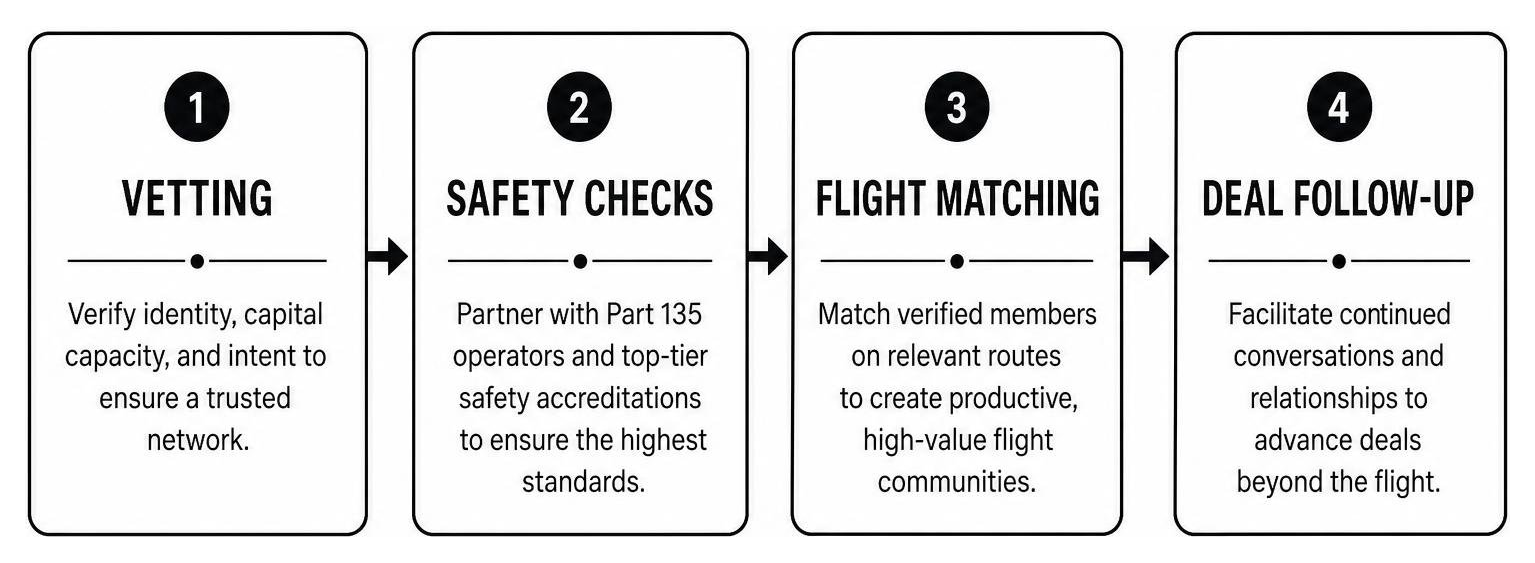
Rigorous standards guarantee that while members focus on relationship building, ground handling, crew training, maintenance, and flight operations meet the highest possible safety benchmarks. For deal sponsors and allocators alike, that operational discipline is the foundation of trust that makes airborne syndication viable.
Pricing Models and Membership Structures
Aviation-driven deal communities use varied financial structures to align incentives and attract verified participants. Entry points range from accessible monthly micro-memberships to high-tier annual syndicates. Each tier is designed to match a different stage of investor engagement, from first-time co-investors to established family offices seeking direct allocation opportunities.
| Membership Model | Typical Entry Cost | Aircraft Access Format | Primary Deal-Flow Focus |
|---|---|---|---|
| Community Micro-Membership | $499 / month | Empty-leg alerts & seat buy-ins | Co-investments & off-market real estate |
| Mastermind Travel Club | $6,000 – $10,000 / year | Per-trip curated adventures | Peer advisory, scaling & venture rounds |
| Bespoke Jet-Sharing Syndicate | Low five-figures annually | By-the-seat private routes | Direct allocation & private equity syndication |
These models allow executives to enjoy the privacy and velocity of business aviation while spreading operational expenses across a verified circle of peers. By aligning membership fees with deal-flow access, programs attract participants who are serious about deploying capital rather than simply seeking luxury travel perks.
Strategic Frameworks for VIP Jet Deal Networking in 2026
Networking inside an enclosed jet cabin requires a nuanced, high-touch approach. You are sharing an intimate space for several hours, making hard sales pitches completely unacceptable. Success aloft relies on discretion, emotional intelligence, and mutual respect. The most effective participants treat each flight as a curated relationship-building session rather than a transactional sales opportunity.
A thoughtful framework ensures you build lasting relationships without crossing personal boundaries:
- Focus on Peer Rapport First: Treat your fellow passengers as peers, not pitch targets. Inquire about their operational focus and long-term investment themes rather than asking for checks.
- Read the Cabin Cadence: Recognize when co-passengers need quiet focus for work or rest, and engage when the cabin atmosphere naturally opens up for informal conversation.
- Carry Clean Executive Summaries: Keep high-level executive summaries accessible on your mobile device, but only share them if a peer explicitly requests to see them.
- Leverage Super Mid-Sized Range: Longer, non-stop flight paths—such as transcontinental routes utilizing super mid-sized private jet efficiency—provide natural windows for deeper strategic dialogue.
Applying refined UHNW networking strategies ensures you establish organic trust that pays dividends across future investment rounds. The goal is not to close a deal on the first flight, but to position yourself as a credible, discreet counterpart for future opportunities.
Establishing Trust and Protocol During VIP Jet Deal Networking Flights
The cabin of a private aircraft operates under unwritten rules of etiquette. When you step through the airstair door, confidentiality is paramount. Ultra-high-net-worth investors value their privacy above all else; photos, unprompted social media tags, or disclosing co-passengers' travel plans will quickly shut down relationships. A single breach of discretion can permanently exclude a participant from future flights.
Adopt an active listening mindset. When discussing macroeconomic trends or industry shifts, allow allocators to voice their perspectives. If a portfolio synergy emerges, offer a brief, thirty-second overview of your thesis. If your peer shows genuine interest, suggest exchanging direct contact information to review detailed financials after landing. This demonstrates professional poise and honors the integrity of the flight. Over time, this measured approach builds the relationship velocity that leads to repeat co-investment opportunities.
Curating High-Yield Deal Flow Through VIP Jet Deal Networking Hubs
Airborne circles frequently unlock proprietary, off-market opportunities before they reach institutional investment banks. By connecting executives during transit between premier markets like Miami, New York, Dallas, and San Francisco, cabins serve as real-time syndication rooms. The enclosed environment encourages candid discussion of deal structures, risk tolerances, and capital deployment timelines that rarely surface in larger conference settings.
Common transactions originated aloft include:
- Off-market commercial and residential real estate acquisitions.
- Pre-IPO growth equity allocations.
- Real asset infrastructure funds and private debt opportunities.
- Direct co-investments alongside single-family offices.
By synchronizing business travel schedules along curated private aviation routes, members turn essential transit time into active deal sourcing opportunities. For many participants, a single well-matched flight can generate more actionable deal flow than an entire quarter of traditional networking.
Integrating Hangar Gatherings, Private FBOs, and High-Stakes Events
High-level airborne networking works best when paired with curated ground experiences. The runway-to-boardroom journey often begins inside private Fixed Base Operator (FBO) terminals and luxury hangar lounges. These spaces provide a controlled, private environment where introductions can happen before the aircraft door closes.

Pre-flight gatherings inside private suites provide relaxed settings where principals connect before boarding. Integrating private terminal lounges with cultural and sporting calendar milestones creates powerful networking hubs. Whether arranging flights for Art Basel in Miami or coordinating private aviation access for marquee sports summits, integrating runway hospitality with destination events creates an environment where investors can connect naturally. The combination of shared anticipation for a major event and the privacy of an FBO suite accelerates relationship formation.
Employing discrete VIP airport networking tactics inside private FBO suites helps establish trust before the aircraft even taxis onto the runway. For many high-net-worth participants, the pre-flight hour is just as valuable as the flight itself.
Destination Retreats and Immersive Investor Experiences
Beyond direct point-to-point routes, curated destination retreats build lasting bonds among investors. Organizing private multi-day excursions to exclusive locations—such as wellness masterminds in Sedona or deep-dive summits in Costa Rica—combines venture discussions with personal rejuvenation. These immersive experiences allow participants to move beyond transactional conversations and develop genuine personal alignment.
These retreats integrate structured financial workshops with shared lifestyle adventures. By sharing distinct experiences outside corporate boardrooms, investors build deep character alignment, laying the foundation for fruitful capital introduction gatherings and multi-year partnerships. The relationships formed during a three-day retreat often prove more durable than those built across months of conventional networking.
Scaling Aviation Networks While Maintaining Exclusivity and Safety
As aviation networking communities expand, maintaining balance and trust is vital. Scaling too quickly risks diluting the community with aggressive promoters, which drives away institutional allocators. The most successful programs grow deliberately, prioritizing member quality over seat count.
Key operational principles include:
- Enforcing Strict Allocator Ratios: Keep attendance heavily weighted toward active capital allocators rather than service vendors.
- Managing Flight Availability: Partnering with scaled aircraft operators ensures reliable access to lift without compromising member schedules.
- Strict Safety Verification: Ground incidents represent a significant portion of aviation occurrences worldwide. Working exclusively with Part 135 operators that maintain strict safety records protects all members.
Adhering to proven private jet networking best practices ensures private aviation communities remain secure, exclusive, and genuinely productive for their members. When safety and selectivity are treated as non-negotiable, the network becomes a durable asset for every participant.
Frequently Asked Questions About VIP Jet Deal Networking
How do invitation-only jet networking clubs vet their members?
Clubs evaluate applicants through financial qualification, background screenings, and peer references. Vetting teams confirm liquid net worth, examine past transaction histories, and conduct introductory interviews to verify character alignment. This comprehensive process protects community trust and ensures productive dialogue on every flight. The most rigorous programs also verify that applicants have a demonstrated history of deploying capital, not merely the capacity to do so.
What aircraft models are best suited for airborne deal-making?
Heavy and super-midsize jets are ideal for business discussions aloft:
- Bombardier Challenger 850: Offers an expansive cabin with distinct seating zones, allowing simultaneous private discussions and group presentations.
- Gulfstream G200: Delivers excellent transcontinental speed and efficient operating economics for super-midsize routes.
- Dassault Falcon 900B: Features a tri-jet layout with quiet acoustics and versatile three-lounge cabin configurations.
Each of these aircraft provides the cabin space, acoustic control, and seating flexibility needed for confidential conversations and structured group discussions.
How does airborne networking differ from traditional private jet chartering?
Traditional private charters simply provide transportation between destinations. Airborne networking programs intentionally curate the passenger manifest. Every seat is occupied by a vetted entrepreneur or investor, transforming transit into a productive, peer-level mastermind with shared investment opportunities. The difference is not the aircraft, but the deliberate design of the passenger list and the structured relationship-building that occurs during the flight.
Conclusion
The future of high-value business development is taking flight. By bringing together vetted capital allocators, founders, and family offices inside private aircraft and executive hangars, aviation networks create unmatched relationship velocity and proprietary investment opportunities. For those who travel frequently between major financial hubs, VIP jet deal networking offers a way to make every flight count.
At Jets & Capital, we curate invite-only networking summits for family offices, investors, and UHNWIs inside private jet hangars across key hubs like Miami, Palm Beach, Dallas, Las Vegas, and San Francisco. Our strict vetting process ensures that 85% of attendees are verified allocators, creating an environment built entirely for high-quality deal syndication. For those who frequently travel transcontinental routes, exploring our insights on luxury jets with bedrooms reveals how elite aircraft design elevates both executive comfort and strategic collaboration above the clouds.
