
Sky-High Luxury: The Highest Flying Business Jets in the World
Engineering Flight Level 510: How Ultra-Long-Range Jets Reach 51,000 Feet

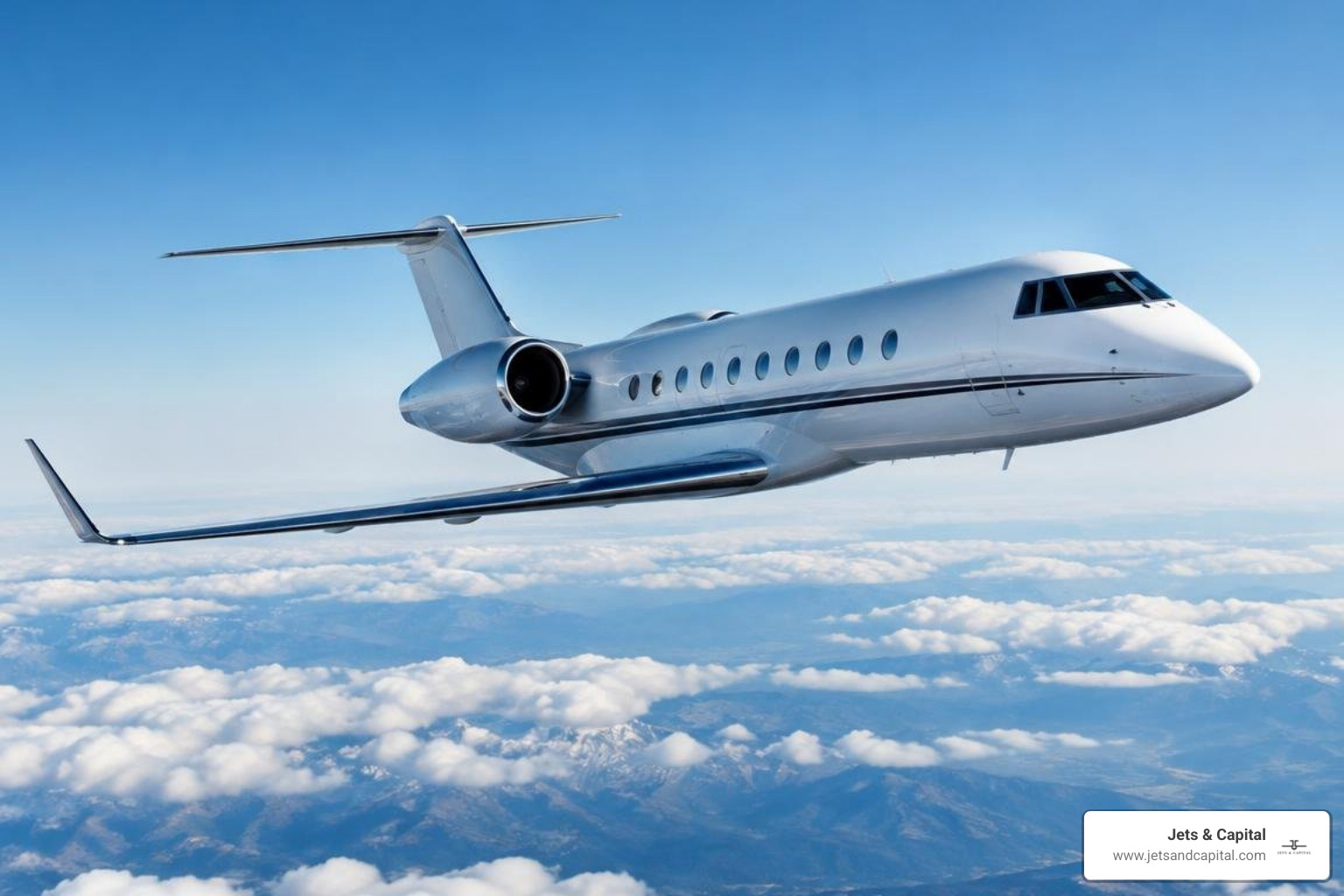
The highest flying business jets in production today are the Bombardier Global 8000, Gulfstream G800, and Dassault Falcon 10X, each certified to a maximum ceiling of 51,000 feet (FL510). Climbing past 45,000 feet into Flight Level 510 places an aircraft above nearly all atmospheric weather, commercial airline congestion, and turbulent air currents. In this rarefied air, air density drops significantly compared to sea level. Achieving sustained, stable flight at 51,000 feet requires specialized aerodynamic profiles, high aspect ratio wings, and precise thrust-to-weight management.
When an aircraft cruises at 51,000 feet, the thinner atmosphere creates less parasitic drag, allowing the airframe to glide through the upper stratosphere with exceptional fuel efficiency. However, operating near the aerodynamic boundaries of high-altitude flight demands careful control. The margin between an aircraft's high-speed buffet (overspeed Mach limit) and low-speed stall narrows—a phenomenon aviators call "coffin corner." Modern ultra-long-range jets utilize supercritical wing designs, active load alleviation, and sophisticated digital flight guidance systems to maintain wide, stable flight envelopes up to their maximum certified ceilings.
Advanced Propulsion and Digital Flight Controls
Reaching these extraordinary altitudes requires engines capable of delivering high thrust despite diminished oxygen levels. The latest crop of ultra-long-range flagships relies on bespoke powerplants engineered specifically for high-altitude thermodynamic efficiency:
- Rolls-Royce Pearl Series: Powering both the Gulfstream G800 (Pearl 700) and the Dassault Falcon 10X (Pearl 10X), these engines produce between 18,000 and 18,250 pounds of thrust. They feature 3D-printed combustor tiles, blisk fan technology, and advanced core aerodynamics that deliver a 5% jump in overall efficiency.
- GE Passport 20: Propelling the Bombardier Global 8000, each engine delivers 18,920 pounds of thrust, featuring a unified titanium blisk and high-pressure turbine cores built for high-Mach cruise profiles.
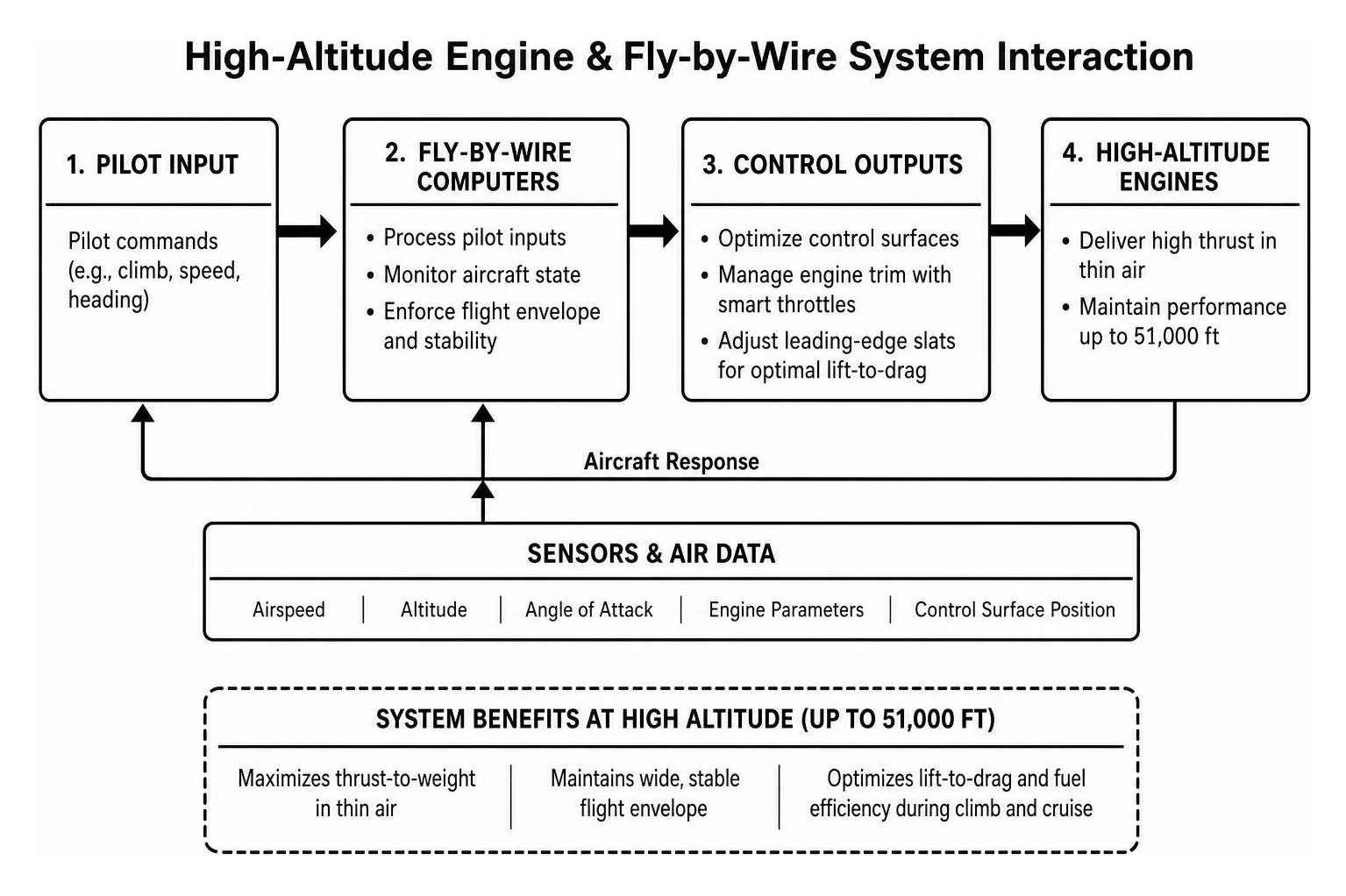
Fly-by-wire (FBW) digital flight control architectures translate pilot inputs through flight computers that automatically optimize control surfaces, manage engine trim with automated smart throttles, and adjust leading-edge slats for optimal lift-to-drag ratios during climbs and descents.
Cabin Pressurization and Environmental Control Systems
Flying at 51,000 feet creates a massive pressure differential between the outside atmosphere (where atmospheric pressure is barely 1.6 psi) and the interior cabin. Maintaining passenger wellness requires heavy-gauge fuselage engineering and responsive environmental control systems (ECS).
Standard commercial airliners typically maintain a cabin altitude of 6,000 to 8,000 feet. In contrast, modern business jets utilize advanced differential pressure systems capable of sustaining cabin altitudes below 3,000 feet at typical cruise levels, and well under 5,000 feet at FL510. When evaluating low cabin altitude on luxury private planes, lower physiological altitude directly minimizes blood-oxygen desaturation, dehydration, headaches, and physical fatigue on long missions.
Comparing the Highest Flying Business Jet Models
The ultra-long-range sector features three primary clean-sheet or next-generation flagships engineered for FL510 operation: the Bombardier Global 8000, the Gulfstream G800, and the Dassault Falcon 10X.
| Aircraft Model | Max Certified Altitude | Maximum Operating Speed | Maximum Range (NBAA IFR) | Cabin Altitude at FL410 / Max Cruise | Cabin Volume |
|---|---|---|---|---|---|
| Bombardier Global 8000 | 51,000 ft | Mach 0.95 | 8,000 nm | 2,691 ft / ~4,500 ft | 2,410 cu ft |
| Gulfstream G800 | 51,000 ft | Mach 0.925 | 8,000 nm | 2,916 ft / ~4,850 ft | 2,138 cu ft |
| Dassault Falcon 10X | 51,000 ft | Mach 0.925 | 7,500 nm | ~3,000 ft / ~4,200 ft | 2,780 cu ft |
Bombardier Global 8000: The Highest Flying Business Jet with Mach 0.95 Capability
The Bombardier Global 8000 holds a commanding position among modern production aircraft by combining a 51,000-foot ceiling with an unprecedented maximum operating speed of Mach 0.95. Demonstrating its transcontinental capability, recent Bombardier Global 8000 speed records established new benchmarks for civil aviation.
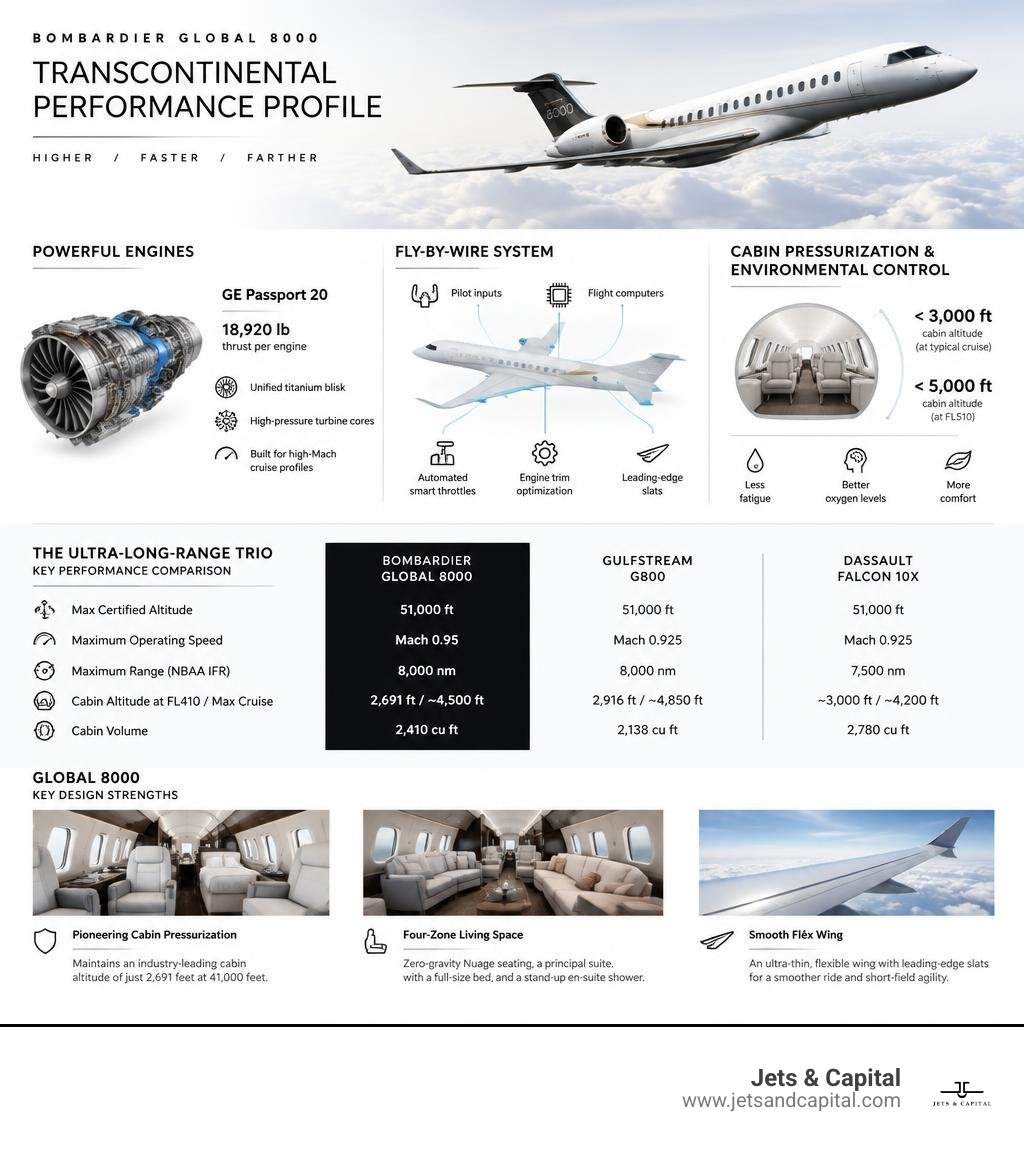
Key design strengths of the Global 8000 include:
- Pioneering Cabin Pressurization: Maintains an industry-leading cabin altitude of just 2,691 feet when cruising at 41,000 feet.
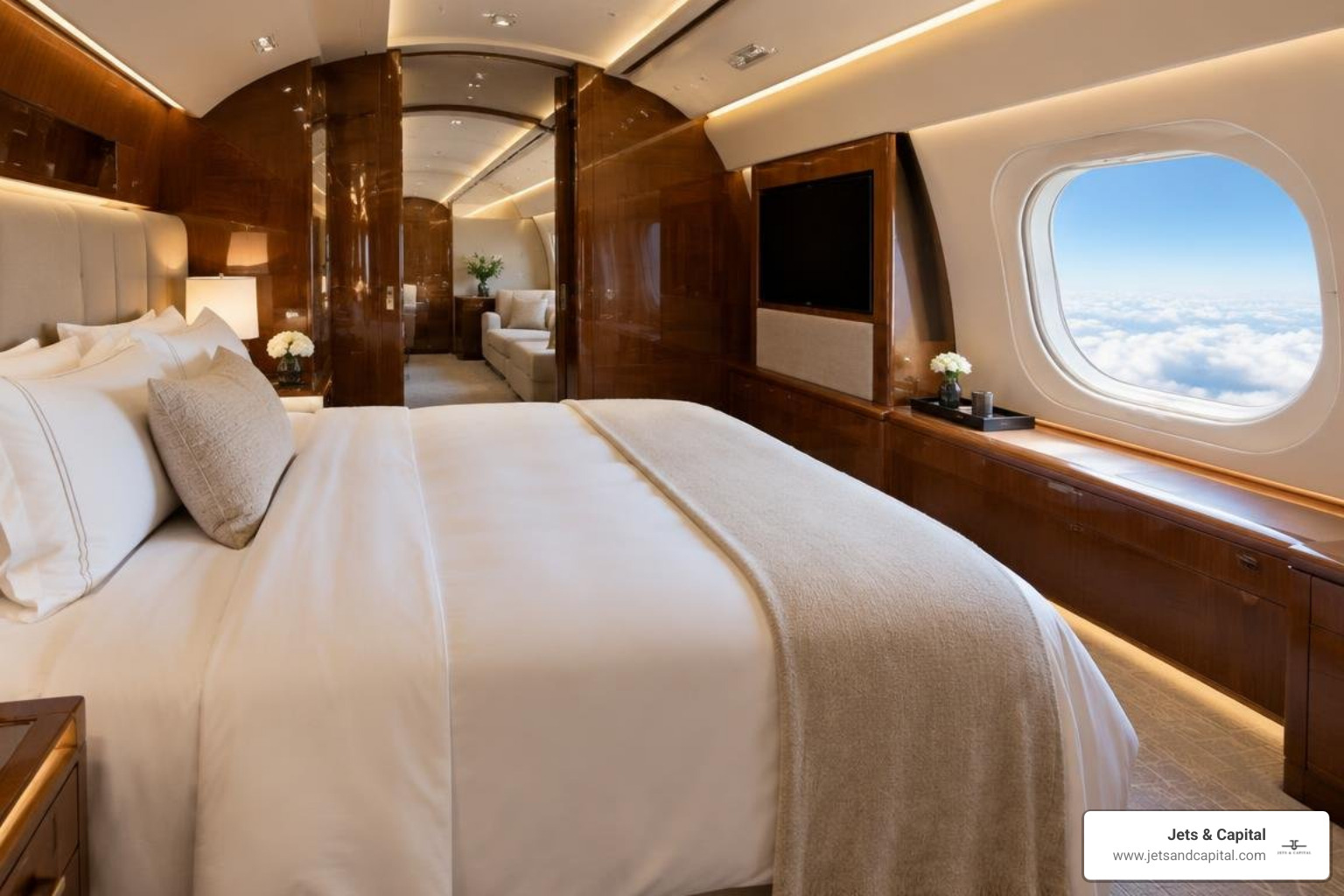
- Four-Zone Living Space: Outfitted with zero-gravity Nuage seating, an available principal suite with a full-size bed, and a stand-up en-suite shower.
- Smooth Flĕx Wing: An ultra-thin, flexible wing design featuring leading-edge slats that absorbs turbulence and enables access to challenging runways, matching fastest private jet in the world performance data with real-world short-field agility.
Gulfstream G800: Ultra-Long-Range High-Altitude Cruiser
Designed to travel up to 8,000 nautical miles at Mach 0.85 or cover 7,000 nautical miles at a rapid Mach 0.90 high-speed cruise, the Gulfstream G800 delivers exceptional non-stop reach. Verified by standard Gulfstream G800 specifications, the aircraft combines its 51,000-foot service ceiling with Gulfstream’s aerodynamically refined wing and low-drag nose profile.
Operational highlights include:
- Symmetry Flight Deck: Integrates active control sidesticks with dual head-up displays featuring Gulfstream's Combined Vision System (EVS + SVS).
- Signature Panoramic Windows: Sixteen oversized oval windows flood the cabin with natural light while providing exterior views from high flight levels.
- Clean Air Technology: The environmental system delivers 100% fresh, non-recirculated air through a plasma-ionization purification cycle, establishing it as one of the best business jets for global travel.
Dassault Falcon 10X: Widebody Luxury in a Highest Flying Business Jet
Dassault’s flagship takes a widebody approach to high-altitude performance. Detailed in the Dassault Falcon 10X widebody overview, the aircraft features an expansive cabin cross-section measuring 109 inches wide and 80 inches tall, providing a total volume of 2,780 cubic feet.
Distinct engineering characteristics encompass:
- Fighter-Derived Aerodynamics: Features high-aspect-ratio carbon-fiber composite wings equipped with advanced high-lift devices derived directly from Dassault's Rafale fighter program.
- NeXus Flight Deck: Incorporates full touchscreen avionics with a single-lever smart throttle architecture that manages both engines simultaneously through automated flight envelopes.
- FalconEye Vision System: Combines synthetic, tactical terrain databases with high-definition thermal imaging cameras to support zero-visibility approaches at elevated airfields.
Cabin Altitude, Interior Volume, and Route Capability
Comparing business aviation flagships requires analyzing how high-altitude aerodynamics balance against internal passenger space and real-world airfield access when analyzing top models among the best jets in the world.
Cabin Altitude and Passenger Wellness on Intercontinental Routes
When an aircraft covers long routes—such as San Francisco to Dubai or New York to Tokyo—the pressure altitude inside the fuselage dictates how well passengers sleep, work, and recover from jet lag.
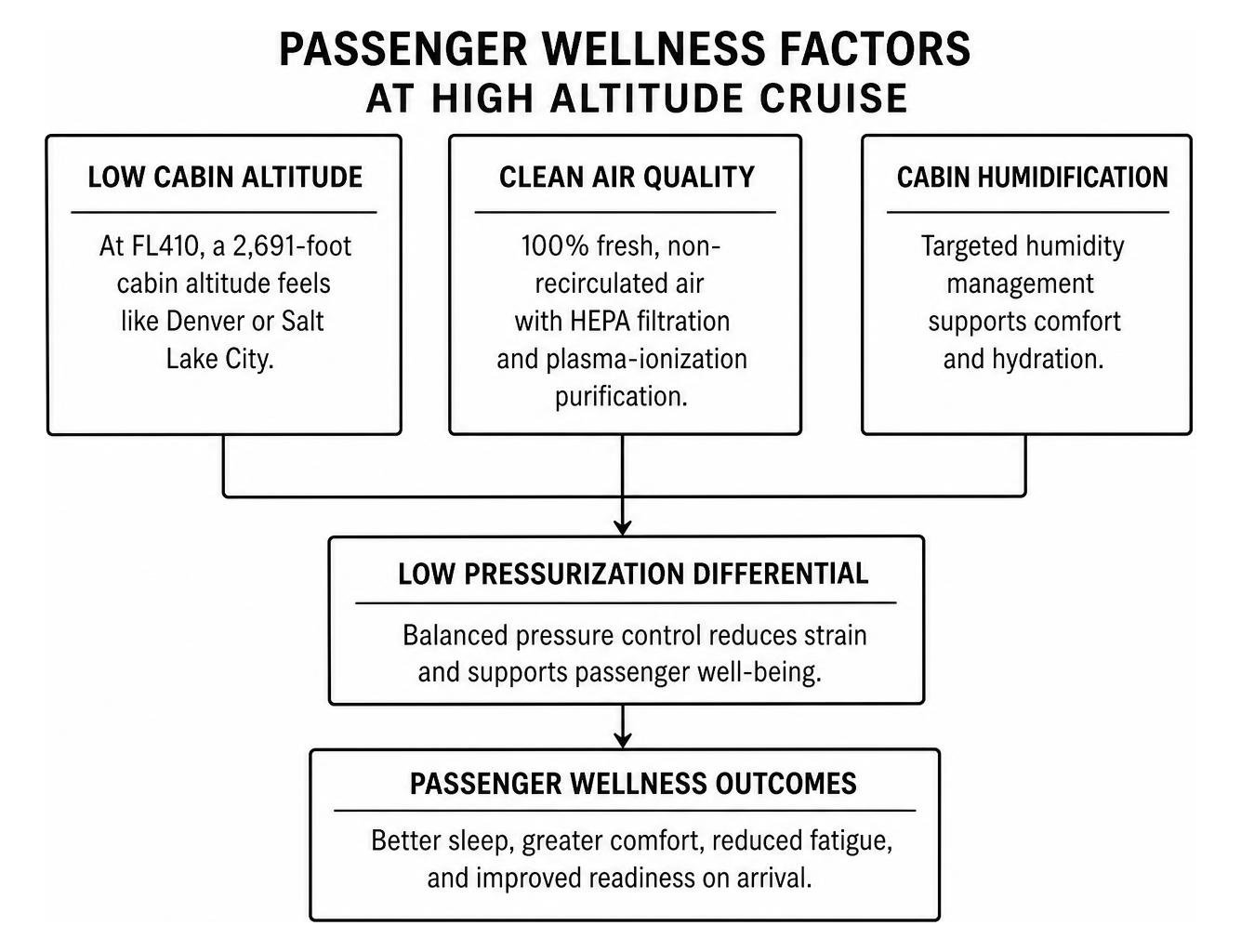
At an initial cruise altitude of FL410, an aircraft maintaining a 2,691-foot cabin altitude exposes the human body to roughly the same atmospheric pressure as walking through Denver or Salt Lake City. This represents a noticeable improvement over older legacy aircraft, which subject passengers to cabin altitudes exceeding 6,000 feet. The combination of HEPA filtration, targeted cabin humidification, and low pressurization differentials ensures travelers arrive alert and ready for business meetings immediately upon arrival.
Runway Performance and High-Altitude Airport Agility
High cruise ceilings must also pair with balanced field length capabilities. Reaching mountainous destinations in locations like Aspen, Colorado, or high-elevation international hubs requires aircraft that perform well in thin air on the ground.
- Leading-Edge Slats: Both the Global 8000 and Falcon 10X utilize actuated leading-edge slats on their wings, allowing for steep approach angles, low final approach speeds (under 115 knots), and takeoff distances under 6,000 feet at maximum takeoff weight.
- Braking and Ground Deceleration: The Gulfstream G800 features predictive landing performance software integrated into its fly-by-wire braking systems, calculating exact stopping margins on wet, icy, or shortened mountain strips.
Frequently Asked Questions About High-Altitude Business Aviation
What is the maximum certified altitude for modern business jets?
The maximum certified ceiling for modern purpose-built civil business aircraft is 51,000 feet (FL510). This limit is governed by strict regulatory safety thresholds regarding cabin depressurization protection, structural fuselage design limits, and engine relight envelopes in sub-zero atmospheric conditions.
Why do business jets cruise higher than commercial airliners?
Commercial airliners generally cruise between 31,000 and 41,000 feet (FL310–FL410) due to airframe weight profiles, passenger cabin volume constraints, and congested air traffic lanes. Business jets possess higher thrust-to-weight ratios and custom wing geometries, allowing them to climb directly over commercial routes. This avoids airline holding patterns, circumvents tropospheric storm cells, and secures direct point-to-point routing.
Which business jet offers the lowest cabin altitude at cruising levels?
The Bombardier Global 8000 delivers the lowest cabin altitude in civil production aviation, maintaining an altitude of 2,691 feet while cruising at 41,000 feet. The Gulfstream G800 follows closely behind, maintaining a cabin altitude under 3,000 feet at similar flight levels.
Conclusion: Selecting the Ultimate High-Altitude Corporate Jet
Choosing an ultra-long-range jet depends on mission priorities across speed, non-stop range, cabin volume, and runway performance:
- For maximum speed and lowest cabin altitude: The Bombardier Global 8000 offers an unmatched combination of Mach 0.95 performance and a 2,691-foot cabin altitude.
- For long non-stop legs with proven flight deck ergonomics: The Gulfstream G800 provides dependable 8,000-nautical-mile range and intuitive Symmetry avionics.
- For maximum interior living space and widebody customization: The Dassault Falcon 10X delivers a 2,780-cubic-foot cabin layout with military-grade flight controls.
For comprehensive aircraft acquisition data and market analysis, review our corporate jet buying guide 2026 insights.
At Jets & Capital, we curate private, invite-only networking summits for family offices, institutional investors, and UHNWIs in private jet hangars across premier financial destinations, including Miami, Palm Beach, New York, Dallas, Las Vegas, Salt Lake City, and our upcoming Super Bowl Edition in San Francisco, California. With a strict vetting process ensuring an 85% asset-allocator attendance rate, we connect high-level capital with world-class opportunities.
Ready to connect with leading aviation investors and market leaders? Explore the pinnacle of luxury corporate jets and request your invitation to our next hangar summit today.
