
The Evolution of Direct Investing and Venture Capital for Family Offices
How Family Offices Are Reshaping Venture Capital in 2026

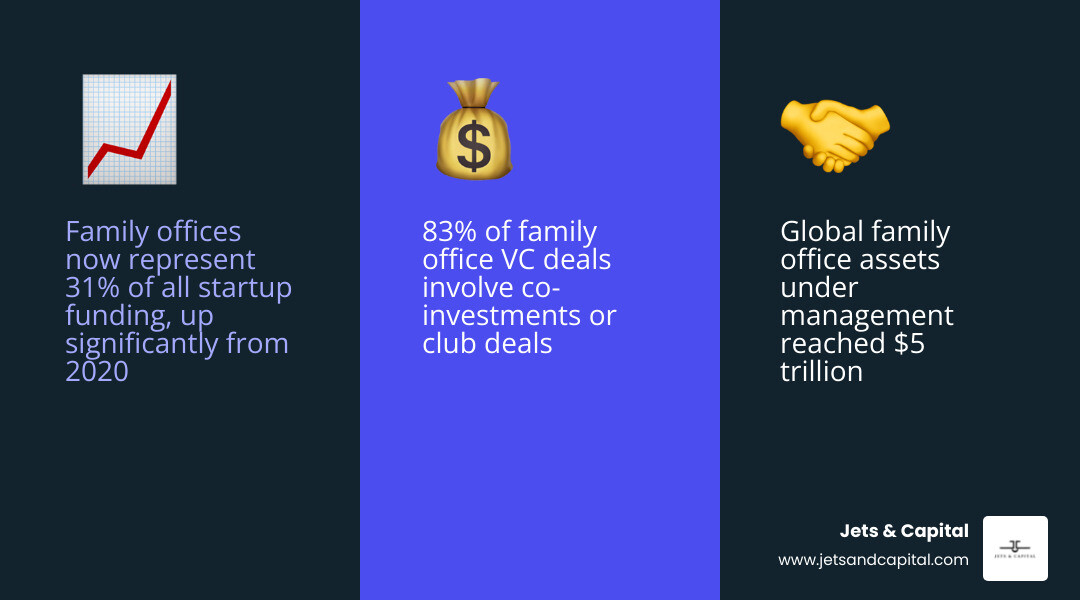
Family office venture capital has become one of the most powerful forces in private markets today. Family offices now account for roughly 31% of all startup funding — nearly one in three dollars flowing into the innovation economy.
Here's a quick snapshot of what that means in practice:
| Key Fact | Data Point |
|---|---|
| Global family office AUM | $5 trillion |
| Share of startup funding | ~31% |
| Average VC allocation | 6% of portfolio |
| Private market exposure | 44–54% of assets |
| Co-investment/club deal rate | 83% of startup deals |
| Family offices investing in AI | 78–83% |
| Venture split (funds vs. direct) | 46% funds / 54% direct |
This isn't a fringe trend. Family offices have quietly evolved from traditional wealth stewards — focused on preserving generational assets — into active co-architects of the venture ecosystem. They bring something most institutional investors simply can't: patient, flexible capital with a decades-long time horizon and no fund lifecycle pressure.
The result? Founders get more aligned backers. Emerging managers get access to sticky, relationship-driven capital. And family offices get exposure to asymmetric returns that public markets rarely offer.
This guide breaks down exactly how this shift is happening, why it's accelerating, and what it means for both family offices and the managers trying to reach them.
I'm Jordan Hutchinson, a family office principal with deep roots in private equity — including a founding role in Bridge Investment Group (NYSE: BRDG) — and hands-on experience deploying family office venture capital across multiple sectors and deal structures. Through Jets & Capital, I've built an exclusive network where family offices and elite fund managers connect and transact in curated, high-trust environments.
The Rise of Family Office Venture Capital in 2026
As we navigate through 2026, the landscape of private wealth has undergone a massive transformation. We are no longer seeing family offices sit on the sidelines as passive Limited Partners (LPs). With over $5 trillion in global assets under management, these entities have moved to the center of the innovation economy.

Historically, family offices were built for wealth stewardship—protecting what was already made. Today, they are engines of wealth creation. By contributing nearly a third of all startup funding, they have proven that they are willing to take on the risks of the "frontier" to secure the rewards of the future. You can see this in the strategies of UHNW family offices across hubs like San Francisco and Miami. Organizations like SherVentures - Family Office Venture Capital exemplify this shift, focusing on disruptive founders and rapid feedback cycles that mirror the agility of the startups they back.
Defining the Difference: Family Offices vs. Traditional VC
While both invest in startups, the "DNA" of the capital is fundamentally different. Traditional VC firms manage third-party money with a ticking clock—usually a 10-year fund lifecycle. They need exits (IPOs or acquisitions) within a specific window to return capital to their own investors.
In contrast, family office venture capital is "patient capital." Because it is the family’s own money, we don't have to sell a winner just because a fund is expiring. This allows for a much longer-term perspective on strategic guidance and value creation. While a VC firm provides a rigorous institutional framework, a family office often offers a more personal, operator-led brand of support. For a deeper dive, check out our UHNW family ultimate guide.
Why Family Offices are Accelerating VC Allocations
The acceleration we’re seeing in 2026 is driven largely by a generational shift. Next-gen principals, often more tech-savvy and mission-driven than their predecessors, are taking the reins. They aren't satisfied with 4% returns from municipal bonds; they want to be part of the next AI revolution or climate tech breakthrough.
Venture capital offers the highest return potential in the private market stack, and it allows families to have a direct impact on industries they care about. This diversification is no longer a luxury—it’s a requirement for maintaining purchasing power in a rapidly evolving global economy.
Strategic Allocation and Investment Structures
How are families actually moving this money? It’s not just about writing one-off checks. It’s about sophisticated portfolio construction that balances risk, reward, and access.
| Feature | Direct Investment | Venture Fund (LP) | Co-Investment / SPV |
|---|---|---|---|
| Control | High | Low | Medium |
| Fees | None | 2% Mgmt / 20% Carry | Reduced or None |
| Diversification | Low (Single Company) | High (Portfolio) | Targeted |
| Effort | High (Diligence/Board) | Low (Passive) | Medium |
Currently, the average global allocation to VC sits at 6%, but that number is often much higher for families in tech hubs like San Francisco or New York. To manage this, many families are seeking high-quality family office deal flow to ensure they see the best opportunities first.
Structuring Family Office Venture Capital Deals
In 2026, the "hybrid model" is king. About 46% of venture capital investments go into funds, while 54% are direct investments. This allows families to get broad market exposure through professional managers while still "cherry-picking" specific deals where they have high conviction or industry expertise. Firms like ISTCAPITAL | Single-Family Office use this operator’s mindset to blend fund investing with direct involvement, ensuring they aren't just writing checks but are actually adding value.
The Power of Co-Investments, SPVs, and Club Deals
One of the most significant trends we’ve tracked is that 83% of family office startup deals now involve co-investments or club deals. Why? Because venture is a team sport. By using Special Purpose Vehicles (SPVs), families can pool resources with other offices to lead larger rounds, share the heavy lifting of due diligence, and reduce the fee burden associated with traditional funds. This "institutional-grade" approach allows even smaller offices to play in the big leagues alongside major VC firms.
Sector Priorities and Geographic Preferences
Where is the money going? In 2026, the focus has shifted from "software eating the world" to "intelligence and atoms."
Frontier Tech: AI, Climate Tech, and Digital Assets
Artificial Intelligence is the undisputed heavyweight, with 78–83% of family offices planning to allocate capital here in 2026. But it’s not just about generative AI; it’s about the infrastructure behind it. Similarly, climate tech and decarbonization have moved from "impact" buckets to core venture buckets as the economic reality of the energy transition takes hold. We also see significant interest in digital assets and blockchain infrastructure as foundational layers for the future of finance. Companies like EE Ventures - Building Generational Wealth focus on these durable economics across sectors like healthcare and SaaS. You can find more specific San Francisco family office insights on our blog.
Geographic Deployment: US, Europe, and Asia
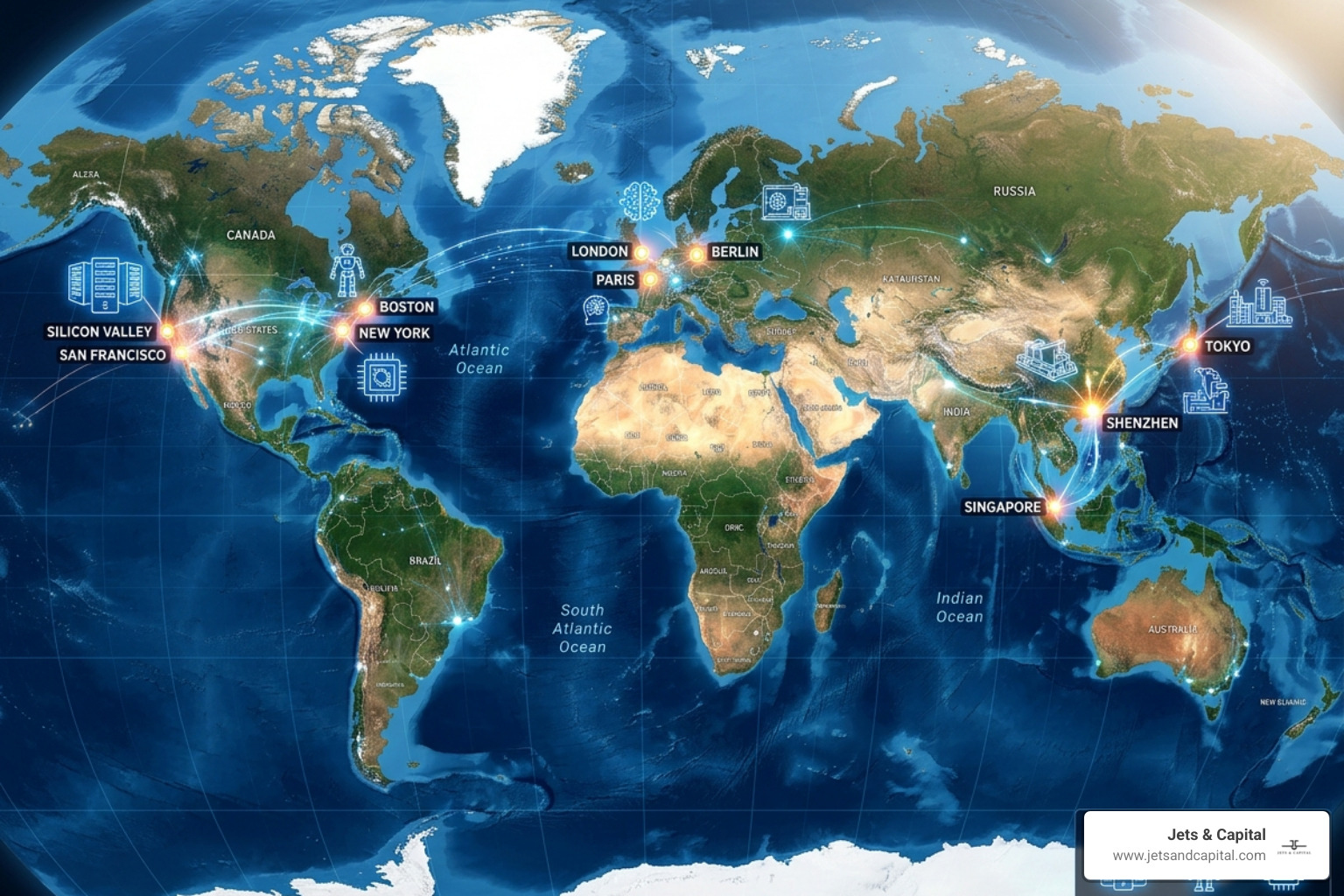
The US remains the primary destination, capturing about 60% of family office VC deployment. However, we see 15-20% flowing into Europe—particularly in deep tech and fintech—and another 15-20% into Asian innovation hubs. This geographic spread requires sophisticated cross-border governance to manage tax and regulatory differences, but it provides a necessary hedge against regional economic shifts.
Operational Excellence: Due Diligence and Decision-Making
Investing in venture capital isn't just about picking winners; it’s about having a process that doesn't break.
The Step-by-Step Process for Getting Started
For families new to the space, the journey usually looks like this:
- Risk Appetite Assessment: Determining how much of the portfolio can be "locked up" for 7-10 years.
- Strategy Definition: Deciding whether to be a generalist or focus on a specific sector like HealthTech or AI.
- Network Referrals: Leveraging groups like Jets & Capital to find vetted opportunities.
- Initial Capital Deployment: Starting with funds to build knowledge before moving into direct deals.
- Knowledge Building: Attending venture capital conferences to stay ahead of the curve.
Best Practices for Governance and LP Management
Decision-making in a family office can be agile, but it must be professional. We recommend establishing formal investment committees and utilizing thematic research. Transparency is key—whether you are a single-family office in Palm Beach using Family Office Services - Bessemer Trust or a Miami-based firm like JC Venture Capital — Miami-Based Family Office, having institutional-grade reporting ensures that all stakeholders are aligned.
Managing Risks and Liquidity in Private Markets
Venture capital is high-risk, high-reward. With a 75% failure rate for venture-backed companies, families must be prepared for the reality that many bets will go to zero.
Addressing the Liquidity Concern
Liquidity is the top concern for family offices in 2026. To manage this, we are seeing an increase in:
- Secondary Markets: Selling stakes in companies before an IPO to recoup initial capital.
- NAV-based Financing: Using the value of the portfolio to secure loans for liquidity.
- Early DPI Strategies: Prioritizing fund managers who have a track record of returning capital (Distributed to Paid-In capital) early in the fund life.
Our early stage investor guide provides more details on navigating these waters.
The Future of Family Office Venture Capital
Looking forward, WealthTech adoption will continue to streamline how we source and track deals. AI-driven sourcing tools are already helping offices like 1932 Capital Management | Strategic Investments identify family and founder-owned businesses that fit their multi-generational legacy.
How Emerging Managers Can Build Long-Term LP Relationships
If you are a fund manager looking to attract family office venture capital, you need to understand that this is a relationship business, not a transactional one.
Positioning for Success with Family Allocators
Families don't just buy your "track record"; they buy your narrative and your values.
- Narrative-Driven Pitches: Explain why you are doing this, not just the IRR.
- Jargon-Free Communication: Avoid "VC-speak." Be clear and direct.
- Educational Value: Can you help the family learn about a new sector?
- Next-Gen Engagement: If you can win over the next generation, you’ve secured a partner for decades.
Groups like House Of Ventures emphasize this network-based operating system for driving returns. We also facilitate this through family office networking events.
Ongoing Engagement and Transparency
Once you have the capital, the work begins. Quarterly letters should be honest about challenges, not just successes. Offering co-investment deal flow is one of the best ways to keep a family office engaged and prove that you are a true partner.
Frequently Asked Questions about Family Office VC
What is the typical check size for a family office in venture capital?
Check sizes vary wildly based on the AUM of the office. Smaller offices might write checks from $25k to $250k through SPVs, while larger "institutional" family offices can easily deploy $10M to $50M+ in a single growth round or fund commitment.
How does family office decision-making differ from traditional VC firms?
Traditional VCs have a rigid investment committee (IC) process and a mandate to deploy capital within a set period. Family offices are often more agile—decisions can be made in weeks rather than months—but they are also more "emotional" in the sense that the investment must align with the family’s broader legacy and values.
Why are co-investments becoming the default for family offices?
Co-investments allow families to bypass the "2 and 20" fee structure of traditional funds for their highest-conviction deals. It also gives them a "seat at the table" and more direct influence over the company's trajectory.
Conclusion
The evolution of family office venture capital has turned the "quiet money" of the past into the "catalytic capital" of the future. By 2026, the lines between family offices and venture firms have blurred, creating a more dynamic, patient, and founder-friendly ecosystem.
At Jets & Capital, we sit at the intersection of this evolution. We organize exclusive, invite-only networking events in private jet hangars—from Las Vegas to Palm Beach—ensuring a strict vetting process where 85% of attendees are allocators. This creates a high-trust environment for relationship-driven deal-making that you won't find at a standard conference.
Ready to connect with the world's leading family offices and investors? Book a discovery call on our calendar and join us at our next hangar event.
