
All About Private Event Venues: Find Your Perfect Space
Find the Right Venue for Private Events
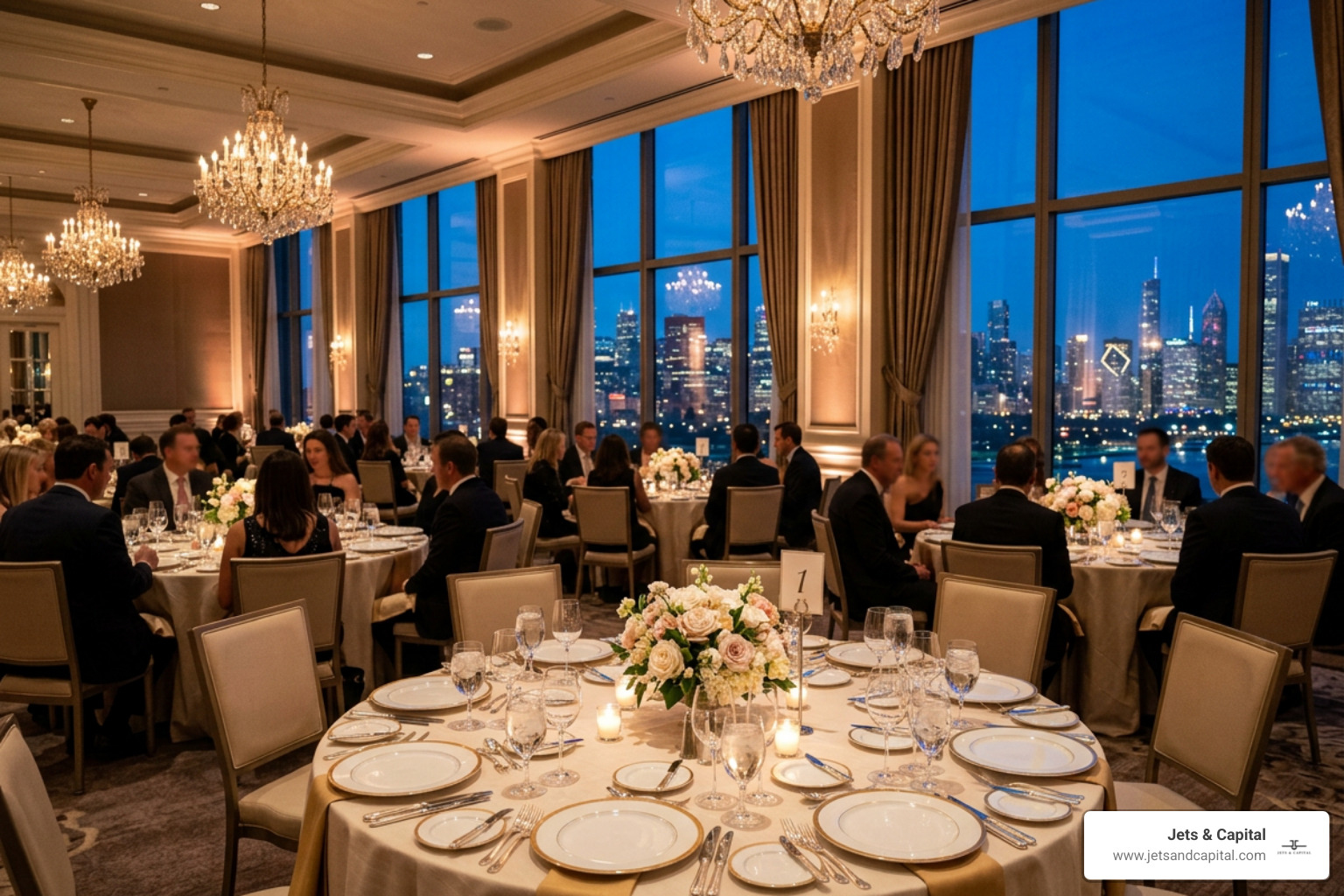
The best venues for private events match your guest count, event goal, privacy needs, and service requirements. Start by deciding whether the gathering needs a seated dinner, cocktail reception, presentation space, or a mix of all three. Then choose a venue with the right capacity, reliable food and beverage service, strong AV support, and an arrival experience that feels effortless.
For high-value business gatherings, the room matters as much as the guest list. A private dining room can support focused conversation. A penthouse, historic clubhouse, rooftop, or hangar can create a stronger sense of occasion. The goal is not simply to find enough square footage. It is to create an environment where guests can connect without distractions.
Jordan Hutchinson is the founder of Jets & Capital and has produced private events for high-net-worth individuals, family offices, and investors in settings ranging from private jet hangars to Formula 1 races and landmark properties. His experience centers on building curated environments designed for meaningful relationships, not crowded rooms or constant fundraising pitches.
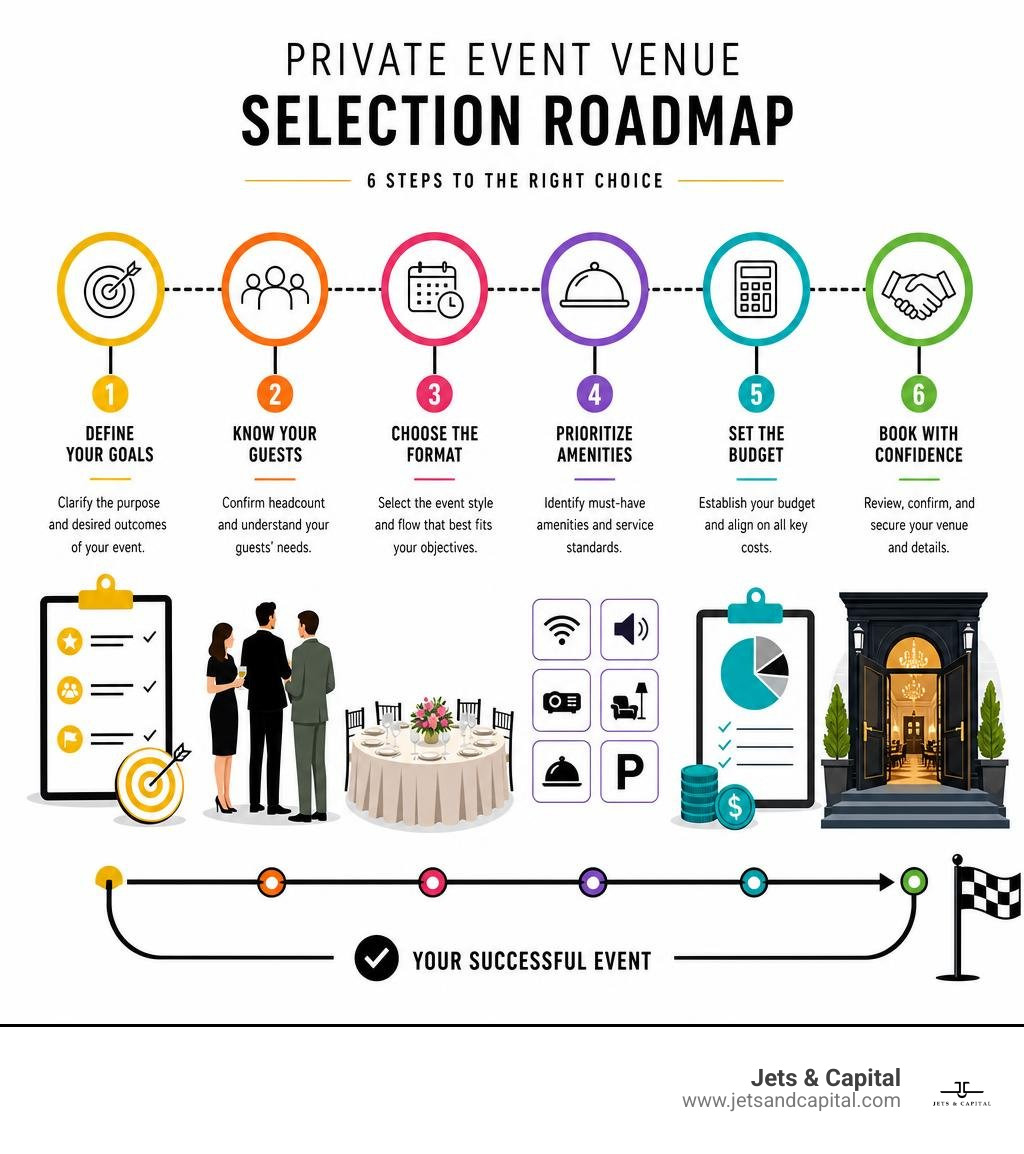
Primary Categories and Formats of Private Events
Selecting the right space starts with understanding your event's primary objective and spatial dynamics. Venue formats range from semi-private dining nooks separated by acoustic drapes to complete architectural takeovers. When you privatize a space, you take command of the guest flow, lighting, culinary timing, and acoustic environment.
Whether you are hosting an intimate investor circle in a 2,000-square-foot downtown penthouse or an enterprise celebration across multi-tiered lounges, your choice of layout directly dictates how attendees interact.
| Venue Type | Typical Guest Capacity | Best Suited Event Formats | Key Structural Advantages |
|---|---|---|---|
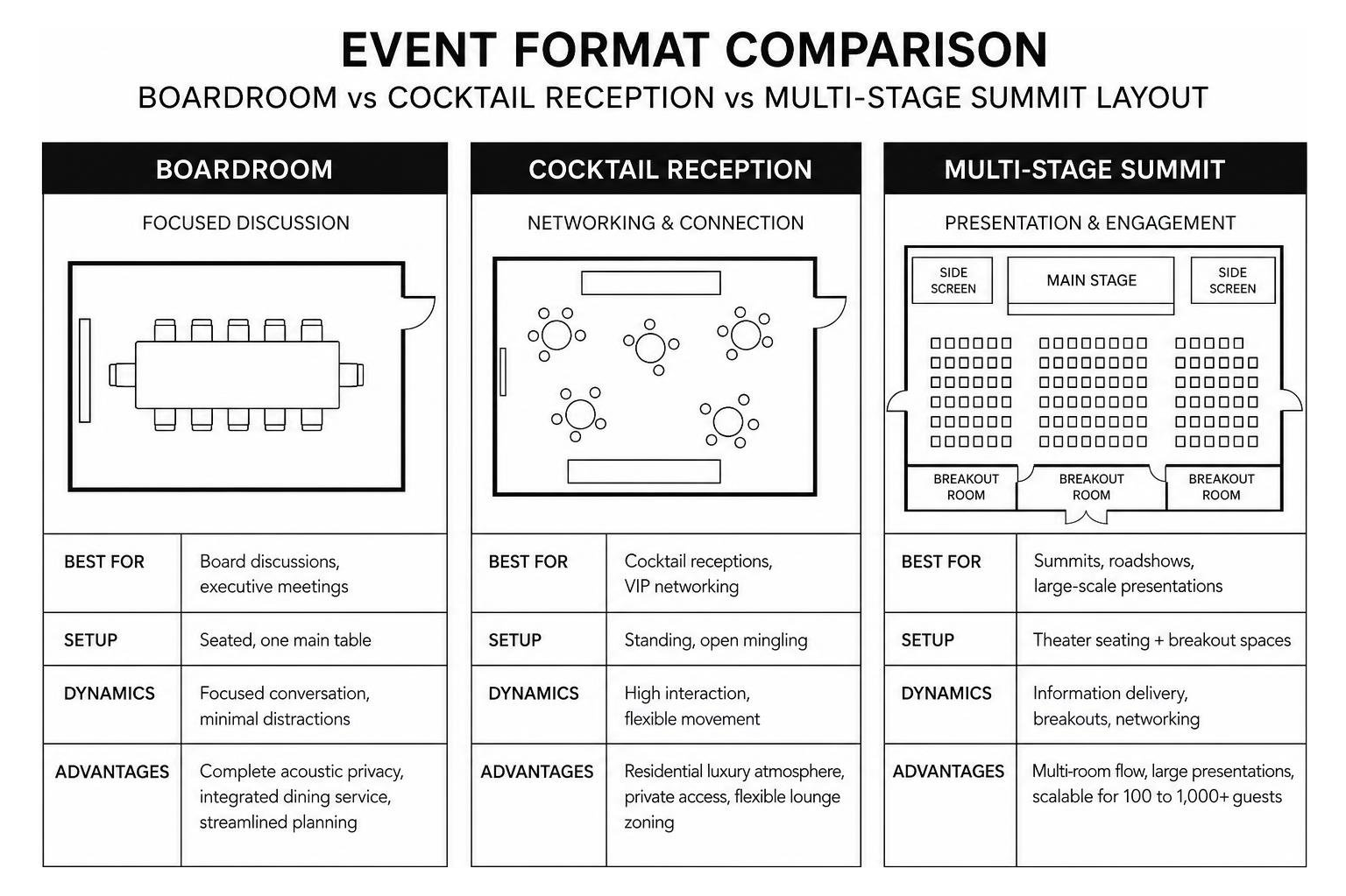
| Private Dining Room (PDR) | 10 – 45 guests | Seated dinners, executive roadshows, board discussions | Complete acoustic privacy, integrated dining service, streamlined planning |
| Boutique Penthouse / Salon | 20 – 50 guests | Investor salons, product debuts, VIP cocktail receptions | Residential luxury atmosphere, private elevator access, flexible lounge zoning |
| Historic Clubhouse / Stateroom | 30 – 150 guests | Formal banquets, corporate retreats, milestone celebrations | Architectural prestige, heritage aesthetics, multi-room breakout spaces |
| Mega-Venue / Stadium Club | 100 – 1,000+ guests | Industry galas, national summits, multi-zone brand activations | Massive digital branding assets, expansive indoor-outdoor concourses, on-site staging |
| Private Jet Hangar | 75 – 350+ guests | Allocator summits, luxury previews, capital networking | Soaring ceilings, tarmac access, blank-canvas customization |
Corporate Gatherings and High-Stakes Business Meetings
Corporate venues must balance elevated hospitality with functional productivity. When planning executive board sessions, partner retreats, or deal sourcing events, environmental distractions must be zero.
A high-stakes business dinner requires dedicated presentation screens, discreet staff service that does not interrupt keynote remarks, and acoustic design that keeps sensitive conversations contained.
For large-scale enterprise summits, organizers frequently look beyond standard hotel ballrooms. World-class destinations provide stadium event spaces that feature over 35 programmable environments, from exclusive founders clubs to broad concourses capable of hosting 100 to over 1,000 attendees.
These massive properties allow companies to place high-definition presentations on ribbon boards or massive central video screens, transforming corporate roadshows into broadcast-grade experiences.
Milestone Social Celebrations and Exclusive Receptions
Social gatherings—such as anniversary galas, bespoke receptions, and luxury lifestyle events—call for atmospheric warmth and visual storytelling. Rather than sterile conference halls, these functions shine in historic landmark spaces, private member clubs, and luxury lofts.
In urban hubs, organizers often choose intimate, high-end private dining rooms in Manhattan to combine architectural heritage with world-class hospitality. For instance, spaces featuring soaring vaulted ceilings, stained glass accents, or private street-level elevator entryways set an immediate tone of prestige.
Balancing standing cocktail receptions with seated multi-course service gives guests the freedom to mingle before sitting down for a curated meal.
Key Features and Venue Selection Criteria
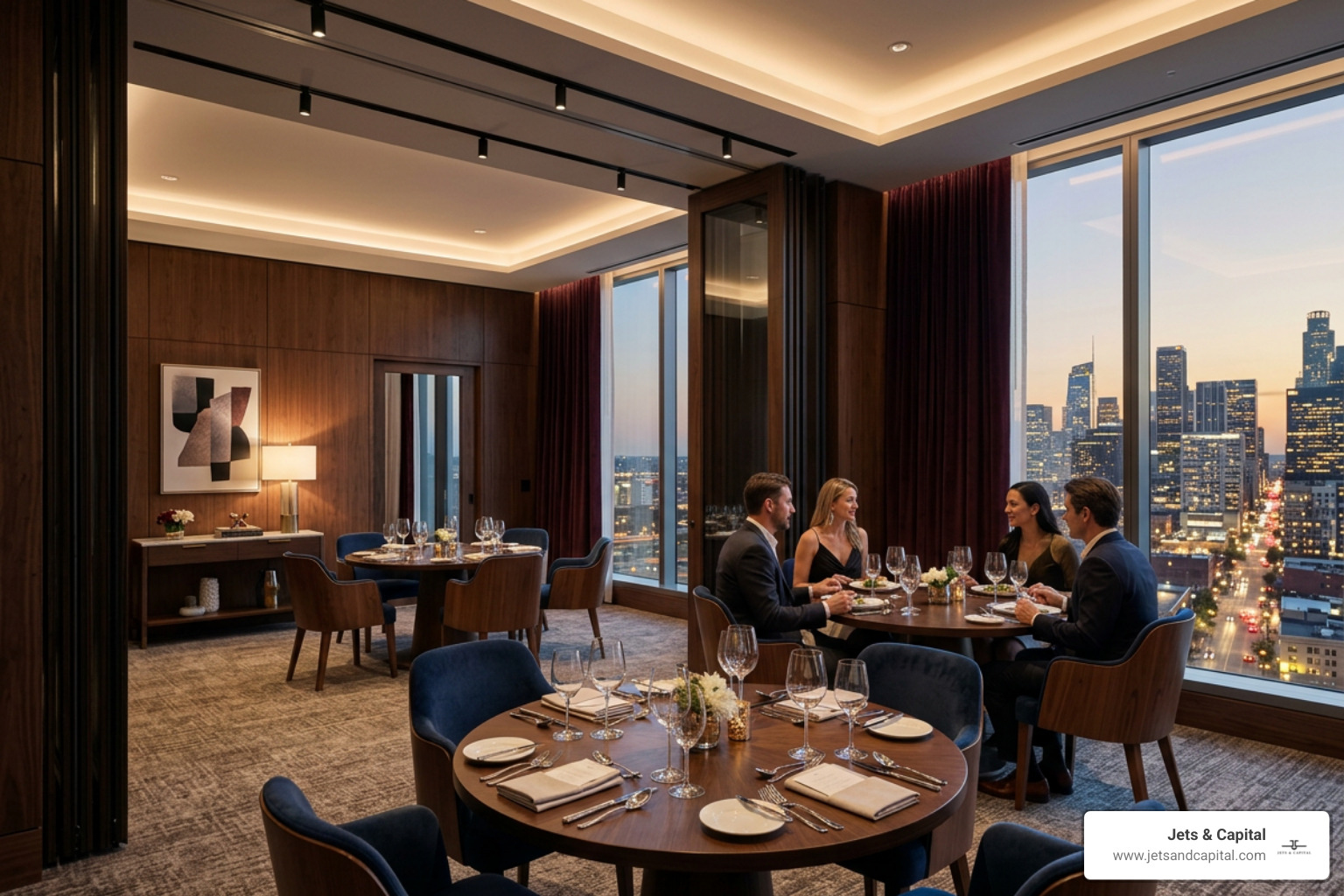
Evaluating a prospective space requires looking beyond aesthetic photos online. A successful event relies on functional infrastructure: spatial flow, catering execution, audiovisual capability, and guest privacy.
When vetting private spaces across key hubs like San Francisco, Dallas, Miami, or Palm Beach, look for clear operational separation between your guests and the general public.
Spatial Layouts and Capacity Management
Capacity is never a single static number. A venue that comfortably accommodates 50 guests for a standing cocktail mixer might only seat 30 guests for a multi-course dinner.
To optimize space planning:
- Analyze Seated vs. Standing Limits: A room holding 146 seated diners often accommodates up to 220 standing attendees. Always verify both maximum capacities.
- Utilize Modular Partitions: Steel-framed glass walls, acoustic curtains, and sliding air walls allow you to partition a 80-guest room into dual 40-guest salons, maintaining energy without feeling empty.
- Incorporate Indoor-Outdoor Flow: Spaces with connected terraces allow guests to step outside without fragmenting the party.
- Check Minimum Guest Thresholds: Many private venues require a 20-guest minimum for dedicated private dining spaces, scaling up to strict headcount tiers for complete buyouts.
Bespoke Catering and Private Chef Integration
Exceptional food anchors memorable gatherings. High-tier private venues provide direct access to an executive culinary team or facilitate full private chef catering to produce tailored tasting menus.
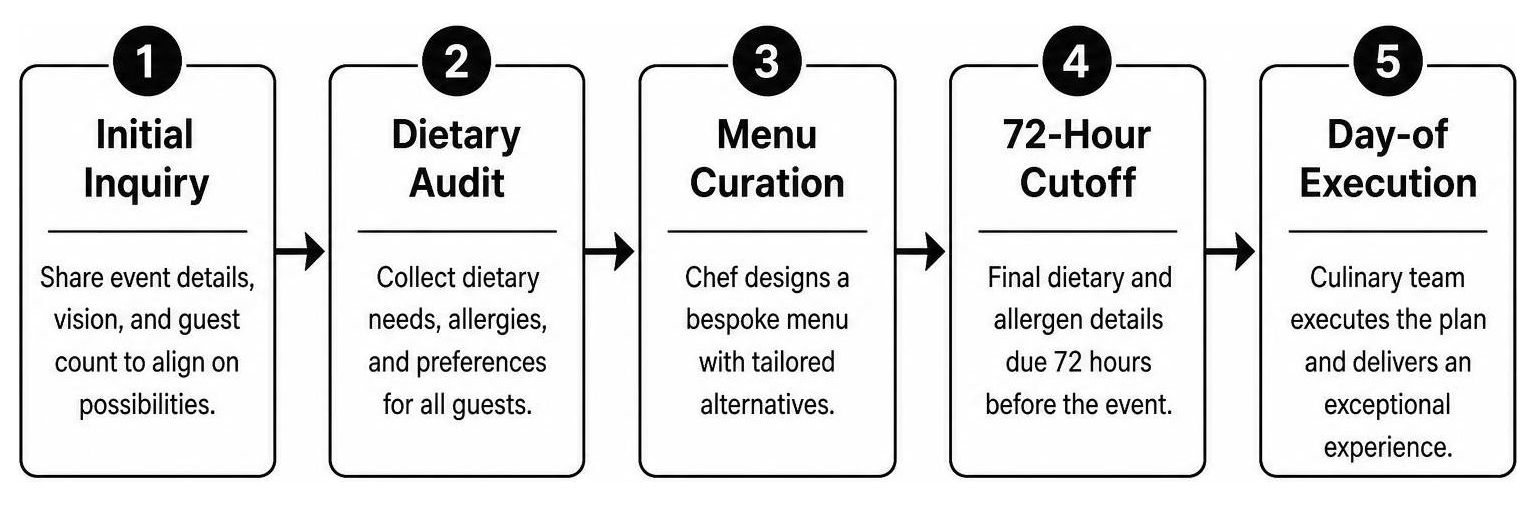
For seated private events, family-style sharing platters with prime cuts and seasonal seafood encourage organic interaction across the table. For executive banquets, multi-course plated tasting menus paired with sommelier-selected vintages offer a structured, refined flow.
Always enforce a strict 72-hour cutoff window for final dietary and allergen submissions, giving the culinary staff adequate prep time to craft personalized alternatives for every attendee.
Audiovisual Infrastructure and Technology for Private Events
Technical glitches instantly deflate high-stakes meetings. Corporate events require enterprise-grade Wi-Fi, low-latency display screens, multi-channel wireless microphones, and dedicated on-site sound engineering.
Modern spaces increasingly offer integrated digital screens, surround-sound audio systems, and hybrid presentation tools. If you are producing an investor gathering, test video feeds and wireless screen-sharing protocols during your initial walkthrough.
For evening social functions, ensure the venue's lighting and background audio can be zoned independently, keeping presentation areas bright and clear while lounge areas retain an intimate glow.
Planning Timelines, Budgets, and Execution Strategies

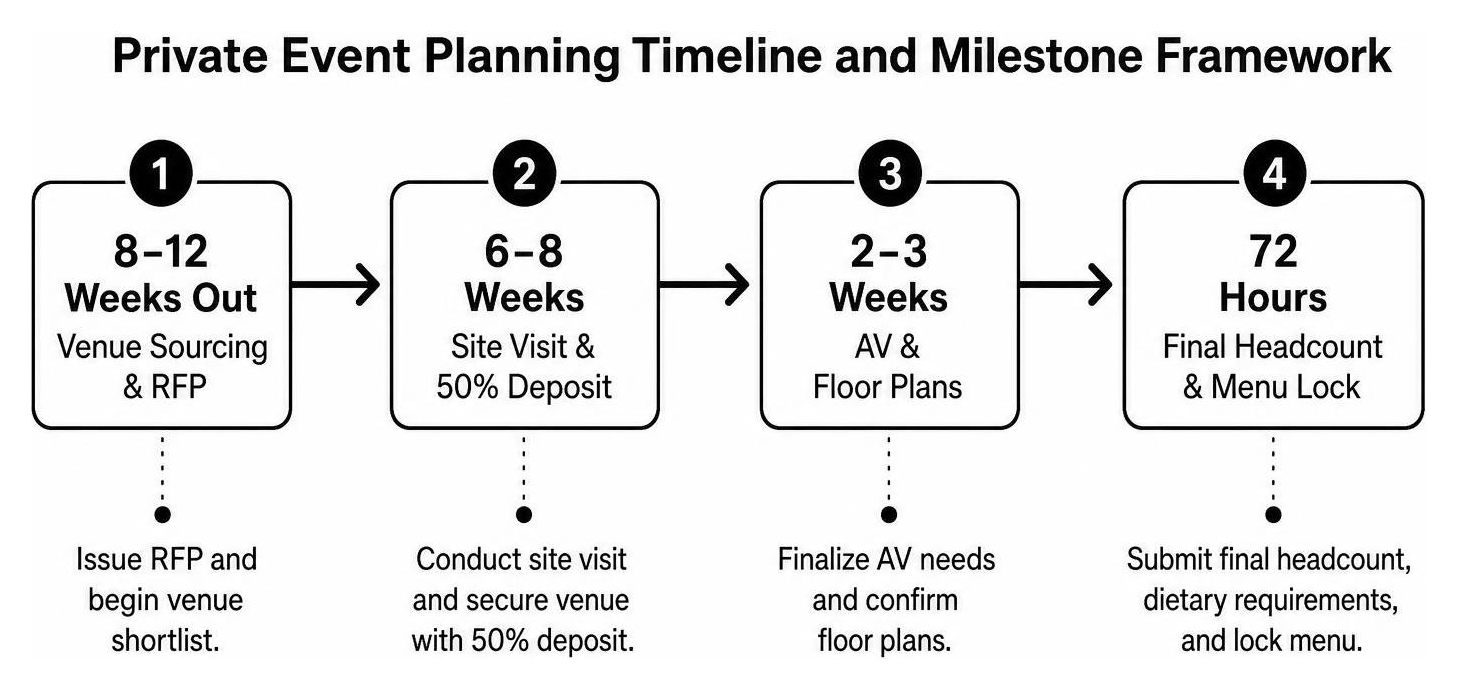
Executing a flawless private function demands disciplined timeline management. From issuing the initial Request for Proposal (RFP) to coordinating day-of load-ins, a structured schedule prevents last-minute surprises.
Budget Structuring and Food and Beverage Minimums
Private venue contracts typically operate on a base rental fee, a Food and Beverage (F&B) minimum spend, or a hybrid model. Base per-person rates for luxury event settings commonly range from $125 to $300+ per guest, excluding administrative charges, local taxes, and service gratuities.
Key financial factors to examine during contract review include:
- Dynamic Daypart Minimums: Friday and Saturday evening buyouts require substantially higher minimum spends than weekday luncheons.
- Standard Rental Blocks: Mega-venues and private lounges standardly contract a 4-hour event window, supplemented by 2 hours of pre-event load-in and 1 hour of load-out.
- Upfront Deposit Schedules: Expect to provide a 50% non-refundable deposit upon contract signing, with the remaining balance due 7 to 14 days prior to event kickoff.
- Liability and Insurance Coverage: Major commercial spaces require commercial general liability insurance or enrollment in a Tenant User Liability Insurance Program (TULIP).
Seamless Guest Journeys for High-Impact Private Events
An unforgettable gathering starts well before the first drink is poured. Refer to our exclusive networking events guide to map out every touchpoint of your guest journey.
Ensure an effortless arrival by arranging private elevator access, dedicated registration desks, and validated garage or valet parking.
For high-profile executives and allocators attending curated relationship building events, discretion is critical. Private street entrances, secluded green rooms, and carefully spaced seating layouts ensure guests can network comfortably.
Follow up within 24 to 48 hours post-event with personalized notes and curated attendee connection recaps while the conversations remain fresh.
Frequently Asked Questions About Venue Sourcing
How far in advance should an exclusive space be booked?
For peak holiday seasons and major regional sporting weekends, premium private spaces should be secured 6 to 12 months in advance. Standard executive dinners, board meetings, and mid-sized receptions typically require an 8- to 12-week booking runway to finalize custom menus and technical production schedules.
How do hospitality venues calculate food and beverage minimums?
Hospitality venues calculate F&B minimums based on historical demand for the specific room, day of the week, time of day (daypart), and overall seasonality. A semi-private room on a Tuesday afternoon will have a significantly lower minimum spend requirement than a full rooftop buyout on a Saturday night in December.
What technical amenities are critical for corporate presentations?
Corporate presentations require a dedicated high-lumen media display or LED wall, reliable wireless presentation adapters (such as Apple AirPlay or HDMI over IP), hand-held and lavalier microphones, isolated sound zoning, and hardwired backup high-speed internet connections.
Conclusion
Finding the ideal venue is about matching your strategic event objectives with an environment that elevates the guest experience. By prioritizing spatial versatility, bespoke culinary execution, robust technology, and discreet access, you lay the groundwork for an extraordinary gathering.
When standard banquet halls and corporate dining rooms fall short of your vision, unique event venues provide the atmosphere necessary to spark real engagement.
At Jets & Capital, we host invite-only summits and private gatherings inside private jet hangars across luxury markets, connecting family offices, institutional allocators, and top founders in an atmosphere built for deal-making.
Ready to connect with leading allocators and high-net-worth investors in a world-class environment? Apply to attend an upcoming private event with our private network.
