
Private Chef Catering: Everything You Need to Know Before Booking
Private Chef Catering Brings Restaurant-Level Dining to Your Event

Private chef catering is the right choice when you want food to be part of the experience, not just a meal served at the event. Before booking, confirm five things: your guest count, venue kitchen access, preferred service style, dietary needs, and what the quote includes for staff, groceries, rentals, and cleanup.
Unlike standard catering, a private chef typically plans a menu around your guests, cooks on-site, and can provide everything from a relaxed family-style dinner to a multi-course plated meal. It is especially well suited to executive retreats, private-home gatherings, vacation rentals, milestone celebrations, and smaller high-touch events. For very large functions where speed and volume matter most, traditional catering can be the more practical and cost-effective fit.
For investors and hosts, the value is simple: you can stay present with your guests while a culinary team manages the details behind the scenes.
I am Jordan Hutchinson, founder of Jets & Capital, where I design curated experiences for high-net-worth individuals, family offices, and influential operators in distinctive settings. That work has shown me how private chef catering can turn an event meal into a more personal setting for meaningful conversation and connection.
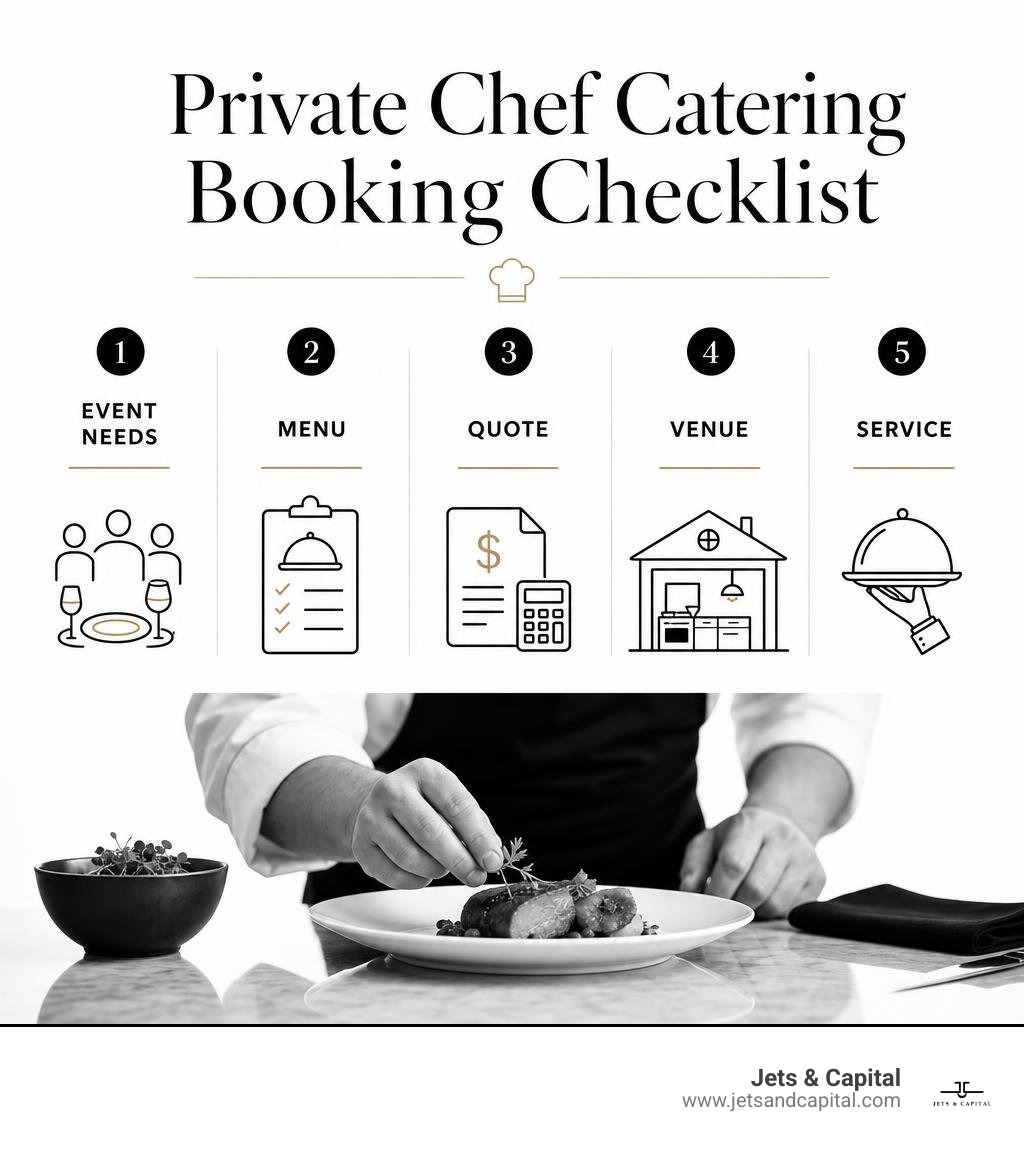
Private Chef Catering vs. Traditional Catering: Key Differences
When orchestrating an elevated dinner party, executive summit, or private celebration across luxury enclaves in Miami, Palm Beach, Dallas, or San Francisco, choosing how to feed your guests sets the baseline for the entire gathering. While the terms are often used interchangeably, bespoke culinary services and standard banquet operations operate on entirely different business and culinary philosophies.
Traditional catering is fundamentally built for volume, speed, and logistical predictability. Food is prepped, batch-cooked, and assembled in a commercial commissary kitchen hours before the event, packaged into insulated hot-boxes, transported across town, and held in chafing dishes until serving. While efficient for large crowds, holding proteins and delicate sauces under indirect heat often compromises texture and vibrancy.
In contrast, a private culinary team brings the restaurant kitchen directly to your venue. Dishes are prepped and cooked à la minute, ensuring searing, saucing, and garnishing occur seconds before the plate reaches the table. World-class talent—such as Chef Maia Domingues, who brings over 12 years of West Coast culinary mastery spanning Chef de Cuisine roles and Michelin-starred pastry technique—focuses on zero-waste discipline, classical French craft, and hyper-personalized hospitality.
| Feature | Private Chef Dining | Traditional Catering |
|---|---|---|
| Preparation Location | 100% on-site in the venue or residential kitchen | Central commissary kitchen off-site |
| Cooking Timing | Cooked to order (à la minute) | Batch-cooked, transported in warming boxes |
| Menu Customization | Bespoke design tailored to exact guest tastes | Standardized, set package menus |
| Service Style | Interactive plated courses, custom family-style | Buffets, drop-off platters, or banquet assembly lines |
| Artistic Control | Fine-dining restaurant presentation & pacing | Functional presentation built for rapid mass service |
| Guest Interaction | Direct engagement, storytelling, table-side finishes | Functional service delivery without culinary interaction |
Scalability and Guest Capacity
Boutique private dining services traditionally focus on smaller groups ranging from 4 to 20 guests, where multi-course tasting menus can be executed with micro-level precision. However, when paired with appropriate front-of-house service staff and sous chefs, private chef operations easily scale to serve 50 to 80+ guests without losing individual plating standards.
When your guest list expands beyond 100 to 150 attendees, traditional catering infrastructure becomes the pragmatic choice. High-volume caterers excel at mass batch logistics for galas and stadium-scale gatherings. But for curated gatherings in unique event venues, scaling a private culinary team maintains direct quality control over every ingredient.
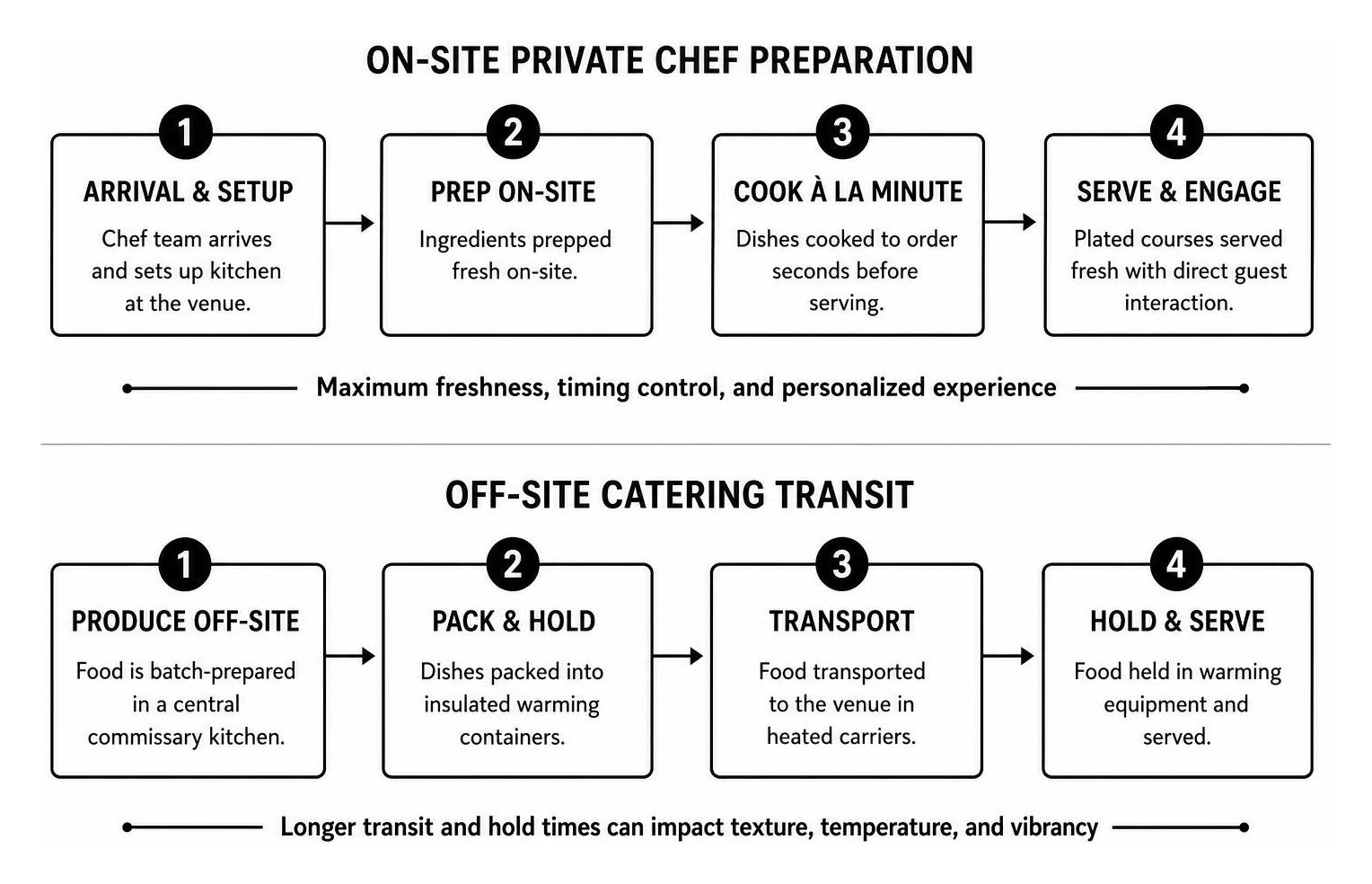
On-Site Preparation vs. Off-Site Production
The experiential difference between on-site preparation and off-site transport comes down to freshness. When food spends an hour in transit inside heated carriers, proteins continue to cook, greens wilt, and emulsified sauces separate.
On-site private culinary teams manage timing dynamically. If an opening keynote or investor discussion runs twenty minutes over schedule, a private chef adjusts the pan heat and holds the course at raw prep rather than letting an already-cooked tenderloin dry out under a heat lamp. This preserves maximum flavor integrity, optimal serving temperatures, and artistic presentation.
Ideal Event Types and Experience Formats
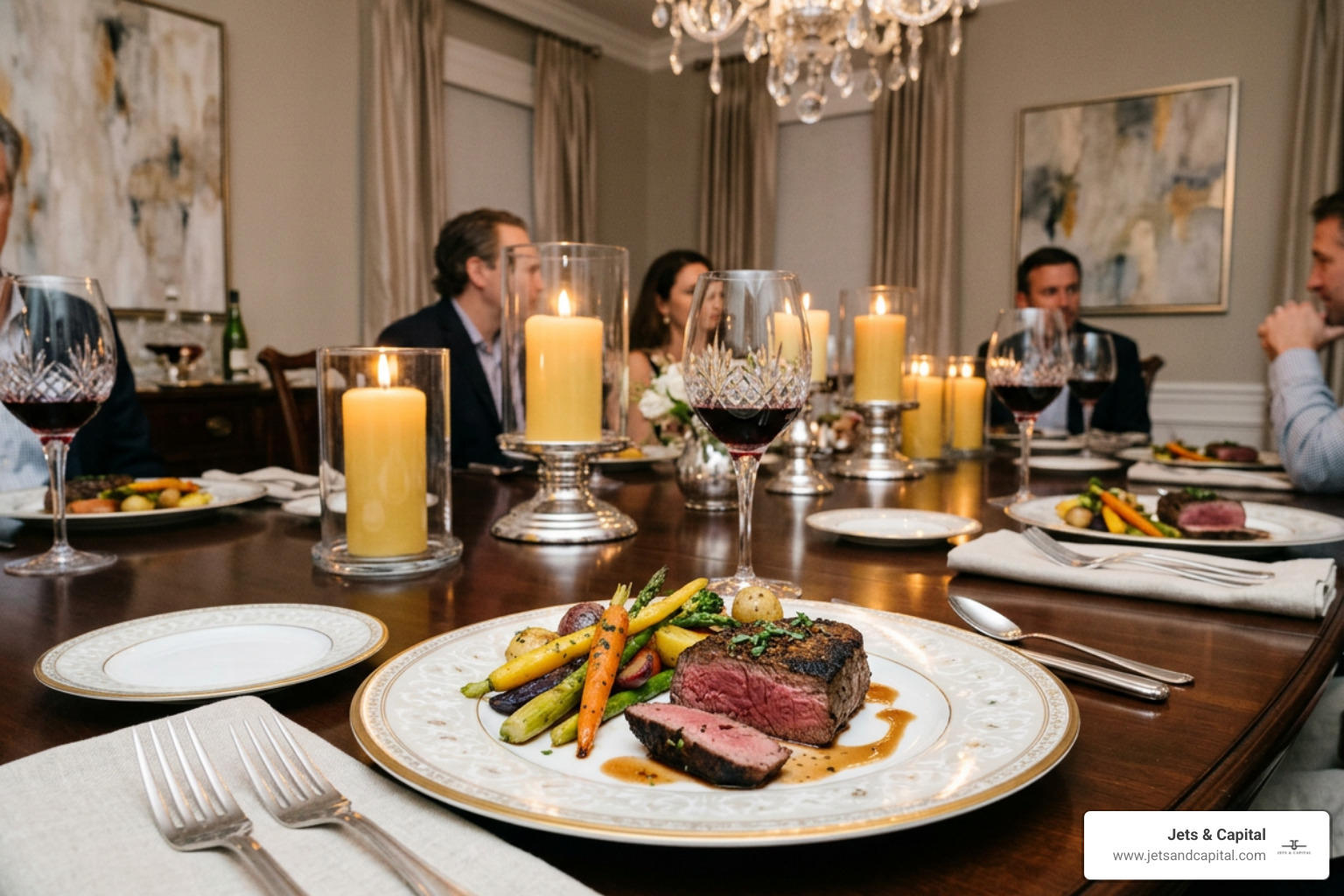
The format of your dining experience dictates how conversations flow throughout the room. Depending on whether you are hosting a lively celebration in Dallas or a waterfront gathering in Palm Beach, private chefs adapt their service structure across several distinct styles:
- Multi-Course Plated Tastings: Ideal for intimate groups of 4 to 40 seated guests. Each course represents a progression of textures and flavors, complete with table-side storytelling by the chef explaining ingredient provenance.
- Elevated Family-Style Feasts: Best suited for 8 to 60 guests. Large, handcrafted ceramic platters are passed communally, encouraging interactive networking while maintaining restaurant-grade culinary execution.
- Standing Cocktail Receptions: Designed for 12 to 60 guests. Features passed artisanal canapés, live chef carving stations, and interactive culinary displays that allow attendees to mingle fluidly.
- Luxury Morning Brunches: Perfect for post-event wrap-ups or weekend retreats, featuring custom espresso stations, fresh pastry service, and savory made-to-order specialties.
When to Choose Private Chef Catering for Your Event
Certain gatherings demand an uncompromising level of discretion, flexibility, and gastronomic artistry that standard banquet companies cannot match. Private chef services are uniquely suited for:
- Executive Retreats and Investor Summits: Keeping leadership teams on-site with clean, nutrient-dense meals that sharpen mental focus without the disruption of commercial restaurant reservations.
- Vacation Rental Stays: Booking multi-day culinary services in Las Vegas, Miami, or California wine country, freeing hosts from shopping, cooking, and cleanup.
- Milestone Private Dinners: Celebrating anniversaries, proposals, or intimate birthdays with custom menus designed around personal memories and favorite regional cuisines.
- High-Stakes VIP Receptions: Serving guests in non-traditional staging areas, such as luxury estates or private jet hangar events, where standard restaurant access is impossible.
Whether you are hosting small-scale celebrations or large luxury lifestyle events, personal culinary management turns the dining room into the centerpiece of the evening.
Thematic Concepts and Specialized Sourcing
Top-tier private dining goes beyond cooking technique—it begins with ethical, hyper-seasonal sourcing. Elite culinary professionals source organic produce, heritage grains, and sustainably harvested proteins directly from regional family farms and artisan fisheries.
These chefs hold pedigree credentials, ranging from Michelin-starred restaurant backgrounds to elite distinctions; in fact, the Certified Master Chef title is held by fewer than 250 culinary professionals worldwide. Whether incorporating modernist culinary techniques, crafting interactive tableside desserts, or curating vintage wine pairings for a Spanish tapas or coastal Italian feast, private culinary teams turn dinner into an immersive sensory performance.
Pricing Models and Operational Logistics
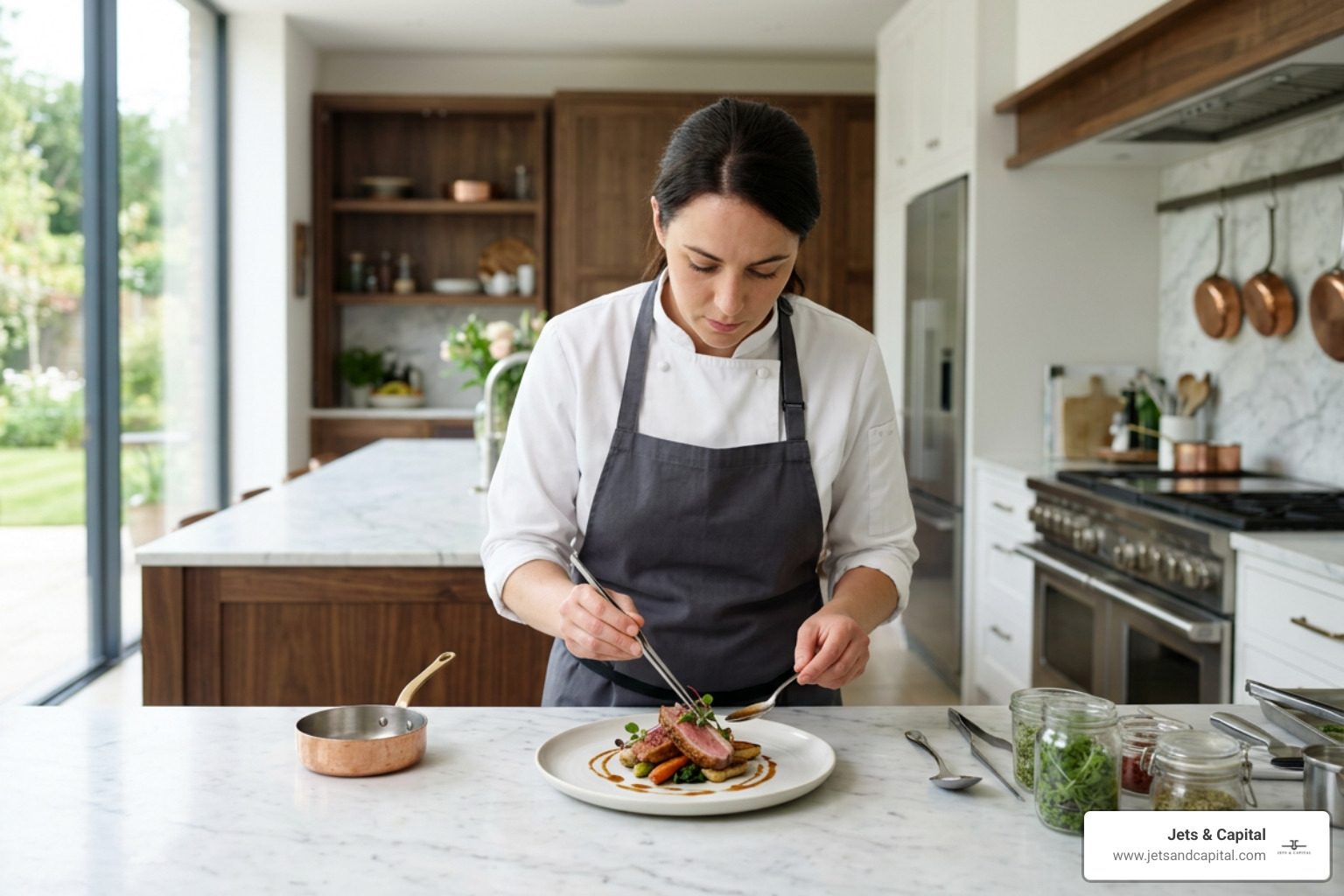
Understanding private dining finances is straightforward once broken down into standard industry pricing structures. Unlike standardized restaurant checks, private culinary billing reflects personalized menu development, premium sourcing, travel, preparation time, and post-event sanitation.
Typical Cost Structure for Private Chef Catering
Most high-end private culinary teams operate under one of two transparent billing models:
- All-Inclusive Per-Person Fee: A single rate per guest that includes menu curation, ingredient costs, prep, cooking, and cleanup.
- Service Fee Plus Groceries (Pass-Through): A baseline culinary service fee combined with direct itemized reimbursement for the exact cost of groceries and specialty purveyors.
Under transparent private dining packages, such as the structures offered by Chef Nate Snyder, baseline service rates typically begin around $133 per person for family-style service, $163 per person for a 3-course plated dinner, and $263+ per person for custom 4-course chef's table experiences (with food and grocery costs billed separately). Additional variables influencing final quotes include:
- Guest Count: Smaller parties require minimum spend thresholds to cover the chef's dedicated operational day.
- Course Complexity: Expanding from a 3-course dinner to a 7-course tasting menu requires additional prep hours and on-site plating time.
- Service Staffing: For plated dinners exceeding 8 to 10 guests, dedicated front-of-house servers and kitchen assistants are added to manage beverage service and plate clearance.
- Rentals & Tableware: Premium table linens, fine china, specialized glassware, and floral centerpieces can be coordinated directly by the culinary team.
Kitchen Logistics, Equipment, and Cleanup Protocols
One of the greatest benefits of hiring a private culinary team is effortless hosting. When the evening concludes, the kitchen is returned to spotless condition—often cleaner than when the team arrived.
To ensure seamless execution, private chefs follow strict on-site operational disciplines:
- Pre-Arrival Staging: The chef arrives 90 minutes to 3 hours prior to guest seating, loading in specialized cookware, cutlery, and prepped ingredients.
- Space Allocation: The host ensures basic refrigerator shelf space and clear countertop surfaces are available before the chef arrives.
- Clean-As-You-Go Sanitation: Professional chefs maintain immaculate work areas throughout service, sanitizing prep stations between courses.
- Comprehensive Post-Meal Cleanup: The culinary team washes all pots and pans, loads and runs the dishwasher, wipes down stovetops and counters, sweeps prep areas, and packs away all trash.
Essential Criteria Before Booking a Chef
Hiring the right culinary partner requires careful vetting, especially when curating meals for high-profile guests, executives, or exclusive UHNW investor parties.
Before signing a contract and submitting a deposit, use this practical vetting checklist:
- [ ] Culinary Background & Technique: What fine-dining institutions, formal academies, or master apprenticeships shaped their culinary style?
- [ ] Allergen & Cross-Contamination Protocols: What specific kitchen systems do they use to manage severe celiac, nut, or shellfish allergies safely?
- [ ] Service Inclusions: Does the quote clearly itemize grocery procurement, front-of-house servers, dishwashing, and trash removal?
- [ ] Liability & Certifications: Does the culinary provider carry commercial liability insurance and active food safety management certifications?
- [ ] Venue Kitchen Requirements: Have they verified burner counts, oven capacities, and refrigeration needs for your specific home or venue?
- [ ] Deposit & Cancellation Policies: What are the terms regarding rescheduling, guest count changes, or unforeseen date shifts?
Frequently Asked Questions About Private Chef Services
How far in advance should you book private dining services?
For prime dates—including weekend evenings, major holidays, and peak seasons in luxury markets like Miami, Palm Beach, New York, or Dallas—book 4 to 8 weeks in advance. However, many private chefs accommodate short-turnaround bookings within 1 to 2 weeks if their calendar allows, providing customized menu proposals within 24 to 48 hours of your initial consultation.
How do private culinary teams accommodate severe food allergies?
Because private dining menus are engineered from scratch for your specific party, accommodating complex dietary restrictions is seamless. During the planning phase, submit all allergies (gluten, dairy, nuts, nightshades, shellfish) and lifestyle preferences (vegan, keto, kosher-style). Professional chefs use dedicated cookware, prepare alternative components separately, and design cohesive substitutions so affected guests enjoy an equally stunning dish.
What kitchen infrastructure is required at the venue?
Most private chefs are masters of adaptability and can execute fine-dining menus using standard residential appliances. At minimum, they require a functional 4-burner stovetop, an oven, basic refrigeration space, running hot water, and clear counter space for plating. If hosting in non-traditional venues lacking a kitchen, chefs can arrange portable induction units, convection setups, or mobile prep stations.
Conclusion
Bespoke culinary service transforms hosting from an exhausting logistical chore into a relaxed, memorable event. By pairing restaurant-level cooking with the comfort of a private estate, penthouse, or boutique venue, you give your guests an evening centered on connection, storytelling, and exceptional food.
At Jets & Capital, we apply this same standard of precision, curation, and hospitality to our private networking summits across the country. If you are an allocator, family office principal, or qualified investor looking to connect with influential peers in world-class settings, apply to attend our upcoming exclusive private events and experience community building at its highest level.
