
Where to Rub Elbows in the Silicon Valley and Beyond
Why Bay Area Networking Events Are Unlike Anything Else in the World
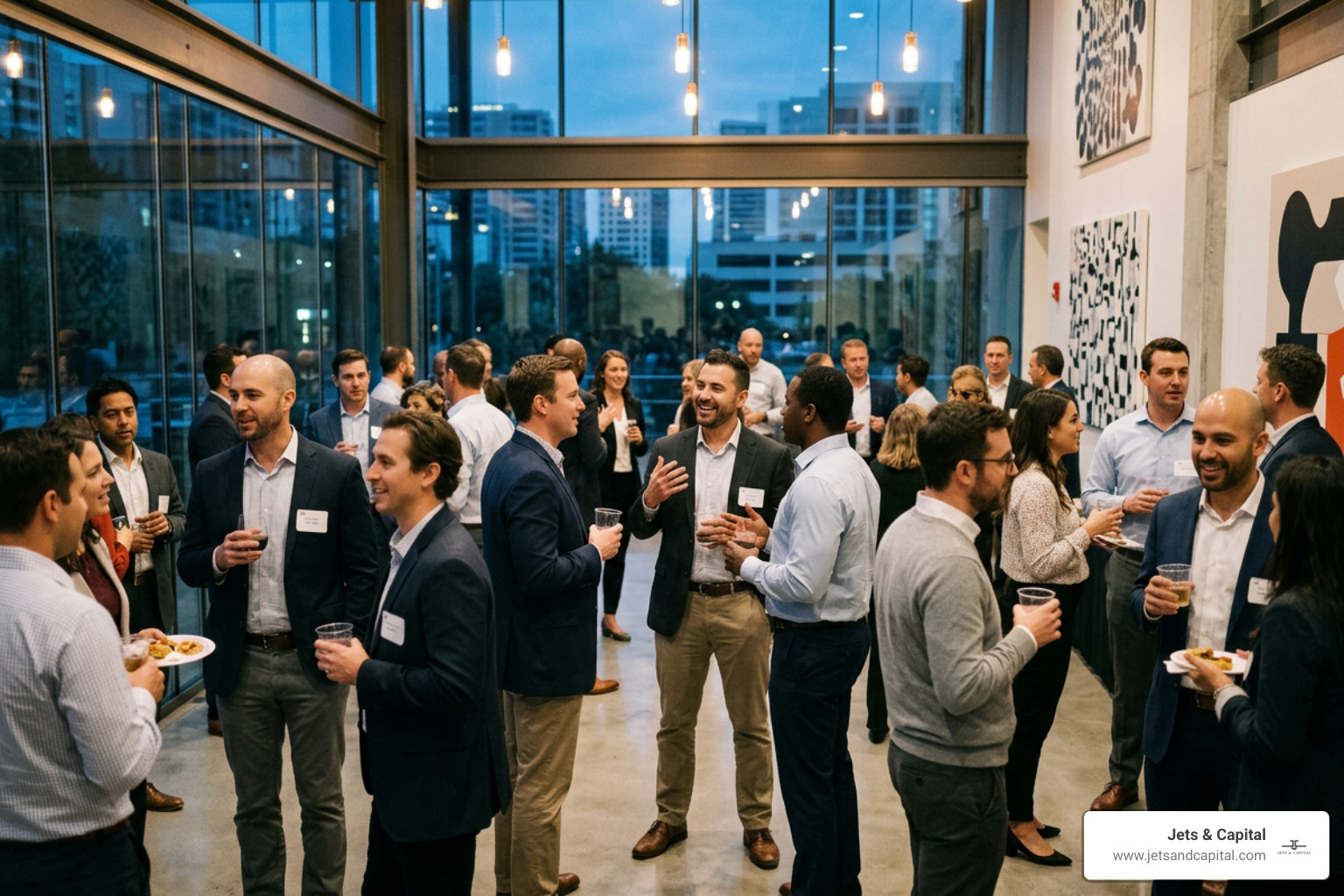
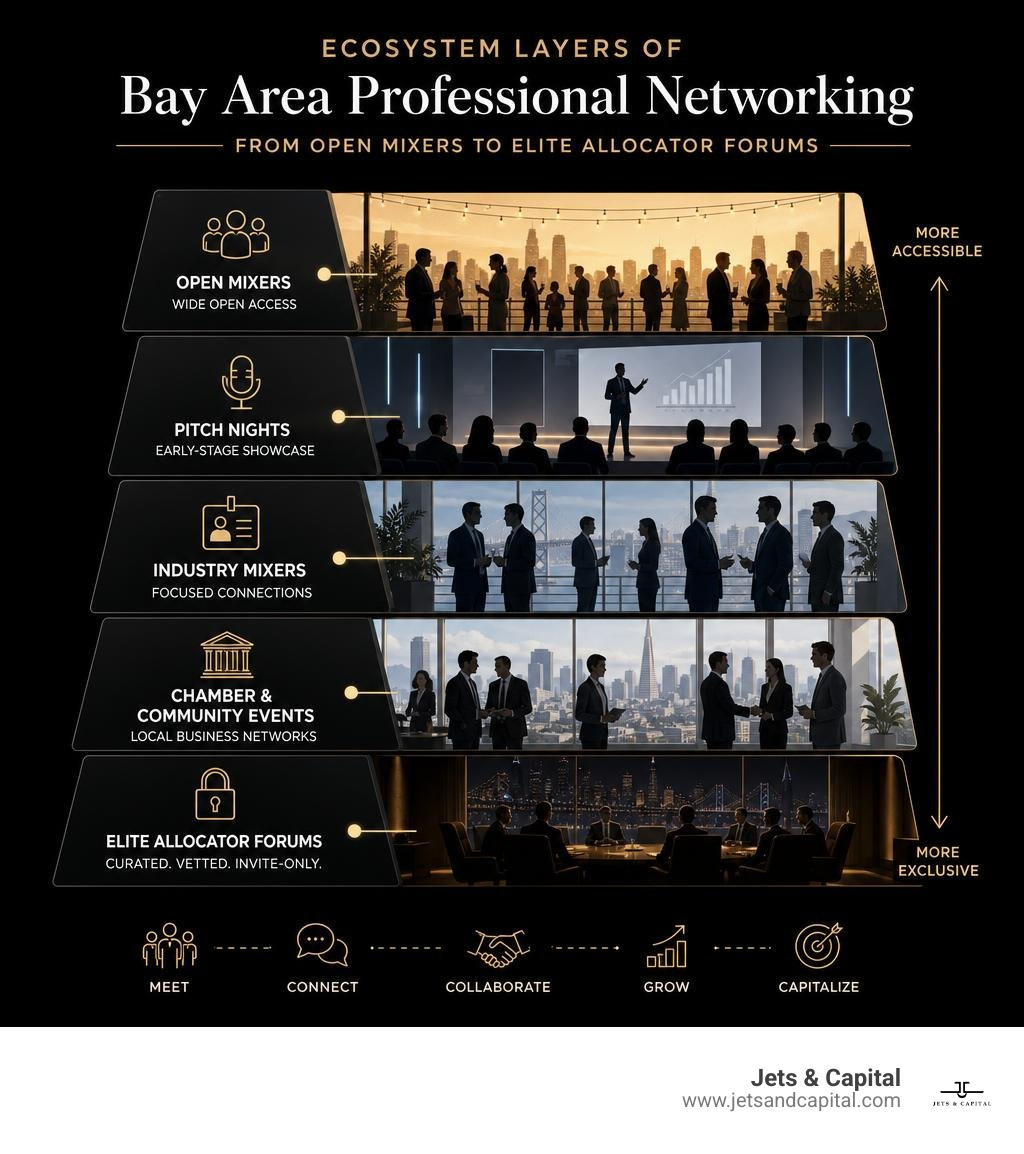
Bay Area networking events attract some of the most influential founders, investors, and operators on the planet — and for good reason. Here are the top event types you'll find across the region:
| Event Type | Best For | Format |
|---|---|---|
| Tech startup mixers | Founders, co-founders, operators | Open bar, casual networking |
| Pitch nights | Early-stage startups, angels, VCs | 4-6 live pitches + Q&A |
| Industry-specific mixers | BioTech, HealthTech, Real Estate pros | Speed networking, badge systems |
| Chamber of Commerce events | Small business owners, local professionals | Merchant walks, executive receptions |
| Elite allocator forums | Family offices, HNW investors | Curated, vetted, invite-only |
The Bay Area is not just a geography — it's a dense ecosystem where a single room can hold a Nobel laureate, a unicorn founder, and a managing partner of a multi-billion-dollar fund. That concentration of talent and capital is what sets it apart from every other networking scene in the world.
One useful lens: the Bay Area operates as a small-world network. Enter at any hub — a pitch night in SoMa, a deep tech breakfast in Palo Alto, a happy hour near Moscone — and you're already one or two degrees from the people who matter most to your goals.
I'm Jordan Hutchinson, founder of Jets & Capital, and I've spent years building and attending some of the most exclusive Bay Area networking events in the country — from private jet hangar gatherings to curated family office forums. That experience shapes everything in this guide. Let's break down exactly where to show up, and how.
Premier Bay Area Networking Events Across Silicon Valley and San Francisco
The Northern California tech corridor stretches from the historic garages of Palo Alto up through the vibrant high-rises of San Francisco's Financial District and SoMa. While each neighborhood exhibits its own distinct culture, all share a central focus on innovation, capital formation, and aggressive professional expansion. Finding the right room depends on understanding where different sub-communities assemble.
If you are looking to discover public calendars and upcoming community meetups, reviewing directories like Eventbrite's San Francisco Networking Guide provides an immediate overview of daily gatherings. However, navigating these options effectively requires matching your specific business lifecycle with the right event structure.
Enterprise Mixers, Pitch Evenings, and AI Breakfasts
For professionals seeking rapid exposure to founders, software engineers, and venture scouts, high-frequency tech mixers offer an ideal entry point. These events prioritize volume, accessibility, and high energy over strict vetting, making them perfect for testing elevator pitches or scouting initial co-founders.
- Tech After-Hours and SoMa Mixers: Casual happy hours hosted near Moscone Center—such as the recurring gatherings detailed on Meetup's Sales Executives Event Page—regularly draw enterprise sales executives, recruiters, and consultants. These gatherings eliminate formal speeches in favor of relaxed conversation over cocktails.
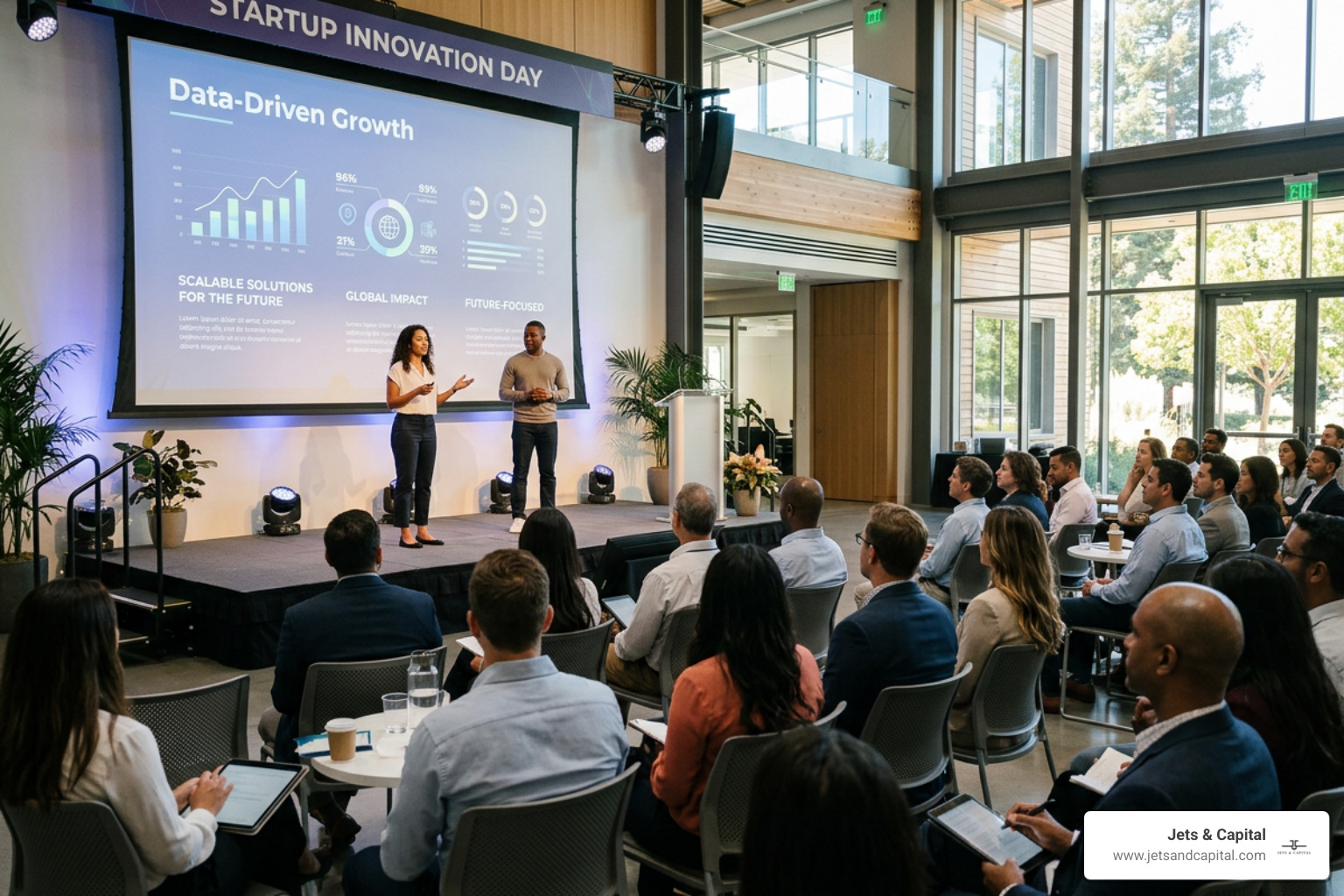
- Rapid Elevator Pitch Evenings: Events organized around brief verbal pitches offer a dynamic stage for early-stage founders. Programs like the San Francisco Tech Startups & Pitch Night give entrepreneurs 60 seconds on stage to pitch their product, team, and immediate capital or hiring needs.
- Structured Startup Pitch Nights: For a more formal pitch setting, curated evenings like the Startup Valley SF Pitch Sessions restrict on-stage presentations to 4 to 6 selected startups. This structure leaves ample time for direct Q&A with angel investors and venture scouts in the audience.
- Deep Tech & AI Breakfasts: South Bay hotspots frequently host early-morning breakfasts focusing on artificial intelligence, agentic workflows, and voice AI. A classic example includes the Ascent Valley AI & Tech Gathering in Palo Alto, where machine learning engineers and seed investors meet over coffee before the market opens.

Industry-Specific Mixers: BioTech, HealthTech, and Real Estate
While broad tech mixers attract generalists, specialized sector mixers provide much higher signal-to-noise ratios for founders, operators, and investors operating in specific domains. Attending niche events ensures every conversation touches upon relevant regulatory, technical, or commercial challenges.
To explore specialized sector meetups, groups like the Bay Area Networking Community host targeted webinars and workshops focused on term sheet negotiations, financial modeling, and AI integration. Furthermore, major regional events—such as the San Francisco Bay Area Small Business Expo held at the South San Francisco Conference Center—utilize proprietary color-coded badge systems ('DOTTEDR') to let attendees quickly identify potential legal, real estate, or technology partners across thousands of participants.
When building long-term local pipelines, leveraging structured San Francisco Networking channels allows teams to secure strategic referrals. Likewise, tapping into dedicated Business Networking Opportunities ensures founders engage directly with vetted service partners, institutional lenders, and commercial development groups.
How Silicon Valley Networking Differs From Other Major Cities
Networking in the Bay Area operates under fundamentally different cultural rules than in financial or media centers like New York, London, or Miami. Understanding these underlying dynamics prevents costly social missteps and accelerates trust-building.
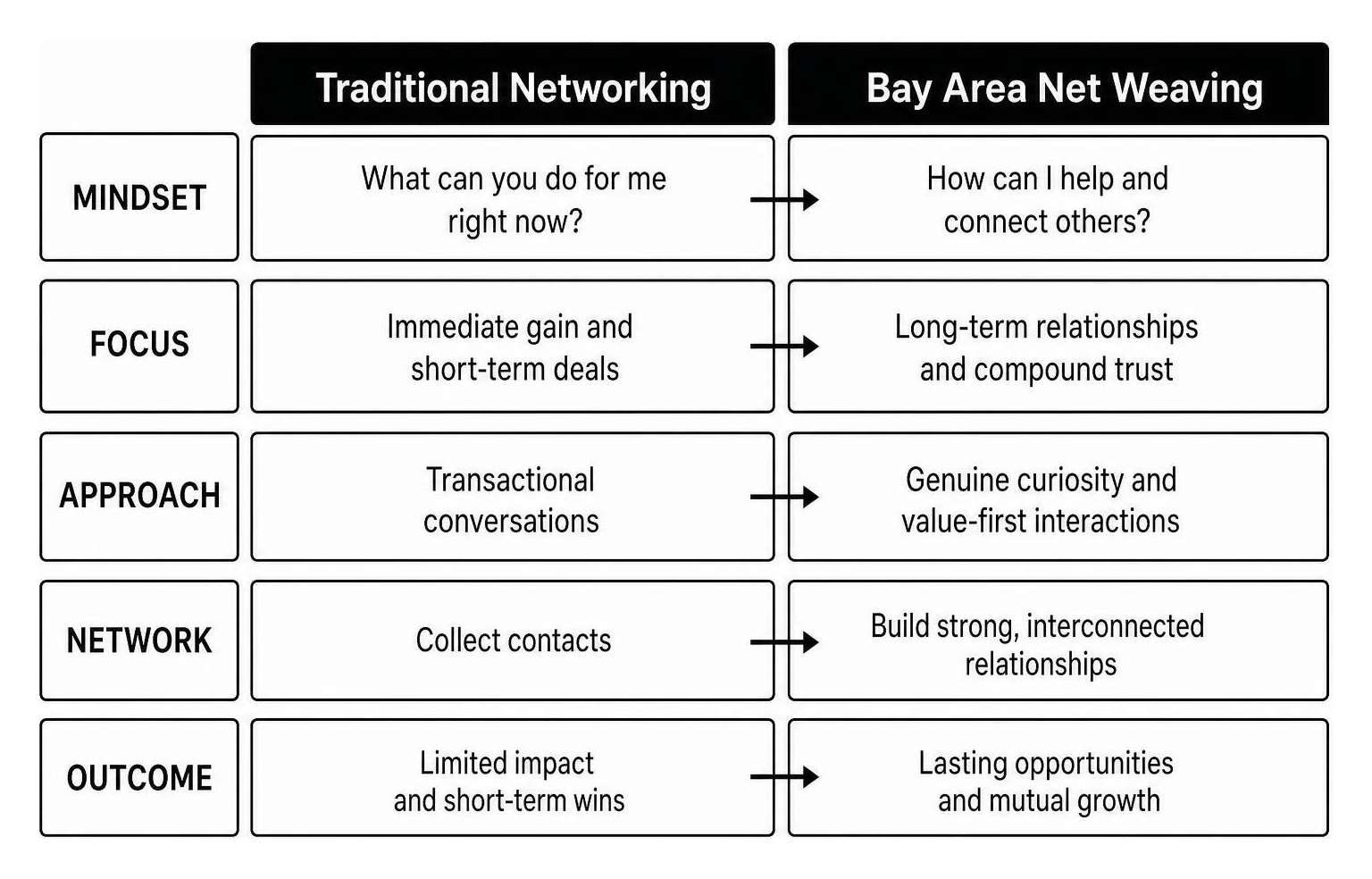
Long-Term Net Weaving vs. Transactional Card Swapping
In many global business capitals, networking is explicitly transactional: "What can you do for me today, and what is the immediate trade?" In Silicon Valley, that approach often backfires. The local community relies heavily on net weaving—the practice of proactively offering help, introductions, or strategic insights without requesting immediate compensation.
- The Small-World Dynamic: Silicon Valley is interconnected. A junior developer you assist at an AI hackathon today could be a key engineering lead at a unicorn startup three years from now. Reputation travels fast across regional Slack channels, Substack newsletters, and X networks.
- Active Listening and Strategic Triangulation: Effective net weavers focus on active listening to discover a contact's core challenges. Rather than pushing their own agenda, they practice triangulation: introducing two participants whose skills complement each other, then stepping back to let them build a relationship.
- Understated Power: Unlike markets where wealth is signaled through tailor-made suits or luxury watches, Bay Area power players often dress in unassuming hoodies, sneakers, and worn t-shirts. Assuming someone's influence based on their clothing is a classic rookie mistake.
Navigating Bay Area Networking Events As an Introvert or Newcomer
The sheer volume of Bay Area networking events can easily trigger social fatigue, particularly for introverts or founders who recently relocated to Northern California. Succeeding does not require attending every happy hour on Eventbrite; it requires focusing on central node organizers and establishing clear mental boundaries.
- Identify the Hub Organizers: Every sub-industry maintains 5 to 15 key organizers who run popular newsletters, host private Slack channels, or manage community meetups. Building genuine rapport with these hub organizers grants access to unlisted, high-value gatherings.
- Use the "Magic Phrase" Icebreaker: When approaching a circle at an open mixer, avoid standard questions like "What do you do?" Instead, try asking: "What brings you to the Bay Area ecosystem this week?" or "What are you currently building that you're most excited about?"
- Set a Conversation "Stop-Loss": Prevent conversational fatigue by pre-determining an exit strategy. If a conversation stalls, politely say: "It was fantastic learning about your platform. I promised myself I'd meet three new people before 8 PM, so I'm going to grab a drink. Let me scan your LinkedIn before I step away."
- Schedule Friday Follow-Up Blocks: Set aside 60 to 90 minutes every Friday afternoon strictly for following up with new connections, sending introduced DMs, and scheduling casual follow-up coffees.
Proven Strategies to Maximize ROI at Every Event
Showing up is only half the battle. To extract real business value from Bay Area networking events, professionals must treat event attendance as a structured operational process with defined input and output metrics.
Crafting an Adaptive Elevator Pitch and Triangulation
Your standard pitch deck or company mission statement is rarely suited for a noisy mixer environment. You need a concise, adaptable pitch that communicates context instantly without sounding overly scripted.
- The 60-Second Casual Pitch: Focus on what you are actively solving or seeking rather than reciting job titles. For example: "We build autonomous agent frameworks for healthcare compliance. Right now, we're closing our seed extension and looking for clinical pilot partners in San Francisco."
- Tailoring to the Listener: If speaking to a developer, emphasize your technology stack and open-source contributions. If chatting with an angel investor, highlight unit economics, key advisors, and early revenue metrics.
- Non-Transactional Facilitation: When you meet someone whose needs match another attendee's strengths, facilitate an immediate, zero-friction introduction. This establishes your reputation as a high-value connector within the regional network.
Post-Event Follow-Up Systems and Hybrid Community Channels
The value of an event is realized during the days immediately following it. Without a disciplined follow-up protocol, even promising interactions quickly fade.
- Leverage Pre-Event and Event Mini-Apps: Modern organizers frequently use dedicated event apps or temporary WhatsApp groups. Joining these channels prior to check-in allows you to audit attendee lists, introduce yourself virtually, and pre-schedule high-priority 1-on-1 meetings.
- Digital Contact Exchange: Swap physical business cards for instant digital sharing. Keep your LinkedIn QR code or personalized digital business card saved on your smartphone's home screen for effortless contact transfer.
- Contextual DM Follow-Ups: When sending a follow-up connection request, always include a personal reference to your conversation: "Great chatting about voice AI latency at the Palo Alto event on Tuesday! Here is the research paper I mentioned."
Scaling Up: Vetted Allocator Forums and Private Hangar Gatherings
While public mixers and open pitch nights play a vital role in early discovery, high-net-worth individuals (UHNWIs), institutional allocators, and single-family offices generally avoid unstructured public events. The constant noise, unvetted solicitations, and transactional pitch deck distribution drive top-tier investors toward private, gated environments.
| Event Format | Attendee Vetting | Primary Focus | Noise Level | Deal Quality |
|---|---|---|---|---|
| Open Tech Mixers | None (Public RSVP) | General networking, job seeking | High | Mixed / Low Signal |
| Public Pitch Nights | Basic screening for presenters | Early-stage pitches, scout discovery | Moderate | Early Seed Stage |
| Sector Trade Shows | Tiered ticket pricing / badges | Vendor discovery, broad industry ties | High | Mid-Market B2B |
| Elite Allocator Forums | Strict qualification (85% allocators) | Capital deployment, direct co-investing | Low / Exclusive | Institutional & Private Equity |
Unlocking High-Value Capital at Elite Bay Area Networking Events
For growth-stage founders, family office principals, and accredited investors, accessing true institutional capital requires moving beyond standard hotel bar happy hours. Private capital allocation happens behind closed doors where trust, discretionary vetting, and privacy are paramount.
At Jets & Capital, we specialize in organizing invite-only, highly curated gatherings for single-family offices, high-net-worth investors, and institutional fund managers. Hosted in unique locations such as private jet hangars—including our signature Super Bowl Edition events—we enforce a rigorous vetting process ensuring that at least 85% of attendees are active capital allocators.
By limiting access to vetted decision-makers, we eliminate cold solicitations and replace them with strategic, peer-level deal-making. Founders and investors seeking to explore high-tier opportunities can review our curated San Francisco Exclusive Events portfolio, connect with our dedicated San Francisco Family Office network, or engage directly with verified High Net Worth Investors across our global ecosystem.
Frequently Asked Questions About Bay Area Networking Events
How do I choose the right networking event for my career goals?
Start by clarifying your primary objective. If you are an early-stage founder seeking technical co-founders or initial feedback, open pitch nights and hackathons provide instant access to talent. If you are raising seed capital, target sector-specific pitch nights with active angel panels. If you represent an established enterprise or family office seeking co-investment opportunities, skip open mixers entirely and apply for vetted investor forums or private allocator summits.
What are the main challenges of networking in Silicon Valley?
The biggest obstacles are networking burnout and pitch noise. Because the Bay Area hosts dozens of events every evening, attending without a clear strategy leads to exhaustion. Furthermore, open events often feature high concentrations of early-stage founders competing for investor attention. Overcome this by capping public attendance to 1-2 focused events per week, emphasizing long-term relationship building, and migrating to vetted, invite-only circles as your business matures.
How do virtual or hybrid events complement in-person mixers?
Virtual events, pre-event digital groups, and webinars serve as efficient top-of-funnel screening tools. Participating in pre-event WhatsApp groups or virtual panels allows you to identify key participants before stepping into a crowded room. Combining digital pre-outreach with face-to-face meetings dramatically increases your conversion rate and ensures your time spent at physical events is maximally productive.
Conclusion
Building a powerful professional footprint across Northern California is not about collecting stack after stack of business cards—it is about consistently placing yourself in rooms where high-value decisions occur. From casual SoMa happy hours and Palo Alto deep tech breakfasts to elite hangar receptions, the Bay Area ecosystem rewards those who show up with clarity, offer long-term value, and respect the local ethos of net weaving.
As your capital requirements scale and your network expands, migrating toward vetted, allocator-heavy environments becomes essential for driving real business outcomes.
Ready to connect with peer allocators, family offices, and high-net-worth investors in private, uncrowded settings? Apply to Attend Exclusive Private Events with Jets & Capital today and take your deal-making to the highest level.
