
What Is the Vetting Process and Why Does It Matter?

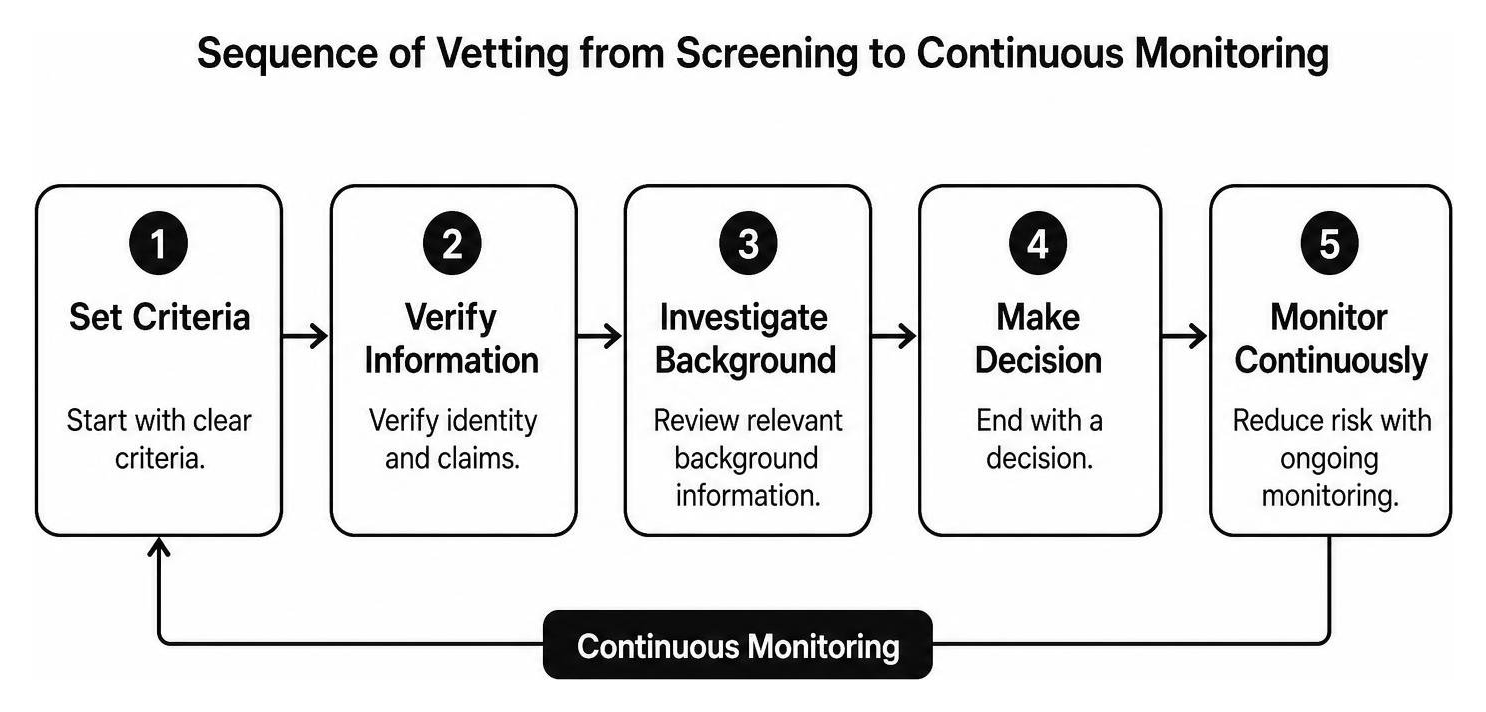
A vetting process checks whether a person or organization is suitable for a role, access, or opportunity. It starts with clear criteria, verifies identity and claims, reviews relevant background information, and ends with a decision. The goal is to reduce risk while giving each person a fair review.
I’m Jordan Hutchinson, founder of Jets & Capital, where a vetting process helps us curate invite-only events for investors and family offices. My experience building businesses and working with investment funds has shown me why credibility and fit matter before people connect.
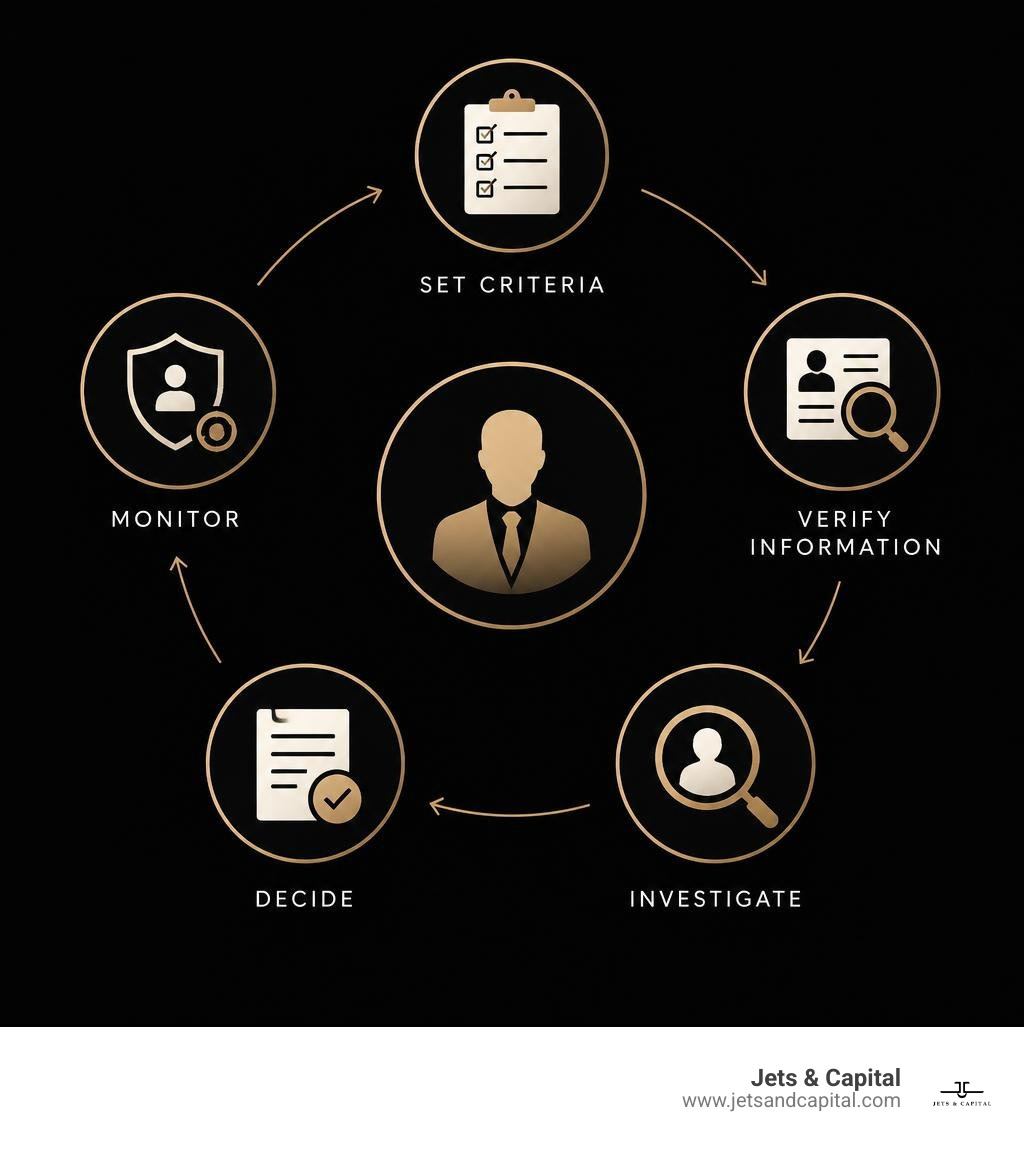
The word "vetting" comes from 19th-century British stable slang: a horse had to be checked by a veterinarian before a race to ensure it was sound, healthy, and fit to run. Today, organizational due diligence applies that same common sense to people, institutions, and partnerships.
Whether you are evaluating a board member, onboarding a security specialist, or screening attendees for closed-door private gatherings, comprehensive verification protects valuable assets, maintains workplace safety, and safeguards brand reputation.
Understanding the Vetting Process: Definition and Importance
At its core, candidate assessment is about making informed decisions before granting access, responsibility, or capital. Making decisions based solely on a polished resume or a charming conversation carries immense risk.
The financial and operational costs of cutting corners are steep:
- Mishire expenses: The average organization in the United States spends roughly $4,700 and takes 36 to 42 days to fill an open role with a qualified, vetted professional. Replacing a bad hire often costs several times that initial amount.
- Workplace safety and legal liability: Negligent hiring lawsuits occur when an enterprise fails to uncover a track record of violence, fraud, or serious misconduct.
- Fraud prevention and intellectual property security: Verifying credentials, professional licenses, and criminal history ensures that those handling confidential systems, trade secrets, or client funds are trustworthy.
Implementing a structured approach to the vetting of staff creates a reliable baseline of integrity across any organization.
Key Stages in the Comprehensive Vetting Lifecycle
A standard verification lifecycle follows a predictable, structured progression. Rather than an arbitrary interrogation, modern background screening relies on transparent, repeatable workflows.

To establish an organized system, organizations follow official federal vetting steps and industry best practices.
1. Position Designation and Risk Assessment
Before collecting any data, the reviewing entity establishes the sensitivity tier of the position. Is it low-risk administrative work, a public trust position involving financial systems, or a high-level role requiring access to state secrets or proprietary capital strategies?
2. Initial Screening and Questionnaire Submission
The candidate signs a formal consent agreement and completes detailed background questionnaires. For federal or defense contractor roles, this typically happens through electronic portals like e-QIP or eApp.
Candidate data is triaged against identity verification databases to ensure that legal names, dates of birth, social security numbers, and residential histories match government records. Similar structured identity frameworks are used globally, such as the digital systems maintained by the National Vetting Bureau.
3. Deep-Dive Background Investigation and Verification
Investigative service providers cross-check the submitted information against primary sources:
- Criminal and regulatory history: Checking local, state, and federal court repositories for felony convictions, active warrants, and financial sanctions.
- Credit and financial checks: Reviewing credit histories, civil judgments, tax liens, and bankruptcies to evaluate financial stability.
- Education and employment auditing: Contacting former employers and degree-granting universities to confirm job titles, tenure dates, degrees, and certifications.
- Referee and personal interviews: Speaking directly with supervisors, colleagues, and character references to assess reliability and temperament. Standard law enforcement vetting checks often incorporate these structured reference reviews to verify a candidate's background across jurisdictions.
- Digital footprint analysis: Reviewing public records and open-source data to identify undisclosed conflicts of interest, sanctions, or politically exposed person (PEP) status.
4. Adjudication and Final Determination
Trained adjudicators evaluate the gathered facts against predefined standards. They use a holistic assessment rather than rejecting an applicant over an isolated, explainable data point.
5. Continuous Monitoring
Modern verification models have transitioned from one-off checks every five years to continuous vetting under initiatives like Trusted Workforce 2.0. Automated systems scan relevant legal and credit databases in real time to catch emerging security flags as they happen.
Government vs. Private Sector Screening: Suitability, Fitness, and Security Clearances
Screening depth varies significantly between corporate human resources checks, public trust positions, and national security clearances.
| Screening Category | Focus Areas | Key Verification Elements | Primary Outcome |
|---|---|---|---|
| Private Sector Employment | Job fitness, workplace safety, credential honesty | Criminal records, credit check, previous employment, reference calls | Offer of employment or board appointment |
| Public Trust / Suitability | Integrity, fiscal responsibility, protection of public services | 5–7 year history, federal tax compliance, fingerprinting, residential checks | Suitability or contractor fitness determination |
| National Security Clearance | Loyalty, foreign ties, vulnerability to coercion | 5–15 year deep background, polygraph (select tiers), counterintelligence review | Clearance eligibility (Confidential, Secret, Top Secret) |
Suitability and Fitness vs. Security Clearance Eligibility
Many candidates confuse a suitability determination with a security clearance.
- Suitability and Fitness: Evaluates whether an individual’s character and conduct are suitable to represent an agency or perform duties on government contracts. It focuses on honesty, workplace behavior, and compliance with laws.
- Security Clearance Eligibility: Evaluates whether an individual can be entrusted with access to classified national security information. Different clearance levels require looking back over varying periods of time. For example, national security clearance tiers often look back 5 years for Confidential access, 10 years for Secret and Top Secret, and up to 15 years for Top Secret Special access.
Having suitability approval does not grant you access to classified secrets; conversely, an active clearance still requires an agency to verify that you have a specific, verified "need to know" before sharing materials.
The Adjudicative Guidelines and the Whole-Person Concept
Adjudicators in sensitive environments do not use simple checklist scoring. Under formal standards, such as the Security Executive Agent Directive 4 (SEAD 4) guidelines, they evaluate a candidate using the whole-person concept.
Adjudicators examine the totality of an applicant's conduct by assessing:
- Nature and seriousness: What happened, and how severe was the conduct?
- Recency and frequency: Did the incident occur last month, or was it an isolated event from eight years ago?
- Age and maturity: Was the applicant a young student at the time, or a seasoned executive?
- Voluntary rehabilitation: Has the person paid their debts, attended counseling, or demonstrated a sustained period of good conduct?
How Long Checks Take and Mitigating Adverse Findings

Navigating Delays Across the Screening Timeline
Turnaround times depend directly on the complexity of an individual's background, the presence of international history, and the level of scrutiny required:
- Commercial employment checks: Typically completed in 2 to 5 business days.
- Law enforcement and federal field checks: As noted by agencies like Immigration and Customs Enforcement, ICE field investigations generally run between 45 and 60 days, though timelines vary based on individual circumstances.
- Comprehensive immigration vetting: Processing international visas, permanent residencies, or asylum requests involves interagency coordination that can stretch from 18 to 24 months or longer.
- Complex security clearances: High-tier clearance investigations with extensive foreign travel, foreign assets, or dual citizenship can take anywhere from 6 to 12 months.
Candidates can avoid delays by gathering their residential addresses, supervisor contact numbers, and tax records before beginning the questionnaire. Submitting incomplete forms is the most common cause of processing delays.
Managing Red Flags and Mitigating Information
Discovering an issue during the process does not automatically result in disqualification. Investigators and adjudicators are far more concerned with dishonesty, omission, and concealment than with historical mistakes.
If you have a past credit issue, a minor misdemeanor, or a foreign contact:
- Disclose it proactively: Omitting a known record on a verification questionnaire is treated as falsification, which is often grounds for immediate rejection.
- Provide context: Use the explanation sections to supply dates, court dispositions, or proof of resolved financial debts.
- Show rehabilitation: Provide evidence of consistent credit payments, positive character references, or professional development that demonstrates long-term growth.
- Exercise procedural fairness: Formal vetting programs provide applicants with the right to review derogatory information, respond with clarifying details, and file an appeal before a final adverse determination is made.
Frequently Asked Questions About Screening and Verification
What is the primary difference between a basic background check and a complete vetting investigation?
A basic background check is an automated, point-in-time check that looks up identity, criminal history, and credit reports. A comprehensive vetting investigation involves a deep evaluation of personal integrity. It includes reference interviews, employment audits, credential verification, and behavioral analysis to determine overall suitability for a sensitive role.
Can past credit issues or minor offenses automatically disqualify an applicant?
No. Under the whole-person concept, adjudicators look at the root causes of financial or legal trouble. If a candidate experienced medical debt or temporary unemployment but has established a steady repayment plan, the financial risk is largely mitigated. Full disclosure paired with proof of personal responsibility makes a major difference.
How does continuous vetting work after initial clearance or employment?
Continuous vetting replaces traditional periodic reinvestigations (which used to occur once every five to ten years). Automated background systems monitor primary databases, such as civil court dockets, credit reporting bureaus, and law enforcement databases, to flag security concerns immediately. This ensures that cleared professionals maintain suitability throughout their tenure.
Conclusion
A successful, reliable organization depends entirely on the integrity of the people within it. Whether screening public service candidates, hiring senior leaders, or building trust within an elite business network, a transparent and thorough review process protects everyone involved.
By approaching verification with clear documentation, complete honesty, and proactive disclosure, candidates and organizations can navigate every step with confidence.
Learn more about our standards, executive leadership, and mission by visiting our About page, reading our member Testimonials, or getting in touch through our Contact portal. To discover how we curate exclusive environments for investors and family offices across Miami, Palm Beach, New York, Dallas, and San Francisco, explore the Jets & Capital private network.
