
Why the Thorough Vetting of Staff Matters More Than a Resume
Why the Vetting of Staff Matters Beyond a Resume

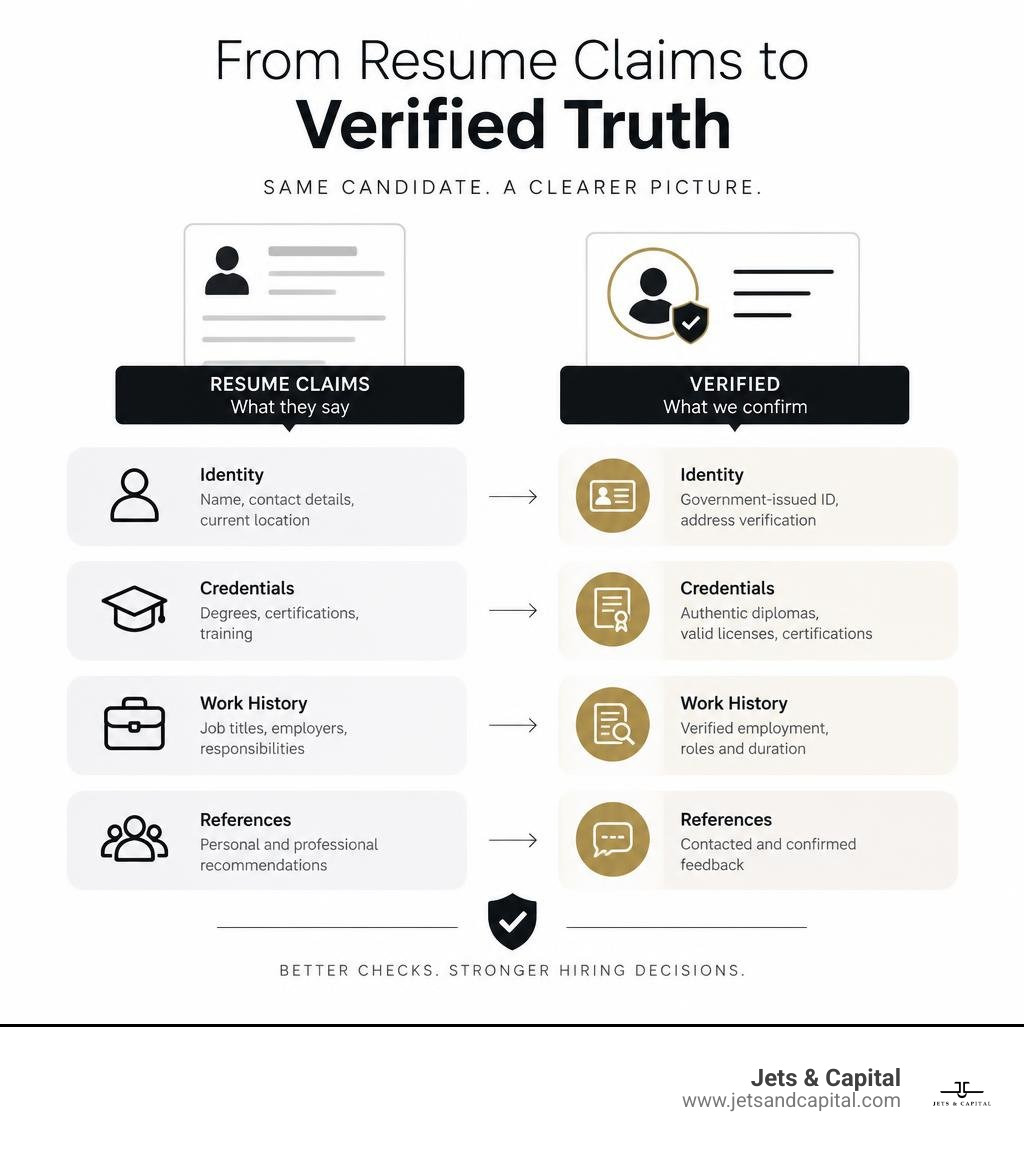
Vetting of staff means checking a person's identity, qualifications, work history, and other job-relevant facts before trusting them with a role. A resume tells you what a candidate claims. Vetting helps you confirm those claims and judge whether the person is suited to the work.
That matters wherever a hire may handle money, private information, or important relationships. The goal is not to find a flawless person. It is to make a fair, informed decision using checks that fit the role and follow applicable law.
I'm Jordan Hutchinson, founder of Jets & Capital and a former entrepreneur who has built businesses and now brings investors and family offices together. In my work, trust is central to lasting relationships, which is why the vetting of staff deserves more care than a quick read of a resume.
What Is the Vetting of Staff? Definition and Scope
In an employment context, vetting is the comprehensive process of investigating and validating an individual's background, legal records, qualifications, integrity, and behavioral history before granting them organizational trust. Rather than taking self-reported achievements at face value, comprehensive vetting builds an objective profile of a candidate’s professional track record and suitability.
The term itself originates from nineteenth-century equestrian culture: veterinarians would rigorously examine racehorses before competition to confirm soundness, health, and fitness to perform. Over the decades, human resource professionals, security agencies, and corporate boards adopted the term to describe the formal assessment of people entering sensitive environments.
Modern workplace vetting serves several fundamental functions:
- Workplace Safety: Keeping violent, abusive, or disruptive individuals out of physical and digital work environments.
- Asset and Financial Protection: Preventing internal fraud, embezzlement, IP theft, and unauthorized transfers of company capital.
- Regulatory Compliance: Adhering to statutory hiring mandates within healthcare, finance, defense contracting, and social services.
- Reputational Resilience: Shielding corporate and family brand value from public misconduct scandals, unauthorized leaks, or credential fraud.
Vetting vs. Screening: Understanding the Difference
While many human resources teams use the words interchangeably, initial screening and deep vetting represent two entirely different layers of recruitment risk management.
- Initial Screening is a high-level filter. It evaluates superficial job eligibility using automated keyword matching, basic work authorization forms, and introductory conversations.
- Deep Vetting is an investigative process. It looks past surface claims to confirm competence, evaluate past conduct, cross-examine professional references, assess security risk factors, and establish behavioral alignment with organizational values.
| Dimension | Initial Candidate Screening | Deep Vetting of Staff |
|---|---|---|
| Primary Goal | Narrow large applicant pools based on surface criteria | Confirm trustworthiness, qualifications, and security fitness |
| Data Evaluated | Resumes, cover letters, self-reported skills | Court records, direct former supervisors, official registries |
| Methodology | Automated keyword parsers, brief recruiter calls | Multijurisdictional background checks, structured interviews |
| Timing | Top of the hiring funnel (pre-interview) | Bottom of the funnel (post conditional offer or ongoing) |
| Depth of Inquiry | Superficial and self-attested | Verified, documented, and legally compliant |
| Risk Focus | Basic job qualification mismatch | Fraud, safety threats, legal liability, insider risk |
Why Surface-Level Resumes Fail Modern Employers
Relying solely on resumes introduces severe vulnerability into any hiring process. In modern recruitment, resume deception is an undeniable reality:
- 70% of workers admit to having lied on their resumes at least once during their careers.
- 64.2% of Americans acknowledge participating in some form of resume misrepresentation, ranging from exaggerated titles to fabricated dates of employment.
When organizations fail to run rigorous verification checks, they expose themselves to legal action under negligent hiring doctrines. If an employee commits workplace violence, identity theft, or fiscal fraud, courts routinely examine whether the employer exercised reasonable care during the hiring phase. If basic checks were skipped, the employer can be held liable for damages that proper due diligence would have prevented.
The End-to-End Vetting Process: Step-by-Step Framework
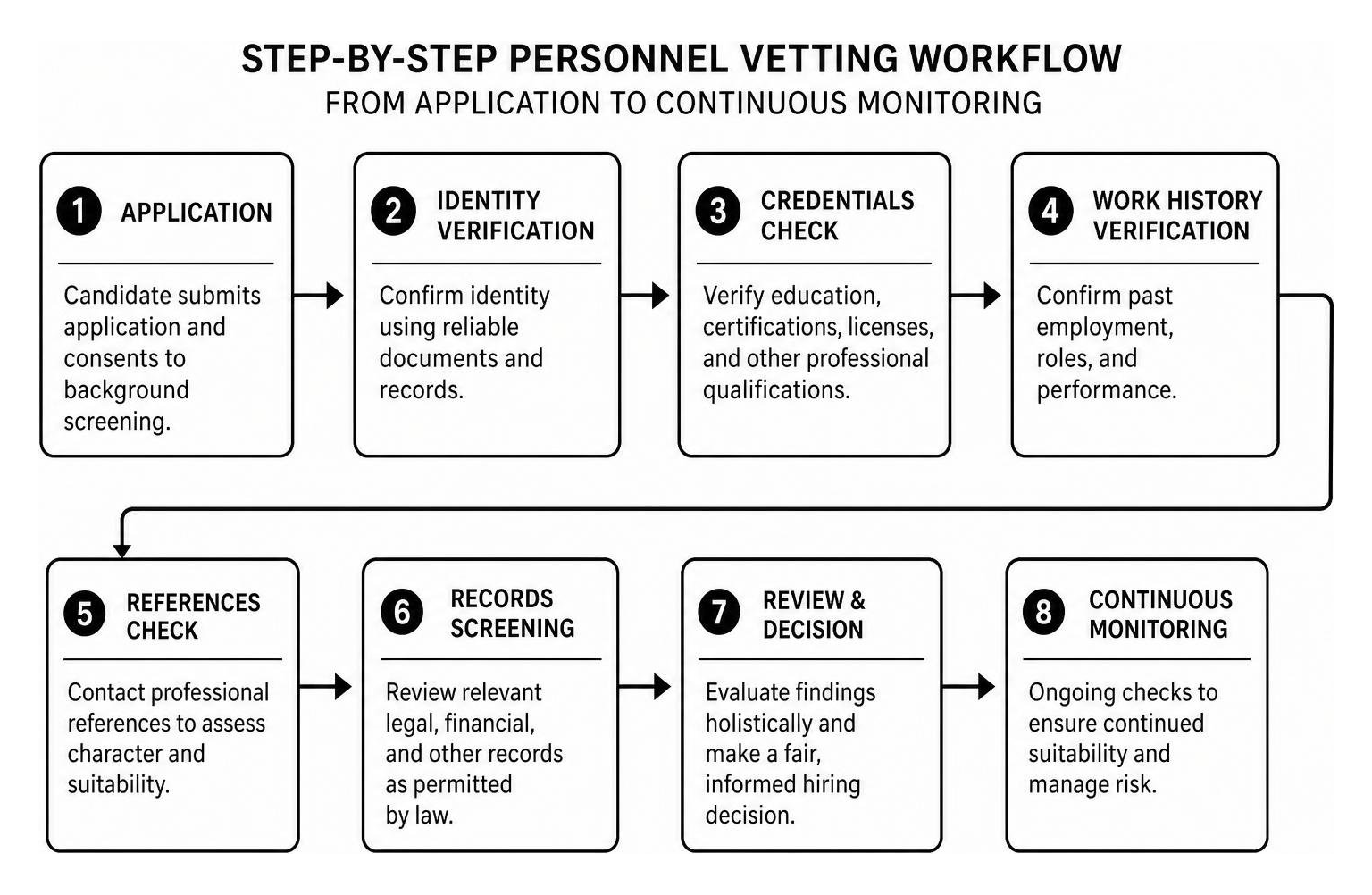
A standardized, multi-stage workflow protects organizations while ensuring fair treatment for applicants.
Position Designation and Screening Protocols in the Vetting of Staff
Before running a single check, organizations must define what risk level a role presents. A warehouse associate does not require the same depth of background inquiry as a chief financial officer handling millions in treasury funds.

- Position Sensitivity Designation: Categorize roles into low, medium, or high risk based on access to funds, client data, intellectual property, or physical infrastructure.
- Conditional Job Offer: Modern employment standards require extending a formal offer conditioned upon satisfactory completion of background reviews.
- Disclosure and Candidate Consent: Securing explicit written authorization and presenting standalone disclosure forms as required by federal and regional privacy statutes.
- Structured Questionnaires: Collecting employment histories, residential records, and identity documents through platforms like the federal electronic questionnaire system (e-QIP / eApp) or enterprise HR tools.
- In-Depth Reference Interviews: Moving beyond standard HR confirmation calls to conduct detailed interviews with former direct supervisors, asking behavioral questions that reveal reliability and character.
Core Checks: Criminal, Financial, and Credential Verification
A standard multi-tier vetting investigation looks at several specific components:
- Criminal Record Verifications: Modern cloud-based platforms return up to 90% of automated criminal background checks in under one minute. Comprehensive checks also review county, state, and federal court repositories alongside domestic and international sanctions lists.
- Education and Credential Audits: Verifying degrees directly with university registrars and confirming professional licenses with state boards to weed out diploma mill credentials.
- Employment History Verification: Contacting payroll departments and verifying tax records to confirm exact employment dates, titles held, and separation terms.
- Credit and Financial History Checks: Reviewing credit histories, bankruptcies, and outstanding civil judgments for roles with direct access to corporate funds or sensitive accounting systems.
- Executive and Directorship Checks: Scanning public registries for conflicts of interest, undeclared business interests, or regulatory sanctions.
Specialized roles require specific, statutory background frameworks. For example, early education institutions must follow established guidelines like the early childhood and care staff vetting standards before placing workers in unsupervised contact with minors.
Continuous Vetting and Reinvestigations After Initial Hire
Vetting should not stop once an employee signs their contract. A clean record on day one does not guarantee risk-free behavior five years later.
Organizations are increasingly adopting continuous vetting models that use automated alerts to flag new criminal convictions, sanctions, or major credit defaults in real time. This ongoing monitoring replaces outdated 5-year reinvestigation cycles, helping risk managers spot insider threats and compliance issues before they escalate.
These models parallel international frameworks like the vulnerable sector periodic re-checking models, which mandate that staff working in critical public and social environments undergo regular background renewals every two to three years.
Federal Personnel Vetting vs. Private Sector Due Diligence
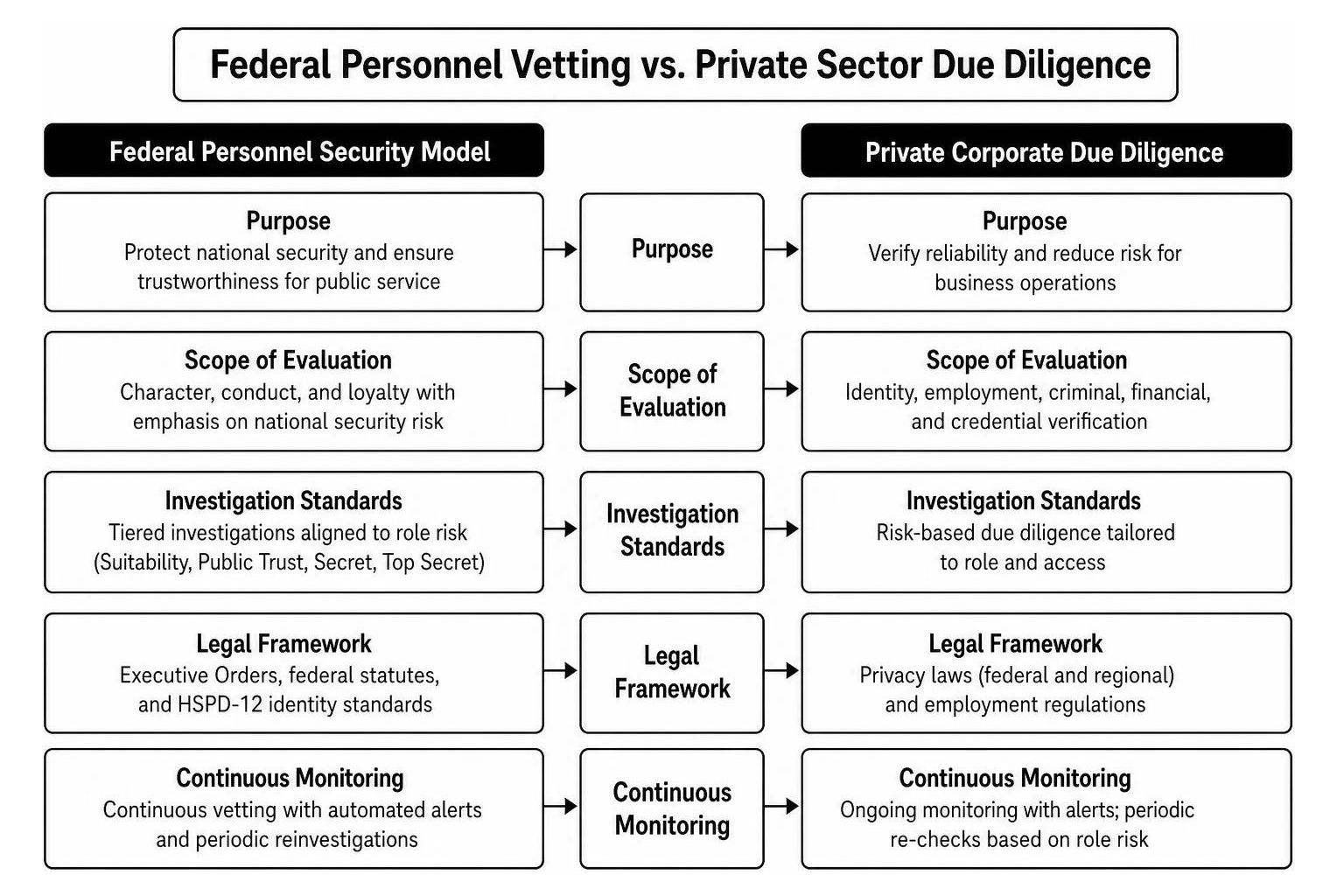
Personnel vetting varies significantly between federal agencies and private commercial enterprises. While both aim to identify dependable talent, their criteria and legal requirements differ.
National Security, Suitability, and HSPD-12 Standards
The federal government uses a structured, tiered approach for personnel evaluation:
- Suitability and Fitness Vetting: Evaluates character and conduct for general competitive service and public trust roles (such as Social Security adjudicators or public health analysts) to ensure effective agency operations.
- National Security Vetting: Governed by Security Executive Agent Directive 4 (SEAD-4), this process assesses eligibility for access to classified defense information across 13 adjudicative guidelines (such as foreign influence, financial management, and personal conduct).
- HSPD-12 Credentialing: Evaluates individuals who require physical or logical access to federal property and IT networks through standard credentialing criteria. These physical security measures are reviewed across various departments, as highlighted in official reports like the government facility secure area access protocols.
A cornerstone of government adjudication is the Whole Person Concept. Under this doctrine, adjudicators do not disqualify candidates over a single past mistake. Instead, they consider the total person—weighing the age of the incident, frequency, surrounding circumstances, and proven rehabilitation.
Best Practices for Private Sector and High-Stakes Roles
High-stakes private sectors—such as family offices, private equity groups, hedge funds, and executive suites—often apply federal-style diligence to protect their operations.

For high-profile hires, private diligence goes well beyond database checks:
- Direct Supervision Inquiries: Cross-referencing non-listed references to confirm actual on-the-job conduct.
- Entity and Corporate Affiliation Audits: Uncovering undisclosed corporate entities, side ventures, or shared business interests that create conflicts.
- Reputational Footprint Reviews: Reviewing public litigation, media mentions, and digital records to assess integrity and public exposure.
Legal Compliance and Regulatory Standards in Staff Screening
Employee vetting is heavily regulated to protect candidates from bias, unlawful privacy invasions, and inaccurate reporting.
Navigating FCRA, GDPR, and Ban-the-Box Mandates
- Fair Credit Reporting Act (FCRA): In the United States, employers using third-party screening vendors must provide a standalone written disclosure, obtain written consent, and follow strict adverse action procedures (providing pre-adverse notice, a copy of the report, and a reasonable dispute window) before rescinding an offer.
- General Data Protection Regulation (GDPR): In Europe and for multinational firms handling EU personal data, employee checks must meet data minimization, strict proportionality, and lawful basis requirements.
- Ban-the-Box and Fair Chance Laws: Many jurisdictions restrict criminal inquiries until after an initial interview or conditional offer. Employers in California must comply with state-level employment history guidelines and city-specific rules like the municipal fair chance hiring regulations, which require an individualized review before denying employment based on a past conviction.
Mitigating Risk and Ensuring Fair Vetting of Staff
To stay compliant and maintain trust with candidates, organizations should adopt these core practices:
- Conduct Individualized Assessments: Avoid automatic, blanket disqualifications for non-violent or older offenses. Evaluate how relevant the record is to the specific duties of the job.
- Apply Consistent Standards: Ensure every applicant for the same position undergoes the exact same screening tiers to prevent discrimination claims under EEOC guidelines.
- Provide Clear Dispute Paths: Always give candidates an easy way to correct inaccurate database records or provide context on past incidents.
- Secure and Purge Records: Store all sensitive vetting reports in encrypted repositories with role-based access, and securely purge files according to local record-retention laws.
Frequently Asked Questions About Staff Vetting
How long does a thorough employee vetting process take?
Turnaround times depend on the depth of the check and the data sources involved:
- Automated Criminal & Identity Checks: Cloud databases can process and return these in under a minute to 24 hours.
- Standard Private-Sector Background Checks: Standard employment, criminal, and education verifications generally take between 2 and 5 business days.
- Federal Suitability and Public Trust Determinations: Typically require 1 to 3 months.
- Top Secret / Sensitive Compartmented Information Clearances: In-depth federal investigations involving field interviews, foreign travel reviews, and neighbor inquiries can take 4 to 9 months.
Does an adverse background check result automatically disqualify a candidate?
No. Except for specific statutory bars (such as specific violent felony convictions barring someone from youth childcare work), an adverse record is not an automatic rejection.
Under EEOC enforcement guidance and state fair-chance regulations, employers must evaluate:
- The nature and gravity of the offense.
- The amount of time that has passed since the conduct or completion of the sentence.
- The direct relevance of the offense to the specific responsibilities of the role.
Documented rehabilitation, character references, and clean employment records since the incident can help mitigate past concerns during the evaluation.
What is continuous vetting and why is it replacing periodic reviews?
Continuous vetting is an automated compliance framework that continuously monitors public records, criminal databases, and regulatory registries for active employees.
Historically, organizations ran background checks once upon hire and then re-screened staff every five years. That left dangerous multi-year gaps where new misconduct could go unnoticed. Continuous vetting alerts security teams to critical legal or financial events right away, allowing leaders to address risks before they harm the organization.
Conclusion: Elevating Integrity Through Systematic Vetting
A well-crafted resume shows how a candidate markets themselves; a thorough vetting process shows who they actually are. Building a systematic, legally compliant vetting program protects your teams, safeguards valuable assets, and establishes a workplace culture rooted in genuine trust.
At Jets & Capital, we apply these same rigorous vetting principles when selecting our community of family offices, institutional investors, and sovereign allocators. Whether you are building an elite executive team, safeguarding enterprise assets, or attending high-level private investment roundtables, disciplined due diligence remains the foundation of lasting success.
Explore our curated allocator vetting standards at Jets & Capital to learn how we maintain an exclusive network of authentic decision-makers across our private investment summits.
