
The High-Flying Secret to Elite Family Office Deal Sourcing
Why a Family Office Hangar Party Can Open Better Conversations
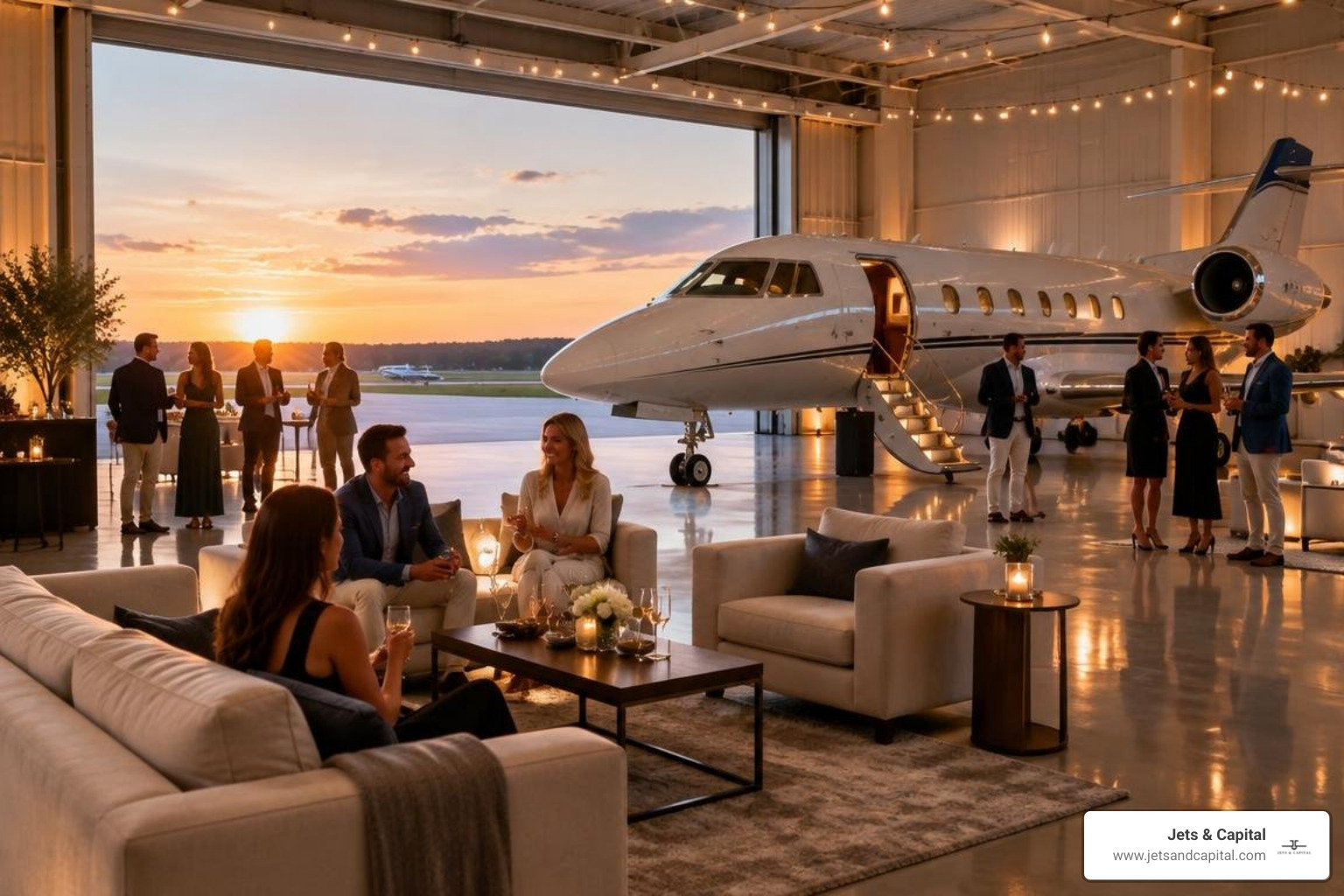
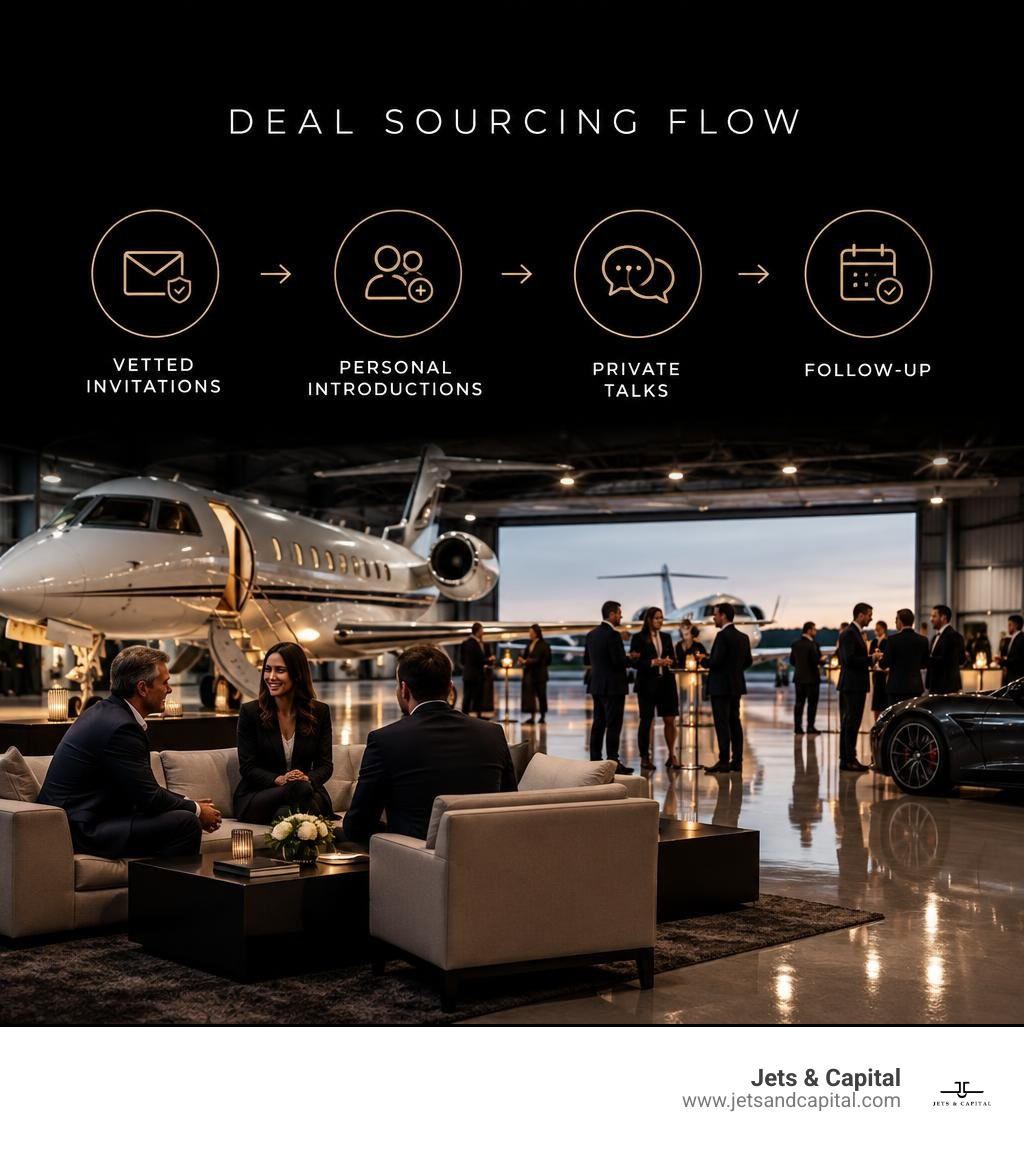
A family office hangar party is an invitation-only gathering in an aircraft hangar where investors and family office leaders can meet in person. Unlike a gala built around a stage or a packed schedule, it gives guests room for private, unhurried talks. For deal sourcing, the key is a vetted guest list, quiet places to talk, and introductions based on shared interests, not a stream of pitches.
The aircraft setting makes the event memorable. The real value comes from who is in the room and whether those first talks lead to a useful follow-up.
I'm Jordan Hutchinson, founder of Jets & Capital. My work with a family office and my experience hosting private aviation networking events shape how I approach a family office hangar party: put genuine connections ahead of spectacle.
Anatomy of an Exclusive Family Office Hangar Party

When done right, walking into an operational aircraft hangar feels entirely different from entering a sterile hotel conference center. You step across polished, reflective epoxy floors underneath architectural clear-span steel trusses, framed by the silhouette of ultra-long-range business aircraft and high-performance supercars. It blends industrial scale with refined hospitality, offering an environment that naturally encourages relaxed conversation among peers.
For ultra-high-net-worth individuals (UHNWIs), principal allocators, and single-family office executives, the private aviation environment is already a familiar ecosystem. In major wealth epicenters like Miami, Palm Beach, New York, San Francisco, and Dallas, private aviation represents both personal utility and operational efficiency. As highlighted in recent research on luxury asset migration, elite capital allocators are increasingly concentrating their time and assets around private aviation corridors.
Hosting an event in an active hangar creates immediate shared context. It removes the stiff corporate pretension found at typical investor galas, replacing it with an atmosphere where genuine relationships develop organically over curated culinary experiences and quiet, private conversations.
Why the Family Office Hangar Party Outperforms Traditional Ballrooms
Traditional hotel ballrooms present real limitations for high-caliber investor gatherings. Between noisy shared hallways, rigid interior walls, and public lobbies that compromise attendee privacy, luxury hotel spaces rarely provide the discretion required for high-stakes deal allocation.
In contrast, hangar facilities offer massive footprint flexibility, dedicated perimeter security, and acoustic isolation that keeps sensitive conversations private. Exploring unique event venues reveals that private hangars deliver a blank canvas where seating zones, presentation stages, and private conversation suites can be laid out without restrictive structural columns.
| Feature / Metric | Private Jet Hangar Venue | 5-Star Hotel Ballroom |
|---|---|---|
| Privacy & Discretion | Isolated facility, private gate access, no public foot traffic | Shared public foyers, open elevators, variable security |
| Spatial Flexibility | Clear spans up to 140+ feet, customizable modular suites | Fixed room layouts, decorative low chandeliers, fixed pillars |
| Audiovisual Capabilities | High-load industrial trusses, custom line-array AV rigging | Strict ceiling weight limits, baseline commercial lighting |
| Arrival Experience | Direct tarmac pull-up, private jet ramp drop-off | Shared valet lines, crowded hotel lobbies, parking garages |
| Guest Perception | Bespoke, exclusive lifestyle experience | Standard corporate conference format |
Beyond structural advantages, the psychological impact on attendees is distinct. When allocators arrive directly at a secure fixed-base operator (FBO) ramp, skip public check-in desks, and step straight into an invite-only space, the tone is established immediately: this is a focused gathering built for serious decision-makers.
Luxury Amenities and Spatial Dynamics on the Tarmac
Modern private aviation facilities are designed with expansive layouts, featuring clear spans of 140 feet or more and vertical door clearances reaching 28 to 35 feet. These dimensions easily accommodate large-cabin corporate jets alongside curated seating lounges, dedicated presentation staging, and executive breakout spaces.
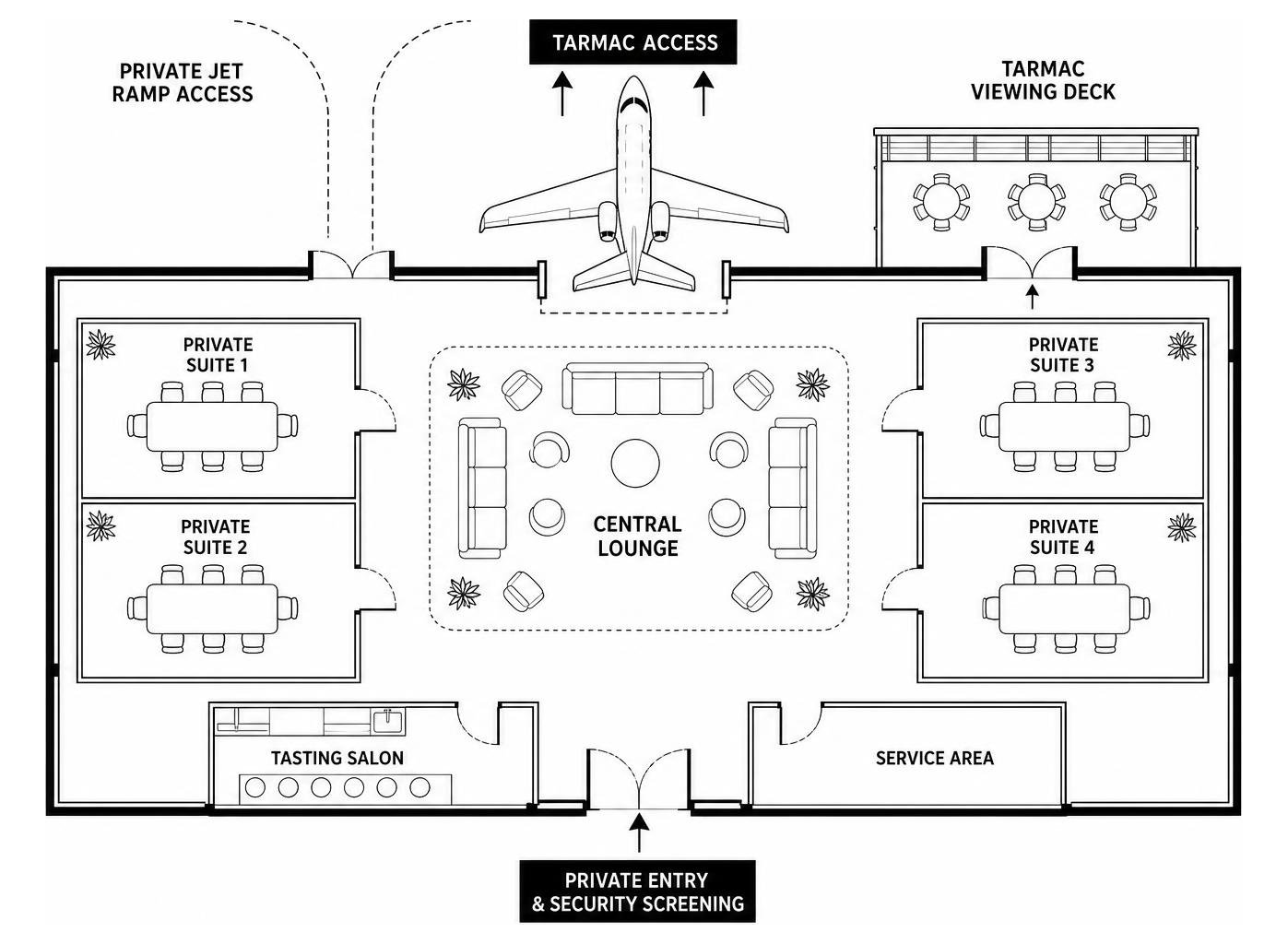
To foster genuine deal-making, the venue layout should be divided into deliberate micro-environments:
- Central Lounge Pods: Plush, low-profile living room clusters positioned beneath aircraft wings, designed for relaxed group conversations.
- Acoustic Breakout Suites: Sound-dampened meeting areas equipped with executive board tables, high-speed encrypted connectivity, and discreet service.
- Tarmac Viewing Decks: Indoor-outdoor transition zones where guests can step out onto the ramp to view incoming arrivals under evening sky lighting.
- Tasting Salons: Dedicated sommelier and culinary stations that encourage mingling without creating long lines or bottlenecks.
Structuring the floor plan this way ensures that guests can transition smoothly between open networking and focused, one-on-one business discussions during these exclusive member events.
Operational Logistics, TSA Protocols, and Hangar Security
Hosting a private gathering within an active aviation facility requires thorough logistical coordination. Because hangars operate on or adjacent to active airport ramps, event planning must seamlessly integrate with local airport authority rules and federal safety guidelines.
Key operational considerations include:
- Airside Access and Credentialing: Every staff member, vendor, and guest must pass through pre-screened security checkpoints managed in close coordination with the FBO and local airport operations.
- Foreign Object Debris (FOD) Mitigation: Active tarmac zones require strict physical inspections before, during, and after the gathering to ensure no loose items drift into aircraft maneuvering areas.
- Fire Suppression and Safety Systems: Hangars utilize specialized fire prevention infrastructure, including high-expansion foam or overhead deluge systems. Production rigs, heating units, and lighting arrays must be installed in full compliance with local municipal aviation safety codes.
- Ramp Marshalling: Coordinating guest vehicle drop-offs with incoming private flights requires dedicated airside safety escorts to maintain clear transit lanes.
Managing High-Net-Worth Arrivals and Middlemen Interception
Reaching ultra-wealthy principals and family office leaders requires handling direct communication challenges. Executive assistants, family office chief operating officers, and gatekeepers naturally filter out generic email blasts and impersonal event invites.
To ensure invitations reach key decision-makers:
- Direct Delivery Methods: Send physical, personalized credentials alongside encrypted digital access passes directly to verified family office representatives.
- Flexible Scheduling Logistics: UHNW guests rarely operate on rigid corporate timelines; flight delays and dynamic calendars mean registration systems must handle rolling arrivals smoothly.
- Frictionless Check-In Protocols: Eliminate name tags, long registration desks, and clipboards. Instead, utilize discreet digital guest verification at the primary security gate to direct guests smoothly into the reception lounge.
Following these steps, as outlined in our private aviation networking guide, ensures high attendance and a comfortable guest experience from the moment principals arrive on site.
Registration and Space Allocation
Allocating venue access and dedicated executive seating requires clear, organized planning. Because space within active hangar facilities is limited, attendance should be intentionally capped to preserve privacy and ease of conversation.
A structured onboarding workflow keeps the process smooth:
- Pre-Screening Review: Reviewing investor credentials to ensure that primary attendees represent verified single-family offices, multi-family offices, or qualified institutional allocators.
- Spatial Mapping: Coordinating aircraft placement with production footprints to ensure open sightlines and safe walking paths throughout the space.
- Digital Credentialing: Distributing secure, encrypted QR codes or vehicle gate passes that sync directly with on-site FBO security personnel.

High-Impact Production: Entertainment, Catering, and Deal-Making Atmosphere
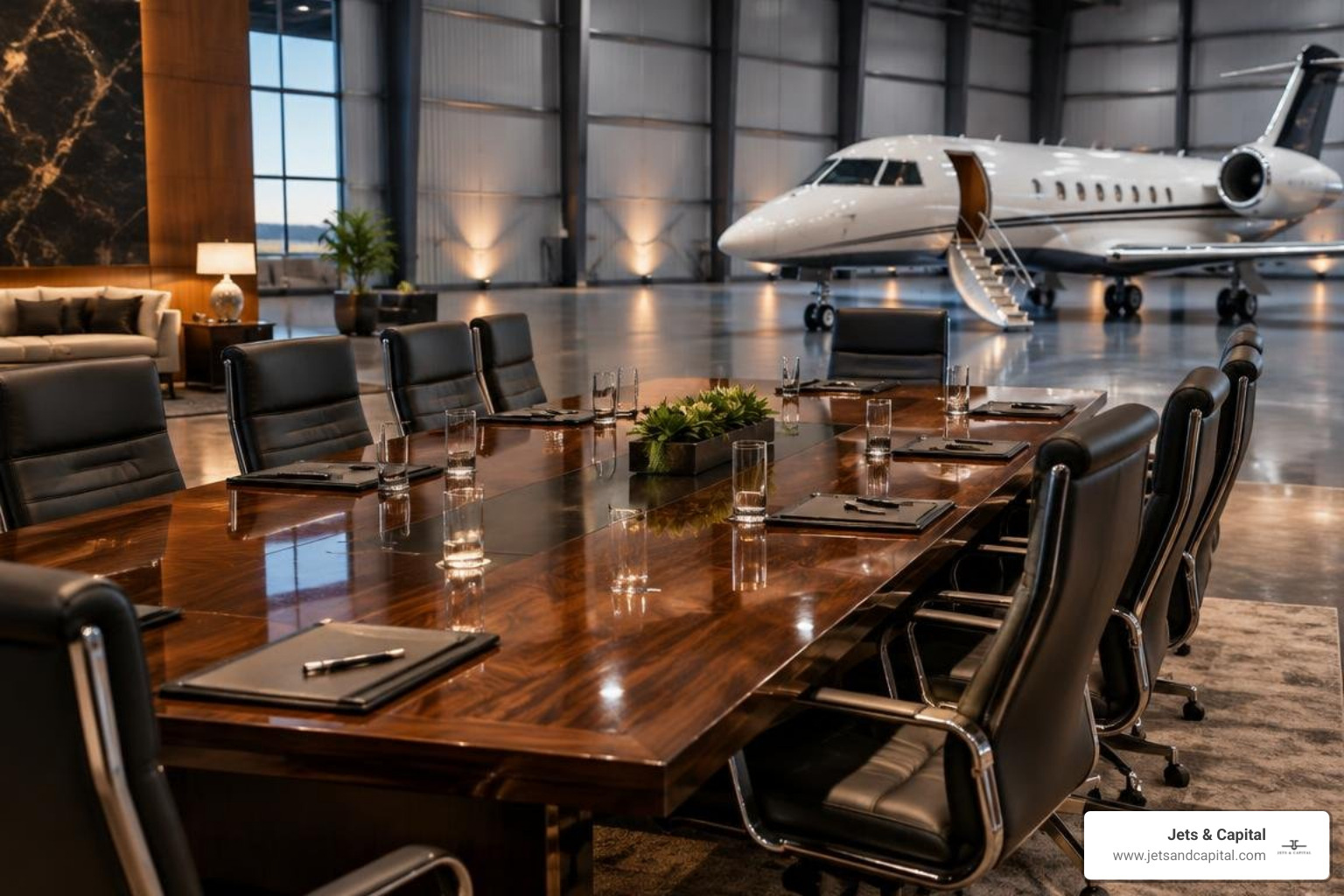
The visual design of an aviation venue sets the foundation for high-level networking. Industrial steel, polished concrete floors, and expansive ceilings benefit from warm, architectural uplighting, high-lumen projection mapping across aircraft fuselages, and carefully tuned acoustics.
Because metal hangars naturally reflect sound, production teams must install balanced line-array audio systems. This keeps speech crisp and background music comfortable, ensuring that conversations remain effortless across every lounge pod and dining area.
Structuring High-Value Deal Flow at a Family Office Hangar Party
The real objective of an investor gathering is facilitating productive, unhurried deal exploration. Rather than subjecting guests to high-pressure stage pitches, the environment should support organic syndication and private discussions across key sectors like private equity, venture capital, real estate, and private credit.
Structuring effective deal flow involves:
- Curated Syndicate Lounges: Grouping seating pods loosely by investment focus—such as emerging technologies, direct private equity, or commercial real estate—enabling allocators to connect naturally around shared portfolio goals.
- Private Consultation Corners: Providing quiet, enclosed conference suites where principals can review offering memorandums, explore term sheets, or discuss co-investment opportunities in private.
- Direct Introductions: Connecting attendees based on verified portfolio needs, ensuring conversations start with mutual context and high relevance.
These structured elements create an environment where exclusive UHNW investor parties become valuable engines for private capital deployment.
Experiential Elements: Supporting Conversation and Deal-Making
Entertainment and dining should enhance conversation rather than compete with it. Heavy culinary presentations and rigid seating charts can slow down networking, whereas interactive, high-end hospitality keeps energy high throughout the evening.
Effective hospitality and entertainment elements include:
- Bespoke Chef Stations: Live-action culinary presentations, raw bars, and artisanal carving stations distributed across the hangar to keep guests moving and interacting.
- Curated Aircraft Walkthroughs: Open access to modern business aircraft cabins, giving guests a chance to tour cockpits and luxury interiors during networking breaks.
- Acoustic & Low-Volume Live Music: Modern jazz ensembles or subtle instrumental performances that provide atmosphere without overpowering dialogue.
- Curated Product Showcases: Strategic pairings of luxury watches, collector supercars, or contemporary fine art that spark shared conversation among attendees.
Frequently Asked Questions About Private Jet Hangar Networking
How do planners manage airport security and TSA clearances for hangar events?
Event organizers work directly with the FBO leadership, the local airport authority, and regional security officials well in advance of the event. All guests and production personnel submit basic screening information before arrival.
On the day of the event, dedicated security teams manage private gate access, verify pre-cleared guest credentials, and provide badged escorts across any active ramp areas to ensure full safety compliance.
What makes an operational hangar superior to luxury hotel venues for deal sourcing?
Operational hangars offer complete spatial privacy, total perimeter control, and an exclusive setting that traditional hotel venues cannot match.
Because hangars do not have public lobbies or outside foot traffic, family office principals can discuss sensitive co-investment strategies and allocation preferences discreetly. The open architectural footprint also allows for customized seating layouts that encourage natural networking.
How are attendee lists structured to maintain high allocator-to-sponsor ratios?
Maintaining a high standard of conversation requires a rigorous, invitation-only vetting process. Attendance is structured so that family office principals, institutional allocators, and active investors make up the vast majority of the room—consistently maintaining an 85% allocator concentration.
Commercial service providers and fund sponsors are strictly capped, ensuring that conversations focus on high-level strategy, co-investment opportunities, and long-term relationship building rather than constant pitching.
Conclusion: Transforming Private Aviation Spaces into Capital Hubs
An aircraft hangar is more than an impressive venue—it is a functional, private platform where the world's most sophisticated investors can gather away from public noise. By blending industrial architecture with curated hospitality, deep security, and strict attendee vetting, these gatherings create an ideal environment for serious capital allocation.
At Jets & Capital, we host invitation-only private aviation networking events across premier wealth hubs including San Francisco, Miami, Palm Beach, New York, Dallas, Salt Lake City, and Las Vegas.
By maintaining a strict 85% allocator concentration, our gatherings ensure every conversation connects you with qualified principals, active family offices, and leading institutional investors.
Explore our upcoming private gatherings and discover the power of private jet networking for your investment portfolio.
