
The Complete Guide to Brand Merchandise Options
Why Brand Merchandise Is One of the Most Powerful Marketing Tools Available

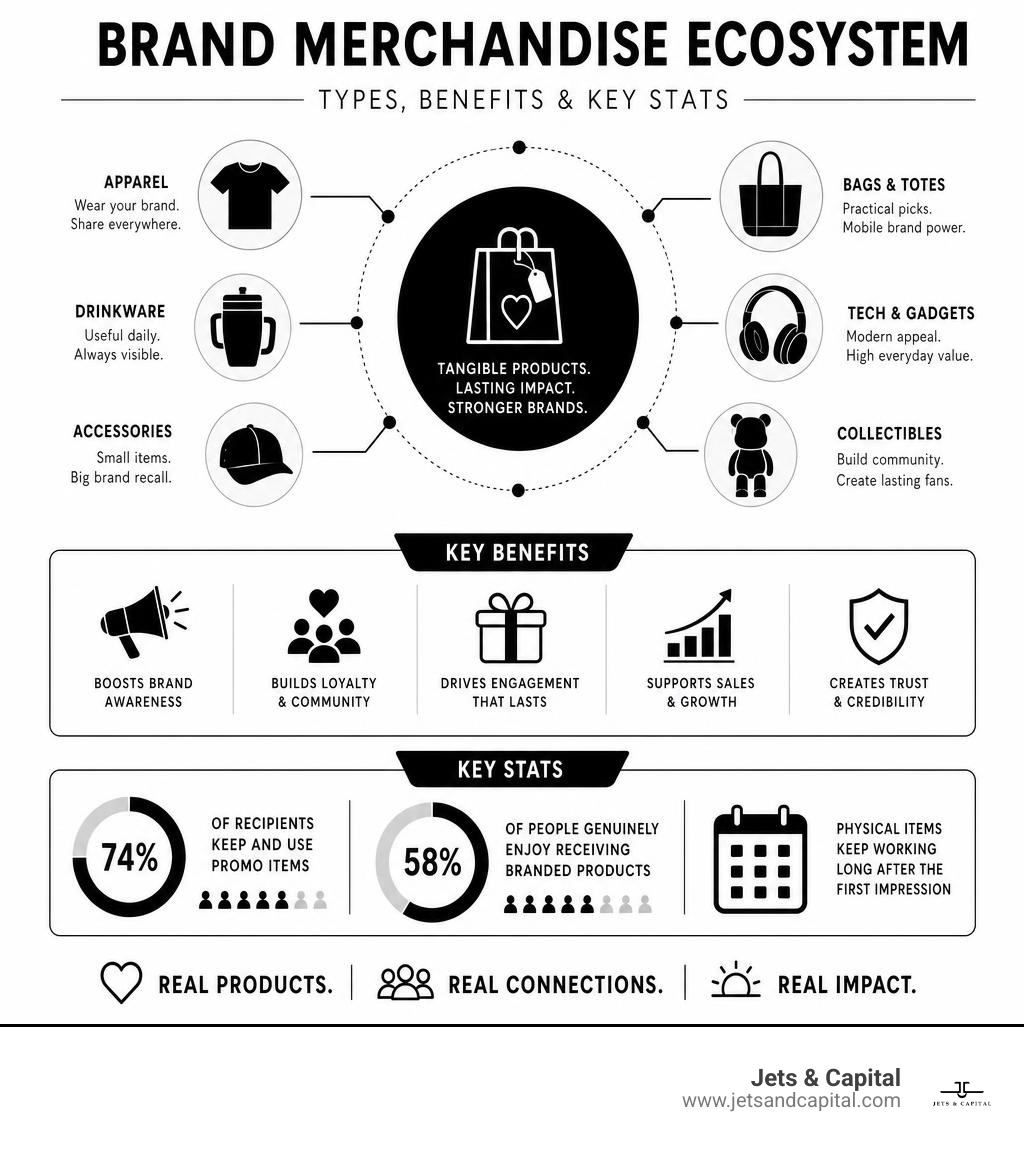
Brand merchandise is any physical product — apparel, drinkware, accessories, collectibles — that carries your logo, design, or identity and is either sold or given to your audience.
Here's a quick breakdown of what you need to know:
| What It Is | Why It Matters | Who Uses It |
|---|---|---|
| Physical products with your brand on them | Builds loyalty, awareness, and revenue | Businesses, artists, sports teams, events |
| Sold or given away depending on strategy | 74% of recipients keep and use promo items | Startups to Fortune 500s |
| Ranges from T-shirts to premium collectibles | 58% of people genuinely enjoy receiving branded products | Consumer brands and B2B companies alike |
Physical products do something digital ads simply can't — they create a tangible, lasting connection between a brand and its audience. A well-designed hoodie or a quality water bottle doesn't get scrolled past. It sits on a desk, gets worn in public, and keeps working for your brand long after the first impression.
That's why companies of every size — from indie musicians to global streaming platforms — are investing more seriously in merchandise strategy. The question isn't whether to use branded merchandise. It's how to do it well.
I'm Jordan Hutchinson, founder of Jets & Capital, and through years of building high-net-worth networking events and running multiple businesses, I've seen how thoughtfully executed brand merchandise can turn a room full of strangers into a community. This guide covers everything you need to make that happen.
Defining Brand Merchandise: Swag, Promo Products, and Corporate Gifts
While the terms are often used interchangeably, there are distinct differences between "swag," "promotional products," "corporate gifts," and true retail-quality brand merchandise. Understanding these nuances is crucial for planning your budget, setting your design standards, and meeting your audience's expectations.
At its core, the distinction lies in the intent, the quality, and the distribution method. True brand merchandise is built to retail standards. It is something your audience would actively choose to buy or wear because it aligns with their personal style and identity.
To help clarify the differences, let's look at how they stack up:
| Category | Typical Quality | Primary Goal | Common Distribution |
|---|---|---|---|
| Promotional Products | Budget to Mid-tier | Mass brand exposure, lead generation | Trade shows, public events, community outreach |
| Swag | Mid-tier | Employee engagement, event humanization | Onboarding kits, virtual event packages |
| Corporate Gifting | Premium / High-end | Relationship building, client retention | Executive meetings, holidays, VIP events |
| Brand Merchandise | Retail Quality | Community building, brand advocacy, revenue | Online storefronts, fan communities, exclusive drops |
The data supports the power of physical branding. Industry research shows that 58% of people love getting promo products from brands, and a staggering 74% keep promotional gifts and use them regularly. However, the longevity of these items depends entirely on their quality and utility.
What is Brand Merchandise?
True brand merchandise is an extension of a company’s identity. Unlike cheap giveaways, retail-quality merchandise focuses on aesthetic appeal, product durability, and a deep consumer connection.
When we design merchandise, we aren't just slapping a logo on a basic t-shirt. We are creating a product that tells a story. It should feature thoughtful typography, custom colorways, and materials that feel great to the touch. The goal is to create an emotional connection where the wearer feels like they are part of an exclusive club.
Swag vs. Promotional Products vs. Corporate Gifts
Let's break down the other three pillars of physical branding:
- Promotional Products: These are high-volume, budget-friendly giveaway items like pens, tote bags, and keychains. They are designed to put your logo in front of as many eyes as possible. If you need local fulfillment in the Southwest, you can source these quickly through services like Los Angeles Fast and Quick Promotional Products or Branded Clothing, Promotional Products, Shirts, Hats, Pens, Bags ... .
- Swag: Usually distributed during employee onboarding or corporate events to drive internal engagement. High-quality custom apparel, hoodies, and tech organizers fall into this category. For companies based in Texas or Utah, platforms like Swag Store: Custom Swag Merchandise Dallas TX and SLC Merch | Promotional Products & Apparel | Salt Lake City, UT ... specialize in curating these kits.
- Corporate Gifts: These are high-end gifts specifically curated for key partners, investors, or VIP clients. Think premium leather goods, custom-engraved drinkware, or high-end tech accessories.
Why Customers and Fans Buy Brand Merchandise
Why would someone pay their hard-earned money to wear a company’s logo? The answer lies in psychology. Fans don't buy merchandise because they need another shirt; they buy it because they want to feel an emotional connection to what that brand represents.
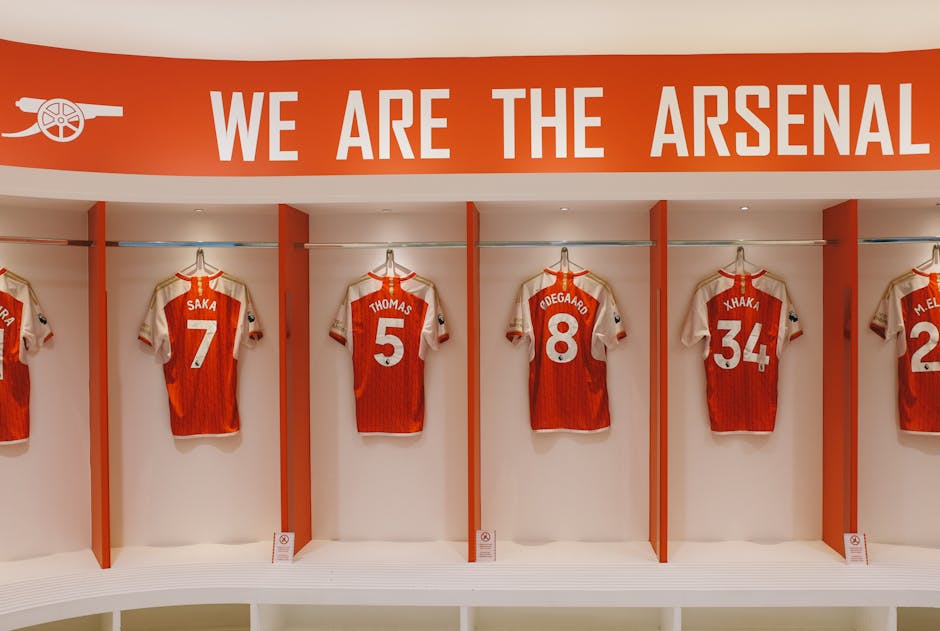
Whether it is a cult-classic television show, an elite investment network, or a favorite software tool, wearing the merch is a form of brand advocacy and community building. For example, The Official Netflix Merch Shop | Netflix Shop succeeds because it allows viewers to bring their favorite digital stories into the physical world.
The Psychology of Brand Loyalty and Belonging
Wearing branded apparel is a powerful form of identity expression. It signals to the world: "This is who I am, and these are the values I support."
By wearing your gear, your customers become walking billboards, but they do so willingly because they feel a sense of belonging to your fan communities. It is a badge of honor. When an investor wears one of our high-quality shirts, they aren't just promoting us—they are signaling their membership in an exclusive community of allocators and deal-makers.
Practical Value vs. Emotional Value in Brand Merchandise
The most successful merchandise strikes a perfect balance between daily utility and aesthetic appeal.
- Practical Value: Items like insulated water bottles, premium notebooks, and weather-resistant windbreakers are kept because they serve a daily purpose.
- Emotional Value: Limited-edition posters, character pins, and premium collectibles are kept because of their sentimental worth.
For instance, fans flock to the Shop Official Star Trek Discovery Merchandise & Gifts because the items offer both daily utility (like mugs and journals) and high emotional value for the sci-fi community.
Strategic Design: Matching Merch to Your Target Audience
The biggest mistake a company can make is choosing products based on what they like, rather than analyzing their audience demographics. Product curation and design aesthetics must align perfectly with your community's lifestyle.
A streetwear brand’s audience wants oversized heavy-weight tees and minimalist embroidery, while a corporate finance crowd prefers tailored quarter-zips and subtle, tonal branding. Look at the NYC Collection - Only NY to see how a brand can capture the raw, artistic energy of a city and translate it into apparel that local communities wear with pride.
Nailing Product Choice and Quality Standards
Quality is non-negotiable. If a shirt shrinks after one wash or a water bottle leaks, it goes straight to the trash—and your brand reputation goes with it.
To put this in perspective, top-tier curation platforms like Swag.com test thousands of items, and a massive 95% of tested products do not make the cut for their curated selection. They maintain this strict standard because product durability directly reflects your brand's values.
For premium, retail-ready garments, working with specialized custom designers like Palm Beach Clothing - High Quality Apparel and Custom Designs ensures that your custom decoration, embroidery, and fabric weights meet the highest standards.
Designing for Usability and Shareability
To make your merchandise desirable, you must focus on retail-ready designs rather than giant, obnoxious logos. Keep the branding subtle. A small, elegant sleeve print or a sleek hem-tag is far more likely to be worn regularly than a massive logo plastered across the chest.
Furthermore, consider the unboxing experience. Beautiful packaging encourages social media sharing, turning a simple product delivery into a viral marketing moment. Utilizing professional screen-printing and embroidery houses like Brand House Miami l Custom Apparel, Silk-Screen & Embroidery can help you achieve those premium, retail-grade finishes that customers love to show off online.
Advanced Merchandising: Collaborations, Drops, and Values
As we navigate through 2026, the brand merchandise landscape has evolved. Modern consumers want exclusivity, story-driven products, and alignment with their personal values.
A great example of this is the Arcane Caitlyn and Vi Foil Tee | Riot Games Store , which combines high-quality garment pigment dyeing with iridescent foil detailing to create an artistic, limited-edition piece of apparel that fans treasure.
The Power of Limited Edition Drops and Exclusive Collabs
The "drop" model relies on artificial scarcity to generate excitement and urgency. By creating limited runs of a product, you leverage FOMO (fear of missing out) marketing to drive rapid sales.
Co-branded products and cross-industry collaborations are also incredibly effective. For example, the gaming giant Riot Games successfully launched the Worlds 2025 Glaive Tee | Riot Games Store and the companion Worlds 2025 Xin Zhao Tee | Riot Games Store to celebrate 15 years of esports. Because these items were tied to a specific historic moment, they became instant collector's items.
Communicating Brand Values and Sustainability
Today's consumers care deeply about social responsibility. Your merchandise is a direct reflection of your company's ethics.
Using eco-friendly fabrics, organic cotton, and recycled materials shows your audience that you care about the planet. Transitioning to green fabrics isn't just a trend; it is a fundamental shift in consumer behavior. When your merchandise aligns with sustainable practices, your customers wear it with an extra layer of pride.
Measuring ROI and Managing Your Merchandise Program
How do you justify the cost of your merchandise program? Unlike digital advertising, where you can easily track cost-per-click, physical products require a different approach to measuring ROI metrics.
However, the long-term value of brand impressions from physical products is often much higher. A single high-quality shirt worn in public can generate thousands of impressions over its lifetime. We discuss this dynamic in detail in our guide on Branded Investor Networking Shirts.
Tracking the Impact of Your Merch Campaigns
While physical items are tangible, you can still use digital tools to track their effectiveness:
- Promo Codes: Print unique discount codes on the hangtags of your shirts to track offline-to-online conversions.
- Tracking URLs & QR Codes: Insert custom QR codes on packaging or labels that lead to exclusive landing pages, allowing you to measure lead generation.
- Customer Lifetime Value (LTV): Monitor whether customers who own or purchase your merchandise show higher retention rates and brand loyalty over time.
Modern Distribution: Automation and Company Stores
Managing physical inventory can be a logistical headache. Fortunately, modern technology has simplified the distribution logistics:
- On-Demand Printing: Eliminates the need to hold massive amounts of inventory by printing items only when a customer places an order.
- Company Stores: Set up a private, branded portal where your employees or clients can log in, select their preferred sizes, and have items shipped directly to their homes.
- Group Ordering: Streamline large-scale distributions by using shared links where recipients enter their own shipping details, saving your team hours of administrative work.
Frequently Asked Questions about Brand Merchandise
What are the most popular brand merchandise items for 2026?
In 2026, the trend is heavily focused on retail-quality apparel, sustainable drinkware (like recycled steel tumblers), and minimalist tech accessories. Heavyweight organic cotton hoodies and oversized tees with subtle, artistic branding are dominating the apparel space.
How do you measure the return on investment (ROI) of promotional merchandise?
ROI can be measured by tracking brand impressions, utilizing custom QR codes and promo codes on packaging, and comparing the customer acquisition cost (CAC) of merch-driven campaigns against traditional digital ads.
Can small businesses order custom merchandise with no minimums?
Yes! Thanks to advancements in on-demand printing and digital decoration technologies, many suppliers now offer low-minimum or no-minimum ordering options, providing incredible budget flexibility for growing brands.
Conclusion
Strategic merchandising is about far more than just printing a logo on a product. It is about creating a physical touchpoint that represents your brand's standards, fosters community, and builds lifelong loyalty.
At Jets & Capital, we host exclusive, invite-only networking events for family offices, investors, and ultra-high-net-worth individuals in luxury private jet hangars. With our strict vetting process ensuring an audience of 85% allocators, we understand the absolute necessity of high-end, uncompromising quality.
If you are ready to experience the power of elite networking or want to explore our exclusive merchandise, secure your Tickets for our upcoming events or visit the official Jets & Capital Shop today.
