
Unlocking New Opportunities: The World of Alternative Investments
Defining Alternative Asset Investments and Their Core Characteristics

When we talk about alternative asset investments, we are essentially describing a vast "everything else" category. If it isn't a stock, a bond, or a stack of cash in a savings account, it likely fits under the umbrella of alternatives. These assets are defined by their non-traditional nature, and they typically share a few DNA markers that set them apart from the S&P 500 or a Treasury note.
The most significant characteristic is low correlation. This is a fancy way of saying that when the stock market takes a nosedive because of a bad jobs report or a geopolitical hiccup, your alternative assets might not follow suit. They often march to the beat of their own drum. For instance, the value of a rare 1933 Saint-Gaudens Double Eagle gold coin (of which only 11 are known to exist) isn't necessarily tied to whether tech stocks are having a bad week.
However, this independence comes with a trade-off: illiquidity. You can sell 1,000 shares of Apple in seconds with a tap on your phone. Selling an 80-year-old bottle of rare Bordeaux or a stake in a private skyscraper takes significantly longer. Most alternative asset investments involve "lock-up periods" where your capital is committed for several years.
To help visualize these differences, we’ve broken down the core distinctions in the table below:
| Feature | Traditional (Stocks/Bonds) | Alternative Asset Investments |
|---|---|---|
| Liquidity | High (Daily trading) | Low (Monthly, quarterly, or years) |
| Regulation | High (SEC registered) | Light (Often exempt from registration) |
| Correlation | High to market cycles | Low to traditional markets |
| Valuation | Real-time market pricing | Periodic appraisals/estimated |
| Minimums | Low (can start with $1) | High (often $25k to $1M+) |
For a deeper dive into how these fit into a broader strategy, you can explore What Are Alternative Investments? Definition and Examples.
Distinguishing Alts from Stocks and Bonds
The fundamental difference lies in where the "value" is created. Traditional investments live in the public markets. They are subject to the whims of public sentiment, high-frequency trading algorithms, and quarterly earnings calls. Because they are traded so frequently, their prices are highly volatile but transparent.
Alternative asset investments primarily exist in private markets. This includes private equity (buying companies not listed on an exchange) and private credit (lending to businesses directly). Because these assets aren't traded every second, they offer a sense of price stability. You won't see your real estate holding "flash crash" by 10% on a Tuesday afternoon. However, this stability is partly because valuations are performed less frequently—often quarterly or annually based on appraisals rather than market trades.
We often see our members at Jets & Capital looking for this exact stability to balance out the "noise" of their public portfolios. You can learn more about how we view these portfolio strategies to manage long-term wealth.
The Role of Regulation and Fees
If the public market is a strictly refereed professional football game, alternative asset investments can sometimes feel like a high-stakes pickup game. While they are still subject to federal laws like the Dodd-Frank Act and oversight by the SEC, many alternative funds are not required to register in the same way mutual funds are. This "light" regulation allows fund managers more flexibility in their strategies, but it also places a much higher burden of due diligence on us as investors.
The fee structure is also distinct. While a traditional ETF might charge a tiny fraction of a percent, alternatives often follow a "2 and 20" model: a 2% annual management fee and a 20% performance fee (often called carried interest). Managers usually have to hit a "hurdle rate"—a minimum return—before they can start collecting that 20% slice of the profits. This aligns their "skin in the game" with your success.
The Diverse Landscape: Main Types of Alternative Investments
The world of alternatives is incredibly diverse, ranging from high-tech venture capital to ancient commodities. It’s helpful to view them through the lens of their risk-return profiles.

For a comprehensive overview of these categories, Alternative Investments: Types, Benefits & Risks | Britannica Money provides an excellent breakdown of how these assets function.
Private Equity and Venture Capital Trends
Private equity (PE) involves taking ownership stakes in private companies to drive growth or restructure operations. In 2024, private equity posted 7.3% returns, which actually lagged behind the stellar 25% return of the large-cap S&P 500. This underperformance was largely due to higher interest rates making it more expensive to finance buyouts.
Venture Capital (VC), the "younger sibling" of PE that focuses on early-stage startups, saw a modest recovery in 2024. The segment returned 3.6%, a significant improvement from the -3% returns seen in 2023. At Jets & Capital, we focus heavily on vintage diversification—the idea that you shouldn't put all your money into PE in a single year, but spread it across different "vintages" to capture different economic cycles. You can read more about how these deals move through the ecosystem in our guide on family office deal flow.
Real Estate and Tangible Alternative Asset Investments
Real estate is often called the world’s biggest asset class, and for good reason. It combines the income-generating potential of a bond (via rent) with the growth potential of a stock (via appreciation).
For many individual investors, the easiest entry point is a REIT (Real Estate Investment Trust). These are companies that own or operate income-producing real estate. By law, REITs must pay out at least 90% of their taxable income to shareholders as dividends. Historically, the FTSE NAREIT All Equity REITs index has delivered an impressive 11.3% average annual total return since 1972.
Commodities and Passion Assets
Commodities are the raw materials of the global economy—oil, corn, gold, and lithium. They are among the oldest forms of investing; in fact, the earliest formal commodities exchange traces back to 16th-century Amsterdam.
Gold remains the "granddaddy" of inflation hedges. Over the last 30 years, gold has returned an average of 6.7% annually, with prices topping $2,000 per ounce in 2024. Then there are "passion assets"—fine art, vintage cars, and rare wine. These offer what we call an emotional dividend. You can’t hang a share of Apple on your wall and admire it, but you can certainly do that with a Warhol. Just be aware that these assets require true expertise; the transaction costs for art can be as high as 10-20% when buying or selling.
Strategic Benefits: Diversification and Inflation Hedging
Why go through the trouble of dealing with illiquidity and high fees? The answer is simple: risk management.
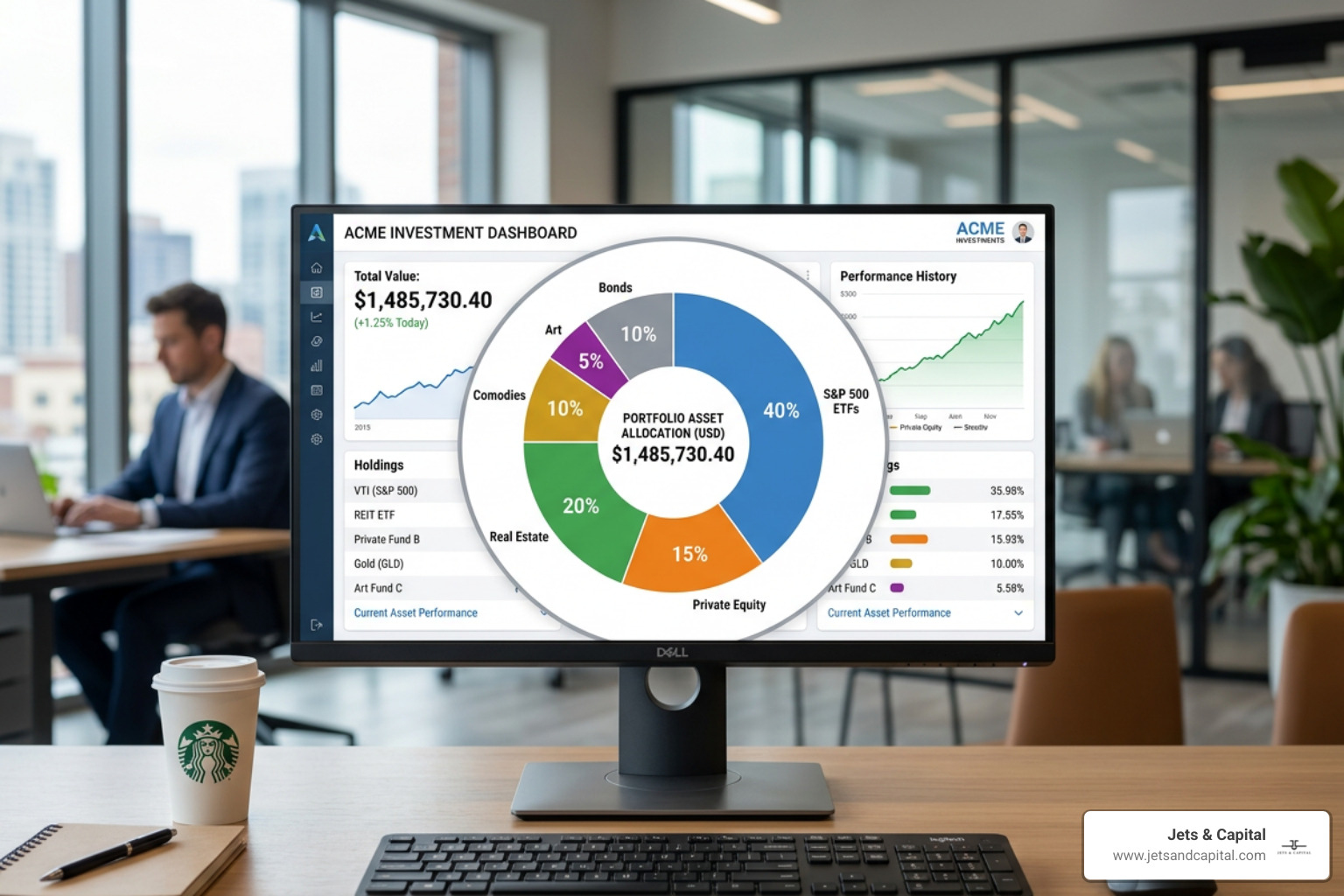
As public markets shrink—the number of publicly traded companies has dropped by over 40% in 25 years—investors who stick only to stocks are missing out on a massive portion of the economy. By adding alternative asset investments, you are diversifying the drivers of your wealth. A stock might go up because of consumer spending; a timberland investment goes up because trees grow, regardless of what the Federal Reserve does.
This is why we focus so much on our allocators. These are the sophisticated investors who understand that "diversification" isn't just owning ten different tech stocks—it's owning assets that don't all break at the same time.
Capturing Growth in Private Markets
The real "alpha" (market-beating return) in today's economy is often found in private markets. We are seeing massive capital flows into:
- Infrastructure: Investing in data centers (essential for AI) and energy grids.
- Middle-Market Lending: Providing debt to solid companies that are too small for big banks but too large for local ones.
- Decarbonization: Funding the transition to a green economy through private equity.
Tax Implications and Long-Term Wealth
Alternatives often come with unique tax "superpowers." For example, real estate investors can use 1031 exchanges to defer paying capital gains taxes when they sell one property and buy another.
However, be careful with "passion assets." The IRS taxes net capital gains on collectibles (like art or coins) at a maximum rate of 28%, which is higher than the standard long-term capital gains rate. Before diving in, it's always wise to run the numbers with this net worth calculator to see how these assets impact your overall financial picture.
Navigating Risks and Investor Suitability
We would be doing you a disservice if we didn't mention the risks. Alternative asset investments are speculative. You could lose your entire principal. They often use leverage (borrowed money) to boost returns, which works great when things go up but accelerates losses when they go down.
Before you jump in, make sure you understand the 10 Rules of Investing, which emphasize the importance of due diligence and not investing money you can't afford to lose for a decade.
Who Should Invest in Alternatives?
Traditionally, these were the playground of accredited investors. To qualify in the U.S., you generally need:
- A net worth of at least $1 million (excluding your primary residence).
- OR an annual income of $200,000 ($300,000 for couples) for the last two years with the expectation of the same this year.
Institutional investors, like pension funds, typically allocate 20-30% of their portfolios to alternatives. For most high-net-worth individuals, a starting allocation of 10-25% is more common.
Accessing Alternative Asset Investments for Individual Investors
The "democratization" of finance is making it easier for non-millionaires to get a piece of the action. You can now access alternatives through:
- Interval Funds: Mutual funds that allow periodic (not daily) liquidations.
- Crowdfunding Platforms: For real estate or even fine art.
- Commodity ETFs: Buying gold or oil via your standard brokerage account.
Frequently Asked Questions about Alternative Investments
How do alternative investments hedge against inflation?
Real assets like real estate and commodities have "intrinsic value." When inflation rises, the cost of the materials to build a house (lumber, steel) goes up, which generally pushes the value of existing real estate higher. Similarly, landlords can often raise rents as inflation increases, preserving your purchasing power.
What is the minimum investment for most private equity funds?
Historically, these required $1 million or more. However, "feeder funds" and new digital platforms have lowered these minimums to $25,000 or even $10,000 in some cases. That these often involve capital calls, where the manager asks for the money in stages over several years rather than all at once.
Why is illiquidity considered both a risk and a benefit?
It's a risk because you can't get your money out in an emergency. However, it's a benefit because it prevents panic selling. When the market crashes, most people sell their stocks at the bottom. With an illiquid alternative, you are forced to stay invested, allowing the asset time to recover and follow its long-term growth trajectory. It "smooths" the volatility of your portfolio.
Conclusion
The investment landscape is changing. With the alternative investment industry expected to grow to $24.5 trillion by 2028, it is clear that "traditional" is no longer enough for those looking to build and protect significant wealth. Whether it’s the 11.3% historical returns of REITs or the inflation-hedging power of gold, alternative asset investments offer a toolkit that stocks and bonds simply can't match.
At Jets & Capital, we believe that the best deals aren't found on a public ticker—they are found through relationships and high-quality networking. We organize exclusive, invite-only events in private jet hangars in hubs like San Francisco, Dallas, and Palm Beach, ensuring that 85% of our attendees are allocators. This creates a vetted, high-stakes environment for genuine deal-making.
If you are ready to move beyond the spreadsheet and into exclusive private opportunities, we invite you to take the next step.
Book a meeting via the Jets & Capital calendar to learn how you can join our next hangar event and connect with the world’s leading allocators and investors.
